“Global Sun Care Cosmetics Market to reach a market value of USD 16.80 Billion by 2032 growing at a CAGR of 7.1%”
The Global Sun Care Cosmetics Market size is expected to reach USD 16.80 billion by 2032, rising at a market growth of 7.1% CAGR during the forecast period.
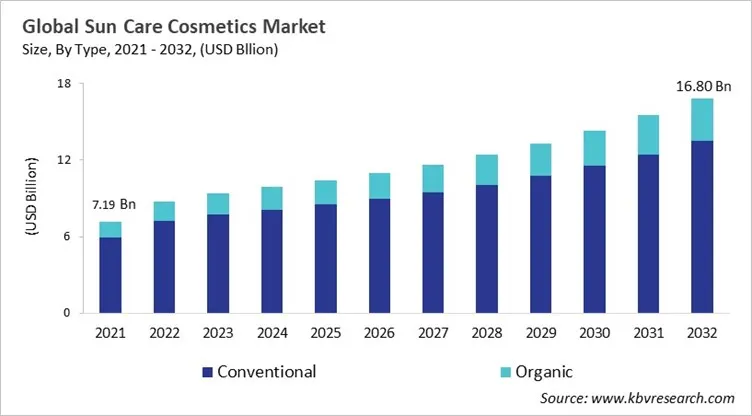
The sun care cosmetics market has transformed from elementary physical sun barriers such as zinc oxide pastes to modern multipurpose products that combine skincare and sun protection. The launch of SPF in the mid-20th century and the growth of the chemical and mineral filters in the late 20th century boosted both the protective effectiveness and visual elegance of sunscreens, meanwhile regulatory frameworks improved consumer trust. In the 21st century, sunscreens are turned as basic, essential and fundamental skincare product. Companies are coming up with new formulas such as, lightweight textures anti-aging ingredients, and hybrid formats that serves as multifunction product. At the same time, inclusivity and aesthetics became very important. New products like tinted, transparent, and micronized mineral formulations were made to work with different skin tones and preferences. New textures and ways to deliver them, such as sticks, sprays, and powders, have made them useful in more than just beach settings.
Sustainability and environmental awareness have become major factors. Brands are changing their products to meet reef-safe standards, using packaging that can be recycled or refilled, and focusing on ethical sourcing. Top companies have focused on continuous product innovation, teaching consumers about their products, and making commitments to sustainability. This has made sunscreens an important part of health and beauty. They are also making products that work better in different climates and for different groups of people, adding more shades, and using a variety of distribution channels, such as e-commerce and retail partnerships. Because of these efforts, the sun care market has changed into a wellness-focused industry that is defined by being multifunctional, welcoming to everyone, and responsible for the environment. This will help it stay strong in the changing global beauty market.
The COVID-19 pandemic had a big effect on the global sun care cosmetics market. Lockdowns, travel bans, and the closing of beaches and resorts made people spend less time outside, which lowered the demand for sunscreen. Retail disruptions, such as long closures of duty-free shops and beauty stores, made it harder for people to shop and buy things on the spur of the moment. Tourism, which is a big reason why people buy sunscreen, fell apart, hurting both sales and brand visibility. People spend less on sunscreen every day because they work from home more. People who took care of their skin preferred moisturizing and taking care of themselves over protecting themselves from UV rays. Supply chain problems and delays in manufacturing also made it harder to find products, which hurt smaller brands the most. Thus, the COVID-19 pandemic had a negative impact on the market.

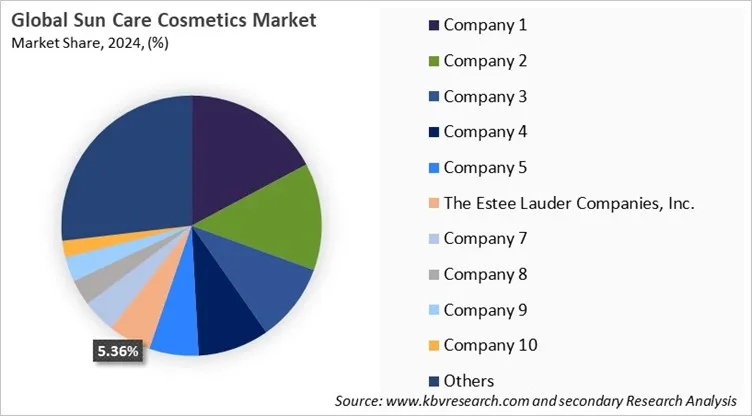
The leading players in the market are competing with diverse innovative offerings to remain competitive in the market. The above illustration shows the percentage of revenue shared by some of the leading companies in the market. The leading players of the market are adopting various strategies in order to cater demand coming from the different industries. The key developmental strategies in the market are Acquisitions, and Partnerships & Collaborations.
Based on type, the sun care cosmetics market is characterized into conventional and organic. The organic segment attained 18% revenue share in the sun care cosmetics market in 2024. The organic sun care cosmetics segment has been gaining increasing traction as consumer awareness of health, safety, and sustainability rises. Products in this category emphasize natural or plant-derived ingredients, often marketed as eco-friendly, reef-safe, and free from synthetic additives or controversial chemicals. This segment has become especially attractive to consumers who prioritize holistic wellness and environmentally conscious lifestyles, as well as those with sensitive skin who seek gentle alternatives to traditional formulations.
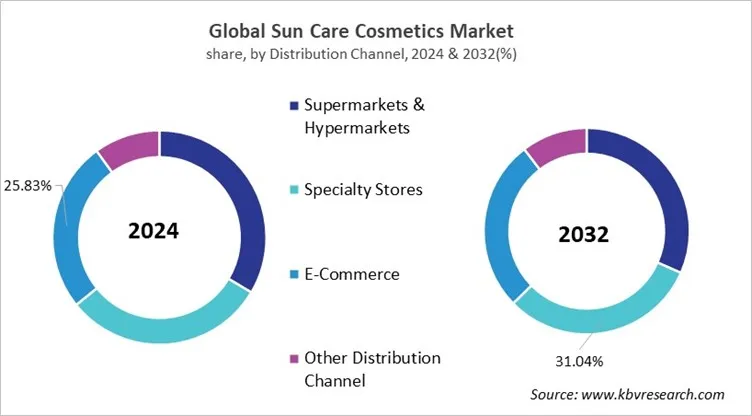
On the basis of distribution channel, the sun care cosmetics market is classified into supermarkets & hypermarkets, specialty stores, e-commerce, and others. The specialty stores segment recorded 31% revenue share in the sun care cosmetics market in 2024. The specialty stores segment serves as a key channel for consumers seeking premium, niche, or dermatologist-endorsed sun care cosmetics. These stores typically offer a curated selection of products, often with expert staff who provide personalized recommendations. Consumers shopping in specialty beauty and skincare stores are generally more informed, quality-conscious, and willing to spend on products that align with specific needs such as sensitive skin, anti-aging, or luxury formulations.
Free Valuable Insights: Global Sun Care Cosmetics Market size to reach USD 16.80 Billion by 2032
Region-wise, the Sun Care Cosmetics Market is analyzed across North America, Europe, Asia Pacific, and LAMEA. The Asia Pacific segment gained 34% revenue share in the sun care cosmetics market in 2024. North America and Europe are two of the most developed and important areas in the world for sun care cosmetics. In North America, especially the US and Canada, demand is driven by a high level of consumer awareness about skin health, a strong dermatological influence, and growing worries about skin cancer and photoaging. People in this area also really like sunscreens that do more than just protect their skin, which fits with their health and beauty-focused lifestyles. On the other hand, Europe is shaped by its strict rules and cultural focus on sun safety. Countries like France, Germany, and the UK are at the forefront of innovation and adoption. The European market is also at the forefront of eco-friendly and sustainable sun care. This is because some UV filters are banned by law and there is a lot of demand from consumers for reef-safe and environmentally friendly products.
Asia-Pacific and LAMEA are becoming high-growth areas with active consumer bases. In Asia-Pacific, markets like, Japan, China, South Korea, and Australia are growing because there is a lot of demand for lightweight, daily-use sunscreens that work well in humid climates and beauty routines that focus on skin tone evenness and anti-aging. The area is also at the forefront of product innovation, especially when it comes to textures like gels, essences, and sprays that meet the needs of a wide range of customers. In Saudi Arabia, LAMEA, the UAE, Brazil, and South Africa are all countries where opportunities are growing because people are making more money, becoming more aware of how the sun can hurt them, and spending more time outside. Brazil's beach culture and the Middle East's year-round sun exposure are two big reasons why people use sunscreen. In both areas, the combination of climate, lifestyle habits, and growing awareness keeps demand steady. There is also a growing shift toward inclusive shades, affordable products, and environmentally safe formulations.
| Report Attribute | Details |
|---|---|
| Market size value in 2025 | USD 10.38 Billion |
| Market size forecast in 2032 | USD 16.80 Billion |
| Base Year | 2024 |
| Historical Period | 2021 to 2023 |
| Forecast Period | 2025 to 2032 |
| Revenue Growth Rate | CAGR of 7.1% from 2025 to 2032 |
| Number of Pages | 499 |
| Number of Tables | 402 |
| Report coverage | Market Trends, Revenue Estimation and Forecast, Segmentation Analysis, Regional and Country Breakdown, Market Share Analysis, Porter’s 5 Forces Analysis, Company Profiling, Companies Strategic Developments, SWOT Analysis, Winning Imperatives |
| Segments covered | Type, Distribution Channel, Product, Region |
| Country scope |
|
| Companies Included | L'Oréal S.A., Beiersdorf AG, Johnson & Johnson, Unilever PLC, Shiseido Company Limited, The Estee Lauder Companies, Inc., Coty, Inc., Clarins Group SA, Edgewell Personal Care, The Procter & Gamble Company |
By Type
By Distribution Channel
By Product
By Geography
This Market size is expected to reach USD 16.80 Billion billion by 2032.
The sun care cosmetics market is projected to grow at a CAGR of 7.1% between 2025 and 2032.
Rising global awareness of skin health and preventive care, along with growing beauty culture, anti-aging trends, and lifestyle integration, is driving the skincare market’s expansion.
L'Oréal S.A., Beiersdorf AG, Johnson & Johnson, Unilever PLC, Shiseido Company Limited, The Estee Lauder Companies, Inc., Coty, Inc., Clarins Group SA, Edgewell Personal Care, The Procter & Gamble Company
The SPF Foundation segment led the Global Sun Care Cosmetics Market by Product in 2024, growing at a CAGR of 5.9 % during the forecast period.
The Asia Pacific region dominated the Global Sun Care Cosmetics Market by Region in 2024, and would continue to be a dominant market till 2032; thereby, achieving a market value of $6.07 billion by 2032.
Our team of dedicated experts can provide you with attractive expansion opportunities for your business.








 Unique Offerings