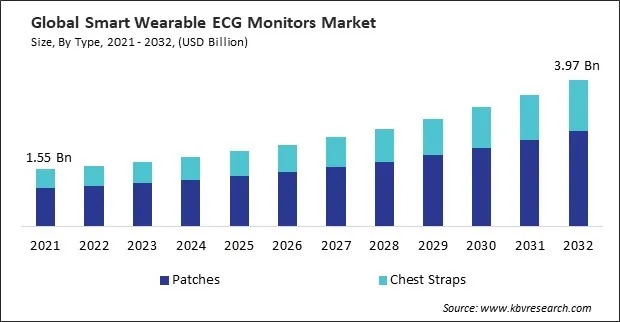
“Global Smart Wearable ECG Monitors Market to reach a market value of USD 3.97 Billion by 2032 growing at a CAGR of 10%”
The Global Smart Wearable ECG Monitors Market size is expected to reach $3.97 billion by 2032, rising at a market growth of 10.0% CAGR during the forecast period.
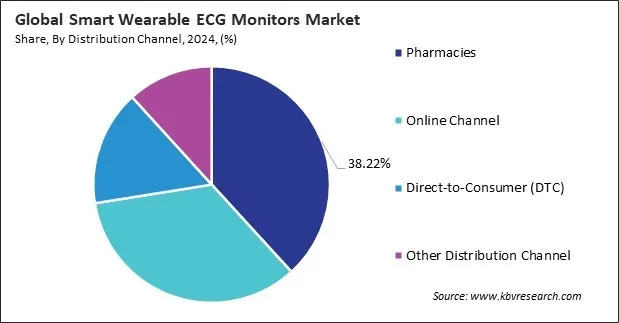
The online channel segment has grown rapidly, driven by the expansion of e-commerce platforms and increased consumer comfort with digital shopping. Online channels offer a broad selection of smart ECG wearables, competitive pricing, and the convenience of home delivery. This mode of distribution is especially popular among tech-savvy users who rely on product reviews, specifications, and digital recommendations to make informed decisions. Thus, the online channel segment garnered 34% revenue share in the smart wearable ECG monitors market in 2024. Both dedicated medical equipment websites and general e-commerce platforms contribute to the growth of this segment, making advanced cardiac monitoring tools more widely available.
During the COVID-19 pandemic, consumers became increasingly conscious of their health, leading to a surge in demand for home-based and continuous health monitoring solutions. This shift in mindset positively impacted the smart wearable ECG monitors market. As people avoided hospitals due to infection risks, wearable ECG devices emerged as a valuable alternative for remotely tracking cardiac activity, particularly for high-risk individuals and chronic disease patients. The rapid expansion of telehealth services during the pandemic also played a crucial role in enhancing the relevance of wearable ECG monitors. These partnerships contributed to sustaining momentum in product adoption even as economic uncertainty persisted. Thus, the COVID-19 pandemic had a mild positive impact on the market.

The global burden of cardiovascular diseases (CVDs) has reached alarming levels, making it a major catalyst in the demand for smart wearable ECG monitors. According to the World Health Organization, CVDs remain the leading cause of death worldwide, accounting for nearly 18 million lives annually. This escalating trend is fueled by multiple risk factors including high blood pressure, obesity, diabetes, smoking, and sedentary lifestyles. In conclusion, the escalating prevalence of cardiovascular diseases and lifestyle-related risk factors is fueling the adoption of smart wearable ECG monitors.
Additionally, the evolution of sensor technology, miniaturization of components, and advancement in AI-powered diagnostics are at the core of the smart wearable ECG monitor revolution. From basic heart rate trackers to sophisticated, FDA-approved ECG functionalities in devices like the Apple Watch or Withings ScanWatch, the leap in capability has made wearables more than just fitness accessories—they have become clinical tools. Hence, rapid technological advancements in wearable biosensors, AI analytics, device connectivity, and user-centric design are transforming smart wearable ECG monitors into powerful, clinically relevant tools that are reshaping the future of cardiac care.
However, one of the most significant restraints holding back the widespread adoption of smart wearable ECG monitors is the concern around data privacy and security. These devices continuously collect highly sensitive health data, including electrocardiogram readings, heart rate trends, and sometimes even geolocation or sleep patterns. Such data, when mishandled, intercepted, or leaked, can expose users to a range of risks including identity theft, discrimination by insurers, and reputational damage. In conclusion, despite the clinical promise of smart wearable ECG monitors, pervasive concerns around data privacy, unauthorized access, and the lack of standardized security protocols continue to be a major impediment to their full adoption and trust in the broader healthcare ecosystem.
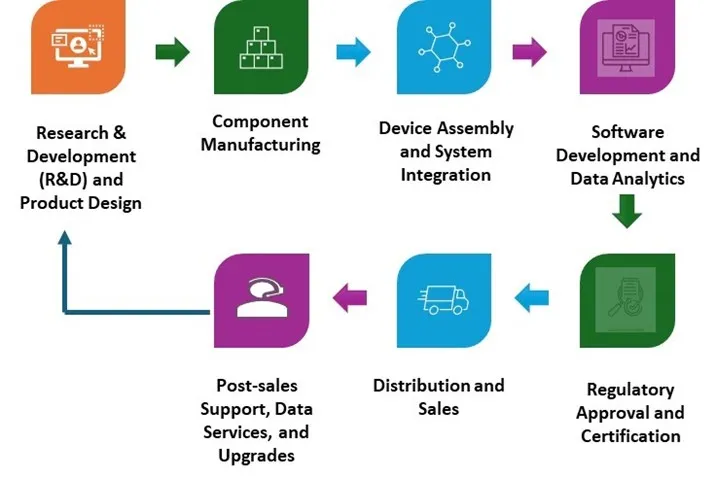
The value chain of the Smart Wearable ECG Monitors Market starts with Research & Development (R&D) and Product Design, focusing on innovation and user-centric features. This leads to Component Manufacturing, where hardware elements like sensors and chips are built. Device Assembly and System Integration follows, aligning all parts into a functional wearable. Software Development and Data Analytics ensures real-time monitoring and interpretation. After Regulatory Approval and Certification, the product moves into Distribution and Sales. Post-purchase, Post-sales Support, Data Services, and Upgrades ensure longevity, feeding back into improved R&D for future models.
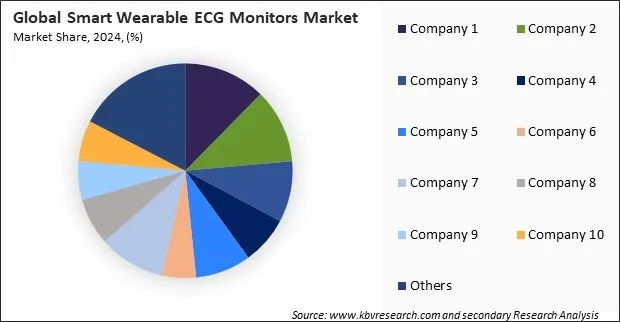
The leading players in the market are competing with diverse innovative offerings to remain competitive in the market. The above illustration shows the percentage of revenue shared by some of the leading companies in the market. The leading players of the market are adopting various strategies in order to cater to demand coming from the different industries. The key developmental strategies in the market are Acquisitions, and Partnerships & Collaborations.
Based on type, the smart wearable ECG monitors market is characterized into patches and chest straps. The chest straps segment procured 33% revenue share in the smart wearable ECG monitors market in 2024. The chest straps segment includes traditional ECG monitors that are worn around the chest and are often used in athletic or clinical environments. These devices provide accurate, real-time heart rate and ECG readings, typically during exercise or physical activity. Chest straps are known for their precision and are frequently used by fitness enthusiasts, athletes, and clinicians who require reliable data during stress testing or training.
| Category | Details |
|---|---|
| Use Case Title | Confidential |
| Date | 2025 |
| Entities Involved | Confidential |
| Objective | To enhance training precision and prevent cardiac overexertion in elite athletes using ECG chest straps for high-fidelity heart monitoring. |
| Context and Background | High-performance athletes face cardiovascular stress. Garmin’s ECG chest straps provide real-time HRV and arrhythmia tracking for safe, optimized training. |
| Description | Garmin’s chest strap offers:
|
| Key Capabilities Deployed |
|
| Benefits |
|
| Source | Confidential |
By distribution channel, the smart wearable ECG monitors market is divided into pharmacies, online channel, direct-to-consumer (DTC), and others. The pharmacies segment witnessed 38% revenue share in the smart wearable ECG monitors market in 2024. The pharmacies segment plays a significant role in the retail distribution of smart wearable ECG monitors. Pharmacies serve as accessible points of purchase for consumers seeking over-the-counter health monitoring solutions. Their physical presence allows users to receive in-person advice, verify product reliability, and compare devices before purchase. In addition to traditional drugstores, large pharmacy chains often partner with manufacturers to promote and distribute medical-grade wearables, making them a trusted option for patients and caregivers.
On the basis of end use, the smart wearable ECG monitors market is classified into hospitals, home care, clinics, and others. The home care segment recorded 25% revenue share in the smart wearable ECG monitors market in 2024. The home care segment reflects a growing trend toward decentralized and patient-centered healthcare. Smart wearable ECG monitors are increasingly adopted in home settings to enable remote monitoring of patients with chronic heart conditions or those recovering from cardiac events. These devices provide a comfortable and user-friendly solution for long-term monitoring, reducing the need for frequent hospital visits while ensuring timely medical intervention.
Free Valuable Insights: Global Smart Wearable ECG Monitors Market size to reach USD 3.97 Billion by 2032
Region-wise, the smart wearable ECG monitors market is analyzed across North America, Europe, Asia Pacific, and LAMEA. The North America segment recorded 36% revenue share in the smart wearable ECG monitors market in 2024. In North America, the market is characterized by a mature ecosystem of digital health technologies and a high level of consumer awareness. The integration of wearable ECG monitors into clinical practices, wellness programs, and home-based care solutions is well-established. Strong demand is fueled by the region's aging population, prevalence of cardiovascular diseases, and the presence of leading tech and medical device companies.
| Report Attribute | Details |
|---|---|
| Market size value in 2024 | USD 1.88 Billion |
| Market size forecast in 2032 | USD 3.97 Billion |
| Base Year | 2024 |
| Historical Period | 2021 to 2023 |
| Forecast Period | 2025 to 2032 |
| Revenue Growth Rate | CAGR of 10.0% from 2025 to 2032 |
| Number of Pages | 337 |
| Number of Tables | 366 |
| Report coverage | Market Trends, Revenue Estimation and Forecast, Segmentation Analysis, Regional and Country Breakdown, Market Share Analysis, Porter’s 5 Forces Analysis, Company Profiling, Companies Strategic Developments, SWOT Analysis, Winning Imperatives |
| Segments covered | Type, End Use, Distribution Channel, Region |
| Country scope |
|
| Companies Included | iRhythm Technologies, Inc., Koninklijke Philips N.V., GE HealthCare Technologies, Inc., Hill-Rom Holdings, Inc. (Welch Allyn) (Baxter International, Inc.), Medtronic PLC, Shimmer Research Ltd., Apple, Inc., Samsung Electronics Co., Ltd. (Samsung Group), Omron Corporation and Fitbit, Inc. (Google LLC) |
By Type
By End Use
By Distribution Channel
By Geography
This Market size is expected to reach $3.97 billion by 2032.
Rising Prevalence of Cardiovascular Diseases and Lifestyle Disorders are driving the Market in coming years, however, Data Privacy and Security Concerns restraints the growth of the Market.
iRhythm Technologies, Inc., Koninklijke Philips N.V., GE HealthCare Technologies, Inc., Hill-Rom Holdings, Inc. (Welch Allyn) (Baxter International, Inc.), Medtronic PLC, Shimmer Research Ltd., Apple, Inc., Samsung Electronics Co., Ltd. (Samsung Group), Omron Corporation and Fitbit, Inc. (Google LLC)
The expected CAGR of this Market is 10.0% from 2023 to 2032.
The Hospitals segment is leading the Market by End Use in 2024, thereby, achieving a market value of $1.62 billion by 2032.
The North America region dominated the Market by Region in 2024, and would continue to be a dominant market till 2032; thereby, achieving a market value of $1.39 billion by 2032.
Our team of dedicated experts can provide you with attractive expansion opportunities for your business.







 Unique Offerings