“Global Security Orchestration Automation and Response (SOAR) Market to reach a market value of USD 5.73 Billion by 2032 growing at a CAGR of 16.1%”
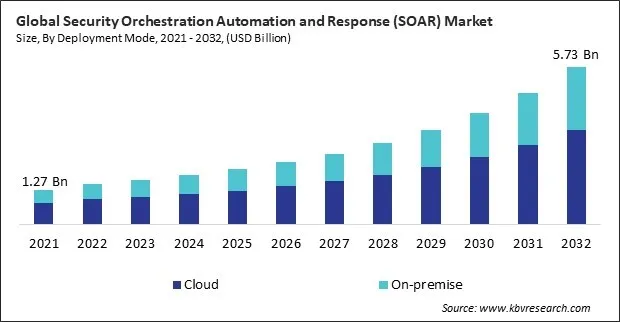
The Global Security Orchestration Automation and Response (SOAR) Market size is expected to reach $5.73 billion by 2032, rising at a market growth of 16.1% CAGR during the forecast period.
In the context of network forensics, SOAR platforms assist in collecting and analyzing network traffic data to reconstruct and understand the sequence of events leading to security incidents. Automated workflows help in correlating logs, identifying anomalies, and pinpointing the origin and progression of attacks. Thus, the network forensics segment recorded 18% revenue share security orchestration automation and response (SOAR) market in 2024. SOAR’s ability to rapidly orchestrate forensic data gathering supports faster root cause analysis and strengthens post-incident investigations, which is essential for threat mitigation and recovery.
The major strategies followed by the market participants are Mergers & Acquisition as the key developmental strategy to keep pace with the changing demands of end users. For instance, In December, 2024, Cisco Systems, Inc. acquired SnapAttack, a threat detection company, to enhance Splunk's security capabilities. SnapAttack's platform offers detection engineering, threat hunting, and SIEM migration. The acquisition will improve visibility, detection engineering, and SIEM modernization, helping organizations stay ahead of emerging threats. Additionally, In September, 2024, Palo Alto Networks, Inc. acquired IBM’s QRadar SaaS assets, enhancing its security platform with Precision AI-powered Cortex XSIAM. This acquisition simplifies security operations by integrating tools like SIEM, SOAR, ASM, and XDR. The aquisition offers seamless migration services and advanced AI analytics to improve threat detection and response for customers.
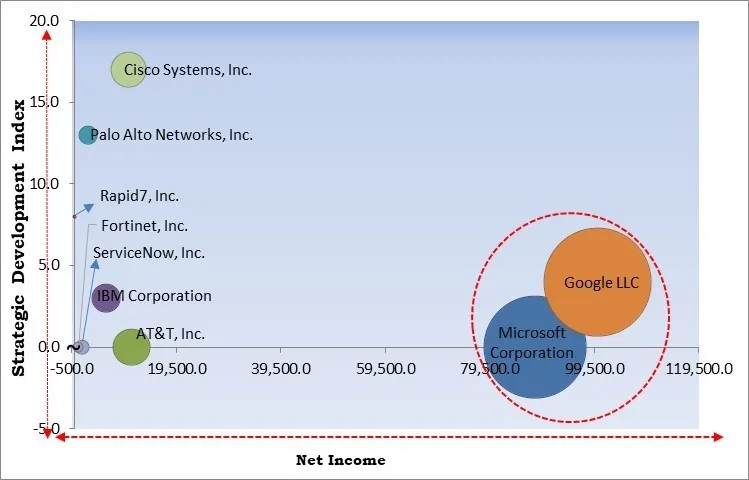
Based on the Analysis presented in the KBV Cardinal matrix; Google LLC and Microsoft Corporation are the forerunners in the Security Orchestration Automation and Response Market. Companies such as AT&T, Inc., Cisco Systems, Inc., and IBM Corporation are some of the key innovators in Security Orchestration Automation and Response (SOAR) Market. In January, 2022, Google LLC acquired Siemplify, a leading SOAR provider, to enhance security operations. Integrated with Chronicle, Siemplify will streamline threat detection and response, boosting SOC efficiency. This move aligns with Google’s vision of automating security workflows at scale, improving risk management, and strengthening cyber defense for organizations.
During the initial phases of the COVID-19 pandemic, the SOAR market experienced moderate disruptions due to the widespread shift in organizational priorities. Many companies, especially small and medium-sized enterprises, temporarily delayed their security infrastructure upgrades, including the adoption of SOAR platforms. Budget reallocations toward immediate operational continuity and remote work technologies took precedence over long-term automation and orchestration initiatives. Thus, the COVID-19 pandemic had a mild negative impact on market.

The modern cyber threat landscape is rapidly evolving. Organizations today are bombarded with an overwhelming number of security alerts generated by intrusion detection systems (IDS), firewalls, antivirus programs, and endpoint detection tools. This alert fatigue is made worse by the complexity of threats, which increasingly use advanced techniques such as polymorphic malware, fileless attacks, credential stuffing, and multi-stage infiltration. In conclusion, the increasing frequency, complexity, and destructiveness of cyber threats are compelling enterprises to adopt SOAR solutions to defend their digital assets efficiently and proactively.
Additionally, the cybersecurity industry faces a persistent and growing talent shortage. Despite a global rise in cyber threats, there simply aren’t enough trained professionals to fill the demand. According to multiple industry surveys, millions of cybersecurity roles remain unfilled globally, a gap that is especially pronounced in small and mid-sized enterprises that cannot match the salaries or benefits offered by large corporations or government agencies. To sum up, SOAR solutions offer a practical and scalable remedy to the global cybersecurity talent shortage by automating routine tasks and preserving institutional knowledge.
However, one of the most significant restraints facing the SOAR market is the high cost of initial deployment and integration, especially for small and mid-sized enterprises. Implementing a SOAR platform typically requires substantial investment in both software licensing and hardware infrastructure (if not cloud-based), in addition to the human resources needed to design, configure, and maintain the system. Unlike plug-and-play cybersecurity tools, SOAR platforms often necessitate a longer setup timeline due to their highly customizable nature. In summary, the high initial investment and ongoing operational complexity of SOAR platforms pose a significant barrier to market growth, particularly among cost-sensitive and resource-constrained organizations.
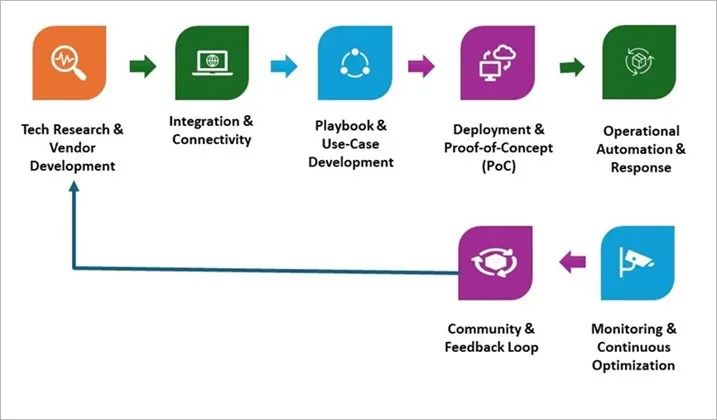
The value chain of the Security Orchestration, Automation, and Response (SOAR) Market begins with Tech Research & Vendor Development, where solutions are conceptualized and vendors are evaluated. Next, Integration & Connectivity ensures seamless linking with SIEM, threat intelligence, and other tools. In Playbook & Use-Case Development, workflows are designed for automated incident handling. Deployment & Proof-of-Concept (PoC) validates system performance in real-world environments. Operational Automation & Response enables real-time threat mitigation. This is followed by Monitoring & Continuous Optimization to refine performance. Finally, the Community & Feedback Loop fosters updates and informs future Tech Research & Vendor Development initiatives.
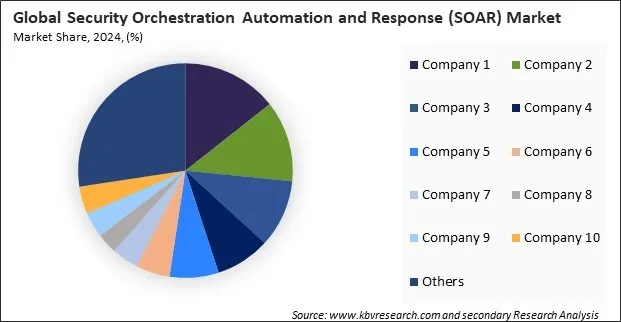
The leading players in the market are competing with diverse innovative offerings to remain competitive in the market. The above illustration shows the percentage of revenue shared by some of the leading companies in the market. The leading players of the market are adopting various strategies in order to cater demand coming from the different industries. The key developmental strategies in the market are Mergers & Acquisition.
Free Valuable Insights: Global Security Orchestration Automation and Response (SOAR) Market size to reach USD 5.73 Billion by 2032
Based on deployment mode, the security orchestration automation and response (SOAR) market is characterized into cloud and on-premise. The on-premise segment procured 38% revenue share in the security orchestration automation and response (SOAR) market in 2024. The on-premise segment continues to hold a substantial share in the SOAR market, particularly among organizations with strict regulatory or security requirements. This deployment mode offers direct control over data, infrastructure, and system configurations, which is often preferred in sectors such as government, banking, and defense.
| Category | Details |
|---|---|
| Use Case Title | Confidential |
| Date | 2025 |
| Entities Involved | Confidential |
| Objective | To protect critical defense communication systems and national security assets through an on-premise SOAR deployment that ensures data sovereignty, air-gapped resilience, and custom incident workflows. |
| Context and Background | Due to the classified nature of military and government operations, cloud-based cybersecurity tools were not viable. The DoD required a secure, isolated SOAR system with deep internal integration and compliance with U.S. cybersecurity regulations. |
| Description |
|
| Key Capabilities Deployed |
|
| Benefits |
|
| Source | Confidential |
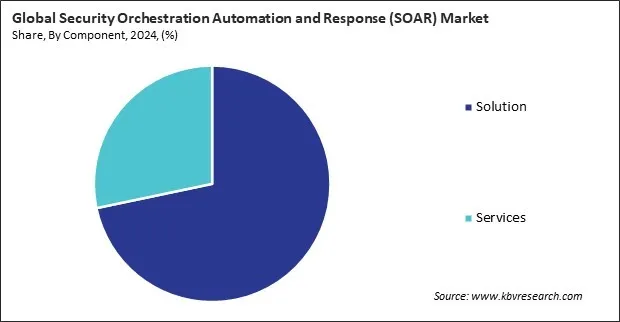
On the basis of component, the security orchestration automation and response (SOAR) market is classified into solution and services. The solution segment acquired 72% revenue share in the security orchestration automation and response (SOAR) market in 2024. The solution segment comprises the core software platforms that enable the automation and orchestration of security operations. These platforms are designed to integrate with various security tools, aggregate alerts from multiple sources, prioritize threats, and execute predefined response playbooks.
By application, the security orchestration automation and response (SOAR) market is divided into incident response, threat intelligence, network forensics, compliance, and others. The incident response segment witnessed 37% revenue share in the security orchestration automation and response (SOAR) market in 2024. Incident response represents a core application area within the SOAR market. SOAR platforms are widely used to automate and coordinate responses to cybersecurity incidents, reducing response times and minimizing the impact of breaches.
Based on organization size, the security orchestration automation and response (SOAR) market is segmented into large enterprises and small & medium enterprises. The small & medium enterprises segment acquired 47% revenue share in the security orchestration automation and response (SOAR) market in 2024. The small and medium enterprises segment has shown strong adoption of SOAR solutions, driven by the need to enhance cybersecurity efficiency with limited resources. SMEs often operate with smaller security teams and tighter budgets, making automation a critical asset for managing threats effectively.
On the basis of vertical, the security orchestration automation and response (SOAR) market is segmented into BFSI, IT & telecom, retail & e-commerce, healthcare, manufacturing, government, education, and others. The BFSI segment attained 21% revenue share in the security orchestration automation and response (SOAR) market in 2024. The banking, financial services, and insurance (BFSI) sector forms a vital segment of the market due to its high sensitivity to data breaches, financial fraud, and regulatory compliance.
Region-wise, the security orchestration automation and response (SOAR) market is analyzed across North America, Europe, Asia Pacific, and LAMEA. The North America segment recorded 41% revenue share in the security orchestration automation and response (SOAR) market in 2024. North America represents a leading region in the SOAR market, underpinned by the presence of advanced cybersecurity infrastructure, large-scale enterprises, and prominent technology providers. Organizations in this region are early adopters of security automation tools, driven by rising cybersecurity threats and regulatory frameworks such as HIPAA, SOX, and CCPA.
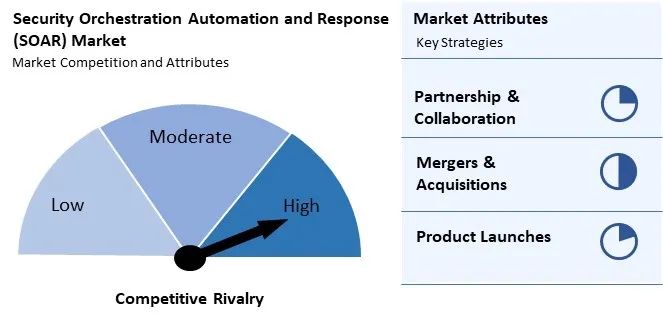
The Security Orchestration, Automation, and Response (SOAR) Market is highly competitive, driven by increasing cyber threats and the need for faster incident response. Key players like Palo Alto Networks, IBM, Splunk, and Rapid7 compete with niche startups offering specialized automation tools. Vendors differentiate through AI-driven playbooks, threat intelligence integration, and seamless compatibility with existing SIEM systems. Strategic partnerships, acquisitions, and cloud-based offerings intensify the landscape, as enterprises prioritize scalable, intelligent SOAR solutions to improve security posture and reduce response times.
| Report Attribute | Details |
|---|---|
| Market size value in 2024 | USD 1.80 Billion |
| Market size forecast in 2032 | USD 5.73 Billion |
| Base Year | 2024 |
| Historical Period | 2021 to 2023 |
| Forecast Period | 2025 to 2032 |
| Revenue Growth Rate | CAGR of 16.1% from 2025 to 2032 |
| Number of Pages | 508 |
| Number of Tables | 585 |
| Report coverage | Market Trends, Revenue Estimation and Forecast, Segmentation Analysis, Regional and Country Breakdown, Competitive Landscape, Market Share Analysis, Market Share Analysis, Porter’s 5 Forces Analysis, Company Profiling, Companies Strategic Developments, SWOT Analysis, Winning Imperatives |
| Segments covered | Deployment Mode, Component, Application, Organization Size, Vertical, Region |
| Country scope |
|
| Companies Included | IBM Corporation, Palo Alto Networks, Inc., Microsoft Corporation, Rapid7, Inc., ServiceNow, Inc., Google LLC (Alphabet Inc.), Fortinet, Inc., SentinelOne, Inc., AT&T, Inc., and Cisco Systems, Inc. |
By Deployment Mode
By Component
By Application
By Organization Size
By Vertical
By Geography
This Market size is expected to reach $5.73 billion by 2032.
Rising Volume and Sophistication of Cyber Threats are driving the Market in coming years, however, High Initial Investment and Operational Complexity restraints the growth of the Market.
IBM Corporation, Palo Alto Networks, Inc., Microsoft Corporation, Rapid7, Inc., ServiceNow, Inc., Google LLC (Alphabet Inc.), Fortinet, Inc., SentinelOne, Inc., AT&T, Inc., and Cisco Systems, Inc.
The expected CAGR of this Market is 16.1% from 2023 to 2032.
The Cloud segment is leading the Market by Deployment Mode in 2024; thereby, achieving a market value of $3.4 billion by 2032.
The North America region dominated the Market by Region in 2024, and would continue to be a dominant market till 2032; thereby, achieving a market value of $2.2 billion by 2032.
Our team of dedicated experts can provide you with attractive expansion opportunities for your business.







 Unique Offerings