“Global Reed Diffuser Market to reach a market value of USD 1.26 Billion by 2032 growing at a CAGR of 5.9%”
The Global Reed Diffuser Market size is estimated at $847.36 billion in 2025 and is expected to reach $1.26 billion by 2032, rising at a market growth of 5.9% CAGR during the forecast period (2025-2032). The projected growth of the global reed diffuser market is supported by rising consumer interest in home fragrance and wellness products, increasing urbanization, and higher disposable incomes. Expanding e-commerce channels and continuous product innovation in natural and premium fragrances further enhance accessibility and appeal, driving steady demand and justifying the forecasted CAGR through 2032.
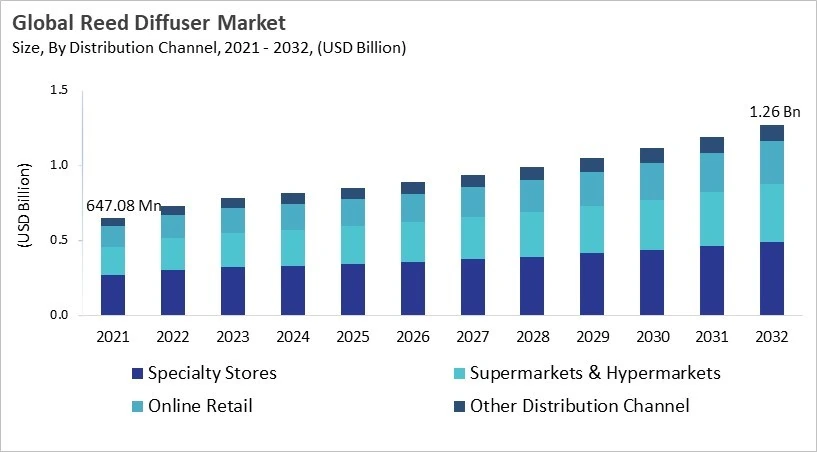
The reed diffuser market has developed into a widely adopted lifestyle category aligned with wellness, indoor environment enhancement, and interior aesthetics. Reed diffusers offer an electricity-free, flame-free fragrance solution, appealing to consumers seeking safe and low-maintenance products for commercial spaces and homes. Rising awareness of indoor environments, propelled by guidance from organizations like the US Environmental Protection Agency, has fuelled demand for indoor fragrance solutions. Portfolio expansion by major consumer goods companies, lifestyle retailers, and luxury fragrance houses, coupled with strong coverage by media like Financial Times and Forbes, has reinforced reed diffusers as decorative and functional products.
The reed diffuser market is witnessing growth based on trends by premiumization through design-led positioning, eco-conscious packaging, and sustainability, increasing preference for natural and plant-based ingredients, and expanding direct-to-consumer and digital channels. Consumers largely favor essential oil-based formulations with clear ingredient disclosure, while brands position themselves through minimalist packaging, elegant bottles, and curated scent collections that double as décor elements. Sustainability has become central with refill systems, responsible sourcing, and recyclable materials gaining traction in response to circular economy policies. Competitive strategies prioritize brand storytelling, regulatory compliance, multi-channel distribution, and scent innovation.

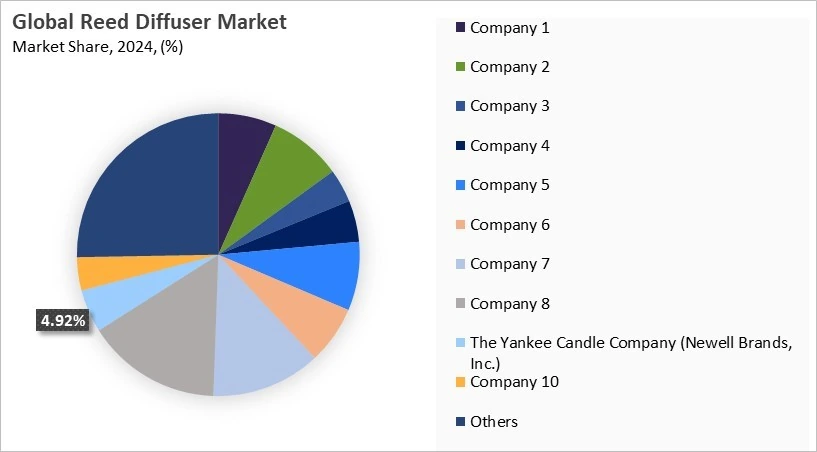
The leading players in the market are competing with diverse innovative offerings to remain competitive in the market. The above illustration shows the percentage of revenue shared by some of the leading companies in the market. The leading players of the market are adopting various strategies to cater demand coming from the different industries. The key developmental strategies in the market are Acquisitions, and Partnerships & Collaborations.
The COVID-19 pandemic hurt the Reed Diffuser Market because lockdowns and limits on movement made it hard for factories and stores to do business. Factory shutdowns, safety rules, and a lack of workers all led to less production. The closure of specialty and lifestyle stores also hurt sales in stores. Trade restrictions and problems in the supply chain made it harder to get raw materials and packaging, which raised costs and pushed back the launch of new products. Uncertainty in the economy made consumers less able to buy things and shifted their spending toward necessities, which lowered demand for home fragrance products. There were fewer social events and fewer people going to stores, which also led to fewer purchases of gifts. Also, brands cut back on advertising and put off plans to make new products and grow their businesses. All these things together slowed down market growth during the worst of the pandemic. Thus, the COVID-19 pandemic had a negative impact on the market.
Based on distribution channel, the reed diffuser market is segmented into specialty stores, supermarkets & hypermarkets, online retail, and other distribution channels. The supermarkets & hypermarkets segment attained 30% revenue share in the market in 2024. Supermarkets and hypermarkets provide wide availability of reed diffusers to consumers through their extensive retail networks. Products are usually displayed alongside other home care items to encourage regular shoppers to make additional purchases.
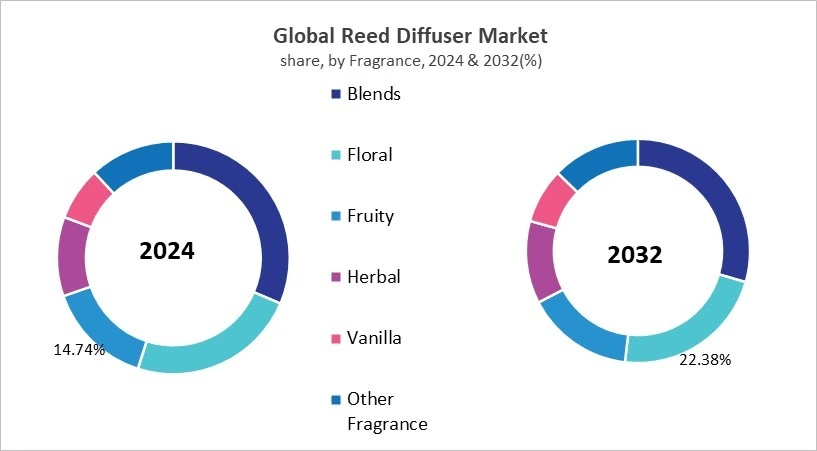
Based on fragrance, the reed diffuser market is segmented into blends, floral, fruity, herbal, vanilla, and other fragrance. The floral segment attained 24% revenue share in the market in 2024. Floral fragrances focus on flower-inspired aromas such as rose, jasmine, lily, and lavender. These reed diffusers are favored for their light, refreshing, and soothing qualities that enhance the ambiance of indoor spaces. Floral scents are often associated with relaxation, comfort, and aesthetic appeal, making them suitable for living areas, bedrooms, and bathrooms.
Free Valuable Insights: Reed Diffuser Market Size to reach $1.26 by 2032
Region-wise, the reed diffuser market is analyzed across North America, Europe, Asia Pacific, and LAMEA. The reed diffuser market is expected to grow at a significant rate in North America and Europe. The market is driven by strong consumer spending on lifestyle aesthetics, home fragrance, and wellness-oriented products. In the North America region, well-established retail structures such as big-box retailers, specialty stores, robust e-commerce channels, and high disposable incomes support innovation and broad product availability. Consumers largely seek natural essential oil blends, premium fragrances, and aesthetically designed diffusers that complement interior décor. Furthermore, Europe reed diffuser market is predicted to expand significantly. The market is supported by regulatory frameworks such as REACH influencing product safety and transparency. European consumers also emphasize clean-label ingredients and sustainability, which drives growth in refillable and eco-friendly diffuser segments. Both regions are characterized by significant brand presence, high market penetration, and steady innovation in scent development.
In the Asia Pacific and LAMEA regions, the reed diffuser market is estimated to experience substantial expansion. The market is propelled by increasing urbanization, expanding lifestyle and wellness trends, and rising middle-class incomes. Growing interest in home décor and gifting, as well as the expansion of e-commerce, also support the adoption of reed diffusers. Moreover, the LAMEA reed diffuser market is projected to capture substantial growth during the projection period. The market is growing, supported by accelerating consumer awareness of premium home fragrance. Urban centers in Latin America especially shows interest in luxury and premium fragrances, while Africa’s market is developing through niche brands and imports. Social media influence, digital retail, and a rising preference for sustainable and natural products.
| Report Attribute | Details |
|---|---|
| Market size value in 2025 | USD 847.36 Million |
| Market size forecast in 2032 | USD 1.26 Billion |
| Base Year | 2024 |
| Historical period | 2021 to 2023 |
| Forecast Period | 2025 to 2032 |
| Revenue Growth Rate | CAGR of 5.9% from 2025 to 2032 |
| Number of Pages | 539 |
| Tables | 425 |
| Report Coverage | Market Trends, Revenue Estimation and Forecast, Segmentation Analysis, Regional and Country Breakdown, Market Share Analysis, Porter’s 5 Forces Analysis, Company Profiling, Companies Strategic Developments, SWOT Analysis, Winning Imperatives |
| Segments Covered | Distribution Channel, Fragrance, End-Use, Region |
| Country Scope |
|
| Companies Included | Flame and Wax Inc. (Voluspa), Diptyque SAS (Manzanita Capital UK LLP), Neom Ltd (NEOM Wellbeing), Aromatherapy Associates Ltd., NEST Fragrances (North Castle Partners, LLC), Molton Brown Limited (Kao Corporation), Jo Malone London (The Estee Lauder Companies, Inc.), Bath & Body Works, Inc., The Yankee Candle Company (Newell Brands, Inc.) and PFCandle Co. |
By Distribution Channel
By Fragrance
By End-Use
By Geography
Our team of dedicated experts can provide you with attractive expansion opportunities for your business.










 Unique Offerings