According to a new report, published by KBV research, The Global Population Health Management Market is expected to reach USD 392.09 billion by 2032, rising at a market growth of 21.6% CAGR during the forecast period.
Population Health Management (PHM) emerged from public-health aims to shift care from reactive, episode-based services to proactive management of defined populations’ health risks and outcomes, blending clinical data, social determinants and community health insights to reduce disparities and costs. Early public health frameworks emphasised population surveillance, prevention and the social determinants of health; over time those functions were amplified by digital health records and interoperable data systems that allowed clinical providers to stratify risk, close care gaps and measure outcomes at scale.
The Services segment is leading the Global Population Health Management Market by Product in 2024, and would continue to be a dominant market till 2032; growing at a CAGR of 21.4 % during the forecast period. These services focus on enabling healthcare providers, payers, and public health organizations to design and execute effective population health programs, improve care coordination, and optimize clinical as well as financial outcomes. Service providers often work closely with clients to integrate PHM solutions into existing healthcare systems, ensuring interoperability, compliance with health regulations, and alignment with value-based care goals. The demand for such services has been supported by the need for expertise in managing large-scale health data, deploying targeted interventions, and measuring the impact of population health initiatives.
The Cloud-based segment is generating the maximum revenue share in the Global Population Health Management Market by Delivery Mode in 2024; thereby, achieving a market value of USD 286.88 billion by 2032. The cloud-based delivery mode in this market was characterized by its flexibility, scalability, and ease of deployment, which made it a preferred choice for many healthcare organizations. This approach allowed providers, payers, and public health agencies to access and share data seamlessly across multiple locations, enabling real-time analytics, care coordination, and patient engagement. Cloud-based platforms supported interoperability by integrating data from electronic health records, claims systems, and social determinants of health sources, creating a unified view of patient populations.
The Providers segment is anticipating a CAGR of 21% during (2025 - 2032). This segment consisted of hospitals, clinics, primary care networks, and specialty care centers that implemented PHM solutions to improve patient outcomes, enhance care coordination, and reduce avoidable healthcare costs. These organizations utilized advanced analytics, electronic health records integration, and risk stratification tools to proactively identify and manage at-risk populations. By embedding PHM tools into their daily clinical workflows, providers were able to streamline care management, support preventive interventions, and strengthen patient engagement initiatives, which contributed significantly to improving operational efficiency and overall healthcare delivery quality.
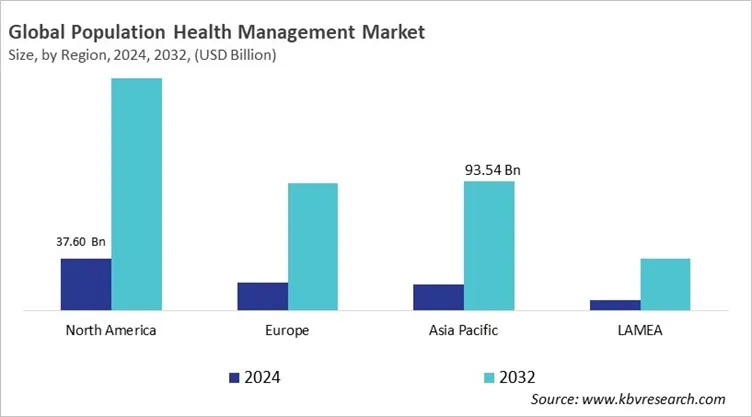
The North America region dominated the Global Population Health Management Market by Region in 2024, and would continue to be a dominant market till 2032; thereby, achieving a market value of $168.25 billion by 2032. The Europe region is exhibiting a CAGR of 21.4% during (2025 - 2032). Additionally, The Asia Pacific region would experience a CAGR of 22.7% during (2025 - 2032).
By Product
By Delivery Mode
By End-use
By Geography



 Unique Offerings

