“Global Patient Portal Market to reach a market value of USD 14.37 Billion by 2032 growing at a CAGR of 18.7%”
The Global Patient Portal Market size is expected to reach $14.37 billion by 2032, rising at a market growth of 18.7% CAGR during the forecast period.
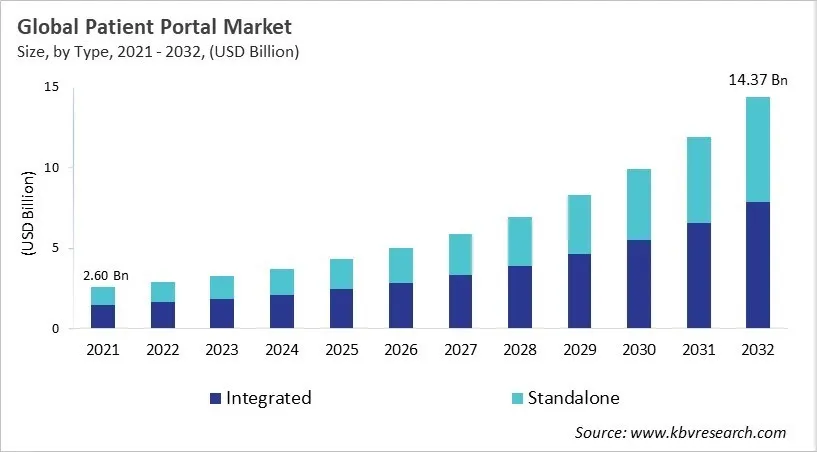
Recently, the patient portal market was developed into a crucial pillar of modern digital-health ecosystems, allowing patients to access their scheduled appointments, medical data, manage care, and communicate with clinicians. Initiatives like the Blue Button programme and the US HITECH Act are surging early adoption by mandating patient access to digital records. Regulatory frameworks such as the CMS Interoperability and Patient Access Rule have reinforced the necessity of data-sharing standards like FHIR and open APIs. Portals have developed from passive, view-only systems to mobile-first, interactive platforms that support payments, telehealth, and chronic-disease management. Healthcare systems and governments now regard patient portals as necessary tools for self-management and patient engagement, making a transformation from provider centric to patient centric healthcare delivery.
The patient portal market’s expansion is supported by a combination of large EHR providers and smaller specialised players. Major incumbents like Cerner (Oracle), Epic Systems, and athenahealth focus on expanding portal capabilities-telehealth integration, mobile access, interoperability, and analytics- to strengthen regulatory alignment and patient engagement. Further, smaller providers compete through flexible, niche, or mobile-first solutions, particularly in emerging markets where scalable and cost-effective platforms are prioritized. With the maturing market, differentiation will largely depend on user experience, interoperability, multi-provider connectivity, and predictive analytics, positioning portals as a crucial part of digital healthcare systems.
The major strategies followed by the market participants are Product Launches as the key developmental strategy to keep pace with the changing demands of end users. For instance, In October, 2025, GE HealthCare Technologies, Inc. unveiled CareIntellect for Perinatal, a cloud-first app integrating maternal and fetal data. It simplifies workflows by offering real-time visibility, event annotation, and unified insights. This aims to boost coordination, cut admin work, and enhance perinatal care. Moreover, In September, 2025, NextGen Healthcare, Inc. unveiled “NextGen Navigator,” an AI-powered virtual assistant designed to streamline patient communication and administrative workflows. By automating scheduling, refills, and inquiries, the tool reduces staff burden while enhancing patient engagement and satisfaction through faster, more personalized digital interactions within the patient portal environment.
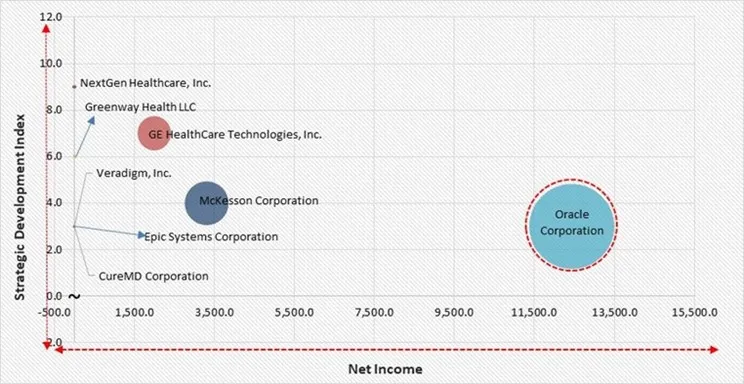
Based on the Analysis presented in the KBV Cardinal matrix; Oracle Corporation is the forerunner in the Patient Portal Market. In September, 2025, Oracle Corporation unveiled an AI Center of Excellence to support healthcare providers. It helps apply AI across clinical, operational, and financial processes. The goal is to optimize workflows, improve engagement, and deliver insights so organizations can extract greater AI value in patient care. Companies such as McKesson Corporation, GE HealthCare Technologies, Inc., and NextGen Healthcare, Inc. are some of the key innovators in Patient Portal Market.
The COVID-19 pandemic sped up the use and integration of patient portals by a lot, turning them from optional digital tools into necessary parts of healthcare delivery. As lockdowns made it hard to visit people in person, portals made it possible to talk to them, see their medical records, and have teleconsultations. Governments and healthcare organizations quickly built up their digital infrastructure by adding things like tracking COVID-19 tests, vaccination records, and monitoring symptoms. Innovation was driven by more patient involvement and better digital health literacy. Portals changed into full platforms that combined EHRs, wearables, and telemedicine. As a result, patient portals became essential for modern healthcare, permanently changing what patients expect and driving steady market growth. Thus, the COVID-19 pandemic had a positive impact on the market.

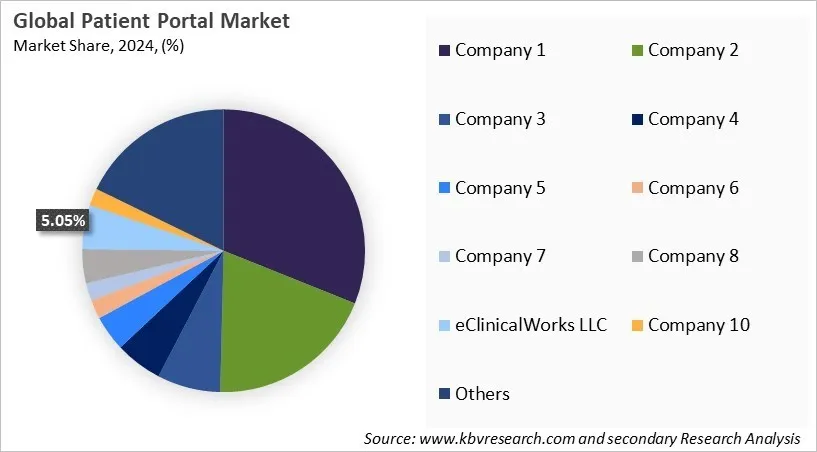
The leading players in the market are competing with diverse innovative offerings to remain competitive in the market. The above illustration shows the percentage of revenue shared by some of the leading companies in the market. The leading players of the market are adopting various strategies in order to cater demand coming from the different industries. The key developmental strategies in the market are Acquisitions, and Partnerships & Collaborations.
Free Valuable Insights: Patient Portal Market size to reach USD 14.37 Billion by 2032
Based on Type, the market is segmented into Integrated, and Standalone. The standalone segment attained 43% revenue share in the patient portal market in 2024. Standalone patient portals function as independent platforms designed primarily to provide patients with direct access to specific healthcare information or services without being deeply embedded into complex hospital IT infrastructures. These portals are often preferred by smaller clinics, specialty centers, or private practices seeking a cost-effective and easily deployable solution for patient engagement.
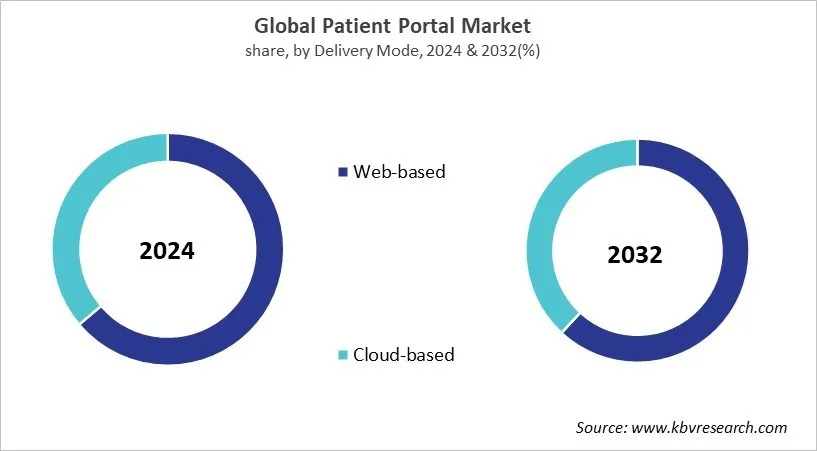
Based on Delivery Mode, the market is segmented into Web-based, and Cloud-based. The cloud-based segment recorded 36% revenue share in the patient portal market in 2024. Cloud-based patient portals utilize cloud infrastructure to deliver flexible, scalable, and easily maintainable digital healthcare solutions. These portals enable patients and healthcare professionals to securely access information anytime and anywhere, promoting continuity of care beyond physical settings. Their cloud architecture reduces the need for heavy IT resources while supporting integration with telehealth, mobile apps, and connected medical devices.
Region-wise, the patient portal market is analyzed across North America, Europe, Asia Pacific, and LAMEA. The North America segment recorded 42% revenue share in the patient portal market in 2024. The patient portal market is anticipated to grow at a significant rate in the North America and Europe regions. The market is supported by strong electronic health record (HER) adoption, strong patient engagement policies, and interoperability mandates. In the US, initiatives like the Blue Button program, HITECH Act, and the CMS Interoperability and Patient Access Rule have made online patient access to healthcare data an operational and legal requirement, resulting to widespread deployment of portals within healthcare systems. Major EHR vendors such as Cerner (Oracle), Epic, and athenahealth lead the market with API-enabled platforms that align with national standards like FHIR. Moreover, in Europe, nations such as Germany and the UK are advancing toward a unified digital-health infrastructure, backed by national eHealth strategies as well as GDPR-compliant data-sharing frameworks. The emphasis across these regions is to enhance usability, deploy telehealth and mobile applications, and allow multi-provider access through patient-centric and interoperable platforms.
In the Asia Pacific and LAMEA regions, the patient portal market is predicted to experience prominent growth during the forecast period. The market is driven by expanding public-sector digitalization programs, increasing patient awareness, and growing digital-health infrastructure. Governments in nations like Singapore, Japan, India, and Australia are promoting patient access initiatives and national health record systems to strengthen the healthcare system. The region is also experiencing increased private investment in mobile health apps and telemedicine, surging portal adoption among tech-savvy and urban populations. Moreover, in LAMEA patient portal market is expanding through initiatives to modernize healthcare IT and expand electronic medical records, particularly in nations such as Saudi Arabia, Brazil, and the UAE. Players that can offer cloud-based, mobile-first, cost-effective, and scalable solutions are well-positioned to gain market dominance, as healthcare systems in these regions shift from fragmented and paper-based workflows to patient-centered digital ecosystems.
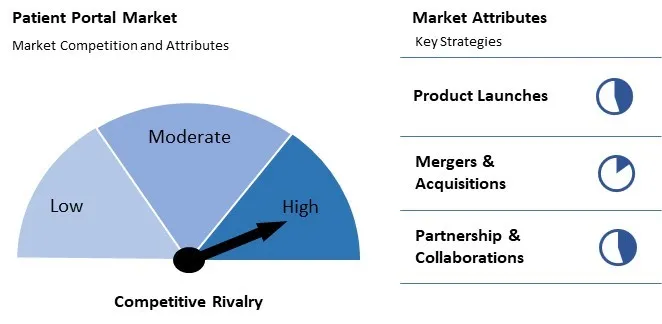
The patient portal market is always changing because companies are always trying to make the user experience better, make it easier for different systems to work together, and keep data safe. Vendors compete by offering advanced integration with electronic health records, personalized engagement tools, and access from mobile devices. To strengthen their presence in the market, many companies work together with healthcare providers and technology partners. The focus on patient-centered digital care and following the rules makes competition even stronger, which leads to constant improvements in service delivery and functionality.
| Report Attribute | Details |
|---|---|
| Market size value in 2025 | USD 4.31 Billion |
| Market size forecast in 2032 | USD 14.37 Billion |
| Base Year | 2024 |
| Historical Period | 2021 to 2023 |
| Forecast Period | 2025 to 2032 |
| Revenue Growth Rate | CAGR of 18.7% from 2025 to 2032 |
| Number of Pages | 415 |
| Number of Tables | 334 |
| Report coverage | Market Trends, Revenue Estimation and Forecast, Segmentation Analysis, Regional and Country Breakdown, Competitive Landscape, Market Share Analysis, Porter’s 5 Forces Analysis, Company Profiling, Companies Strategic Developments, SWOT Analysis, Winning Imperatives |
| Segments covered | Type, Delivery Mode, End-Use, Region |
| Country scope |
|
| Companies Included | Epic Systems Corporation, Oracle Corporation (Cerner Corporation), Athenahealth, Inc. (Bain Capital, LP.), GE HealthCare Technologies, Inc., McKesson Corporation, Greenway Health LLC, CureMD Corporation, NextGen Healthcare, Inc., eClinicalWorks LLC, and Veradigm, Inc. |
By Type
By Delivery Mode
By End-Use
By Geography
This Market size is expected to reach USD 14.37 billion by 2032.
The patient portal market is projected to grow at a CAGR of 18.7% between 2025 and 2032.
Shift toward patient-centric care and engagement is being enabled by integration with EHRs and improved interoperability.
Epic Systems Corporation, Oracle Corporation (Cerner Corporation), Athenahealth, Inc. (Bain Capital, LP.), GE HealthCare Technologies, Inc., McKesson Corporation, Greenway Health LLC, CureMD Corporation, NextGen Healthcare, Inc., eClinicalWorks LLC, and Veradigm, Inc.
The Web-based segment led the maximum revenue in the Global Patient Portal Market by Delivery Mode in 2024, thereby, achieving a market value of $8.9 billion by 2032.
The North America region dominated the Global Patient Portal Market by Region in 2024, and would continue to be a dominant market till 2032; thereby, achieving a market value of $5.7 billion by 2032.
Our team of dedicated experts can provide you with attractive expansion opportunities for your business.









 Unique Offerings