“Global Out-of-band (OOB) Authentication Market to reach a market value of USD 4.59 Billion by 2032 growing at a CAGR of 15.8%”
The Global Out-of-band (OOB) Authentication Market size is expected to reach USD 4.59 billion by 2032, rising at a market growth of 15.8% CAGR during the forecast period.
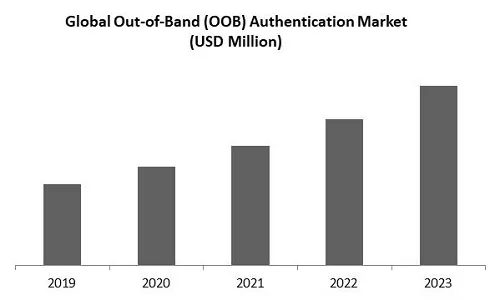
Out-of-band (OOB) authentication refers to a security method that verifies user identity through a secondary, independent communication channel-like voice calls, SMS, push notifications, or authenticator apps, separate from the primary login process. This approach reduces the risk of unauthorized access by requiring attackers to compromise multiple channels. With the increased instances of cyber-attacks, more sophisticated and password-only authentication has proven insufficient, OOB authentication has gained prominence as a core component of multi-factor authentication (MFA). Further, OOB authentication has transformed from a niche solution to a mainstream requirement, especially in industries handling sensitive data like banking, e-commerce, and government services. Advances in cloud and mobile technologies have enhanced its usability and scalability, reinforcing its role in modern digital security frameworks.
OOB authentication is largely embedded within broader identity and access management (IAM) ecosystems that focus on adaptive, layered, and risk-based security. Leading market trends include integration with contextual signals like user-behaviour and device intelligence, rising adoption driven by remote work and cloud services, and a gradual shift toward password-less and phishing-resistant authentication models that build on OOB principles. Key market players position themselves by offering comprehensive IAM platforms that combine OOB capabilities with MFA and adaptive authentication, while aligning closely with regulatory standards to serve compliance-driven sectors.
The COVID-19 pandemic had a good effect on the Out-of-Band (OOB) Authentication Market because companies quickly moved to remote work and digital operations. The need for secure user verification grew as more people were able to access business systems from outside the office, which led to the use of OOB authentication. A rise in online transactions in banking, e-commerce, and healthcare made the need for strong multi-factor authentication even greater. Organizations had to add extra layers of security because of the rise in cyber threats and attempts to commit fraud during the pandemic. OOB authentication helped lower the chances of phishing, account takeovers, and identity theft. The growth of the market was also helped by faster adoption of cloud and digital transformation projects. Because of this, businesses started to use OOB authentication increasingly in their identity and access management systems. Thus, the COVID-19 pandemic had a positive impact on the market.

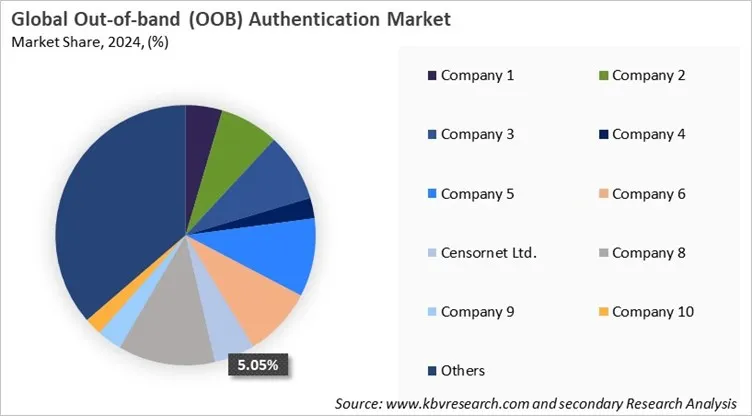
The leading players in the market are competing with diverse innovative offerings to remain competitive in the market. The above illustration shows the percentage of revenue shared by some of the leading companies in the market. The leading players of the market are adopting various strategies to cater demand coming from the different industries. The key developmental strategies in the market are Acquisitions, and Partnerships & Collaborations.
Based on components, the out-of-band (OOB) authentication market is characterized into software and services. The services segment attained 33% revenue share in the out-of-band (OOB) authentication market in 2024. The services segment plays a critical role in supporting the effective deployment and management of out-of-band (OOB) authentication solutions. These services include implementation, system integration, consulting, training, maintenance, and ongoing support.
On the basis of deployment, the out-of-band (OOB) authentication market is classified into cloud and on-premise. The on-premise segment recorded 35% revenue share in the out-of-band (OOB) authentication market in 2024. On-premise out-of-band (OOB) authentication remains relevant for organizations that require direct control over authentication infrastructure and sensitive data. This deployment model is preferred by regulated industries such as BFSI, government, and healthcare, where compliance and data residency are critical.
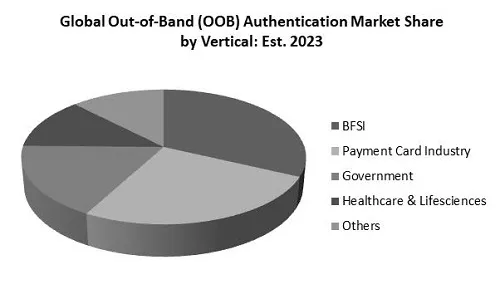
Free Valuable Insights: Out-of-band (OOB) Authentication Market size to reach USD 4.59 Billion by 2032
Region-wise, the out-of-band (OOB) authentication market is analyzed across North America, Europe, Asia Pacific, and LAMEA. The North America segment recorded 37% revenue share in the out-of-band (OOB) authentication market in 2024. The out-of-band authentication market is anticipated to grow at a significant rate in the North America region. This is because of advanced IT infrastructure, strong cybersecurity awareness, and early adoption of secure authentication solutions across key industries such as healthcare, government, and BFSI. Canada and the United States lead demand due to strict regulatory mandates and high investment in digital security technologies, with major providers and continued innovation, resulting in accelerated adoption. Further, North America’s market is expanding due to remote work trends, robust cloud migration, and many organizations prioritizing secure access control. Moreover, the European OOB authentication market is flourishing, driven by stringent data protection frameworks like PSD2 and GDPR that require improved authentication measures for digital services and transactions. The European market in Germany, France, and the UK is experiencing solid OOB solution adoption in banking, telecom, and e-commerce sectors, propelled by consumer privacy concerns, regulatory compliance, and mature digital ecosystems that focus on secure identity verification.
In the Asia Pacific, the out-of-band (OOB) authentication market is witnessing substantial growth during the forecast period. This is due to increasing internet and smartphone penetration, rapid digital transformation, and expanding cloud and mobile service usage. Nations such as India, China, Japan, and Australia are experiencing great demand for secure authentication driven by expanding e-commerce, online banking, and digital payment adoption, along with rising cybersecurity awareness. The region’s accelerating IT investment and large population base position it for strong OOB authentication adoption. The LAMEA out-of-band authentication market is predicted to grow at a steady pace. This is because of rising awareness of cyber threats, and governments start enforcing security regulations. LAMEA region, such as Mexico and Brazil are largely adopting OOB solutions in government and financial services. The Middle East and Africa are experiencing increasing digitalization and security investments that offer opportunities for authentication technologies as part of broader identity and access management strategies.
| Report Attribute | Details |
|---|---|
| Market size value in 2025 | USD 1.64 Billion |
| Market size forecast in 2032 | USD 4.59 Billion |
| Base Year | 2024 |
| Historical Period | 2021 to 2023 |
| Forecast Period | 2025 to 2032 |
| Revenue Growth Rate | CAGR of 15.8% from 2025 to 2032 |
| Number of Pages | 551 |
| Number of Tables | 465 |
| Report coverage | Market Trends, Revenue Estimation and Forecast, Segmentation Analysis, Regional and Country Breakdown, Market Share Analysis, Porter’s 5 Forces Analysis, Company Profiling, Companies Strategic Developments, SWOT Analysis, Winning Imperatives |
| Segments covered | Components, Deployment, Authentication Channel, End-User Industry, Region |
| Country scope |
|
| Companies Included | OneSpan, Inc., Ping Identity Holding Corp., RSA Security LLC (Symphony Technology Group), SecurEnvoy Limited (Shearwater Group PLC), Thales Group S.A., Broadcom, Inc., Censornet Ltd., Cisco Systems, Inc., Deepnet Security and i-Sprint Innovations Pte Ltd. |
By Components
By Deployment
By Authentication Channel
By End-User Industry
By Geography
This Market size is expected to reach USD 4.59 Billion by 2032.
The out-of-band (OOB) authentication market is projected to grow at a CAGR of 15.8% between 2025 and 2032.
Escalating sophistication and frequency of cyber threats, combined with rapid growth in digital transactions and online services, are driving market growth.
OneSpan, Inc., Ping Identity Holding Corp., RSA Security LLC (Symphony Technology Group), SecurEnvoy Limited (Shearwater Group PLC), Thales Group S.A., Broadcom, Inc., Censornet Ltd., Cisco Systems, Inc., Deepnet Security and i-Sprint Innovations Pte Ltd.
The Software segment is leading the Global Out-of-band (OOB) Authentication Market by Components in 2024; thereby, achieving a market value of $3.06 billion by 2032.
The North America market dominated the Global Out-of-band (OOB) Authentication Market by Region in 2024, and would continue to be a dominant market till 2032; thereby, achieving a market value of $1,629.8 million by 2032.
Our team of dedicated experts can provide you with attractive expansion opportunities for your business.







 Unique Offerings