“Global Orthopedic Software Market to reach a market value of USD 678.22 Million by 2032 growing at a CAGR of 5.4%”
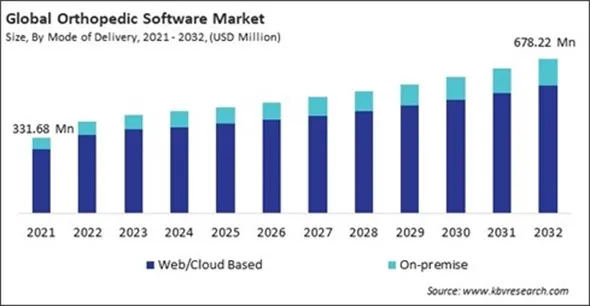
The Global Orthopedic Software Market size is expected to reach $678.22 million by 2032, rising at a market growth of 5.4% CAGR during the forecast period.
The North America segment recorded 42% revenue share in the market in 2024. This can be attributed to the region's advanced healthcare infrastructure, widespread technology adoption, and strong market demand for orthopedic software solutions. The United States, in particular, has a high rate of orthopedic surgeries driven by factors such as an aging population, an increasing number of musculoskeletal conditions, and a growing emphasis on improving surgical outcomes through digital solutions.
The global shift toward value-based healthcare is critical to driving the demand for orthopedic software solutions. As healthcare systems transition from volume-based to outcome-focused care, orthopedic practices increasingly adopt digital platforms that support patient tracking, outcomes measurement, and integrated care planning. Orthopedic software empowers healthcare providers to monitor a patient’s journey across the continuum of care, allowing for personalized and evidence-based interventions. In conclusion, value-based care models and the drive for better patient outcomes significantly boost the demand for orthopedic software solutions.
Additionally, The surge in post-operative and rehabilitative care needs has led to rising demand for software supporting recovery management in orthopedic patients. Orthopedic software is becoming an indispensable tool in rehabilitation programs, offering capabilities such as progress tracking, virtual physical therapy sessions, pain assessment, and patient engagement platforms. These features enable real-time feedback and tailored rehabilitation plans, ensuring faster and safer recoveries. In summary, the increasing need for effective rehabilitation and post-surgical care solutions is a key driver for the market.
However, One of the most significant barriers limiting the widespread adoption of orthopedic software is the high cost associated with its implementation. These costs encompass the initial purchase of the software and expenses related to licensing, customization, hardware upgrades, and integration with existing hospital systems. Smaller clinics and medium-sized healthcare facilities, particularly in developing countries, often lack the financial resources to adopt high-end digital solutions. In conclusion, high implementation costs remain a barrier to the widespread adoption of orthopedic software.
The COVID-19 pandemic had a significant negative impact on the market. Due to the overwhelming number of COVID-19 cases, the healthcare industry, including orthopedic care, faced numerous challenges. This led to the postponement or cancellation of elective surgeries, including orthopedic procedures. This resulted in a decreased demand for orthopedic software, which is primarily used to support surgical planning, patient management, and diagnostic functions in orthopedic care. Thus, the COVID-19 pandemic had a negative impact on the market.
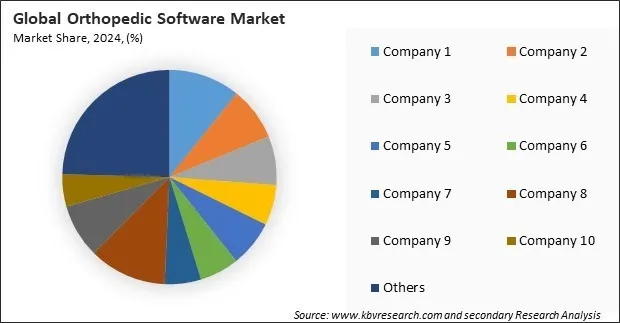
The leading players in the market are competing with diverse innovative offerings to remain competitive in the market. The above illustration shows the percentage of revenue shared by some of the leading companies in the market. The leading players of the market are adopting various strategies in order to cater demand coming from the different industries. The key developmental strategies in the market are Acquisitions, and Partnerships & Collaborations.

On the basis of mode of delivery, the market is classified into web/cloud based and on-premise. The on-premise segment recorded 15% revenue share in the market in 2024. Many healthcare institutions, especially those with stringent data control policies and specific regulatory requirements, continue to prefer on-premise solutions. These systems offer greater control over data storage, customization, and security, which is particularly important for organizations concerned with patient data privacy.
By application, the market is divided into orthopedic surgeries, fracture management, and others. The fracture management segment garnered 29% revenue share in the market in 2024. The need for efficient diagnosis, treatment planning, and recovery monitoring of bone fractures drives the use of orthopedic software in this segment. These solutions aid healthcare professionals in accurately assessing fracture patterns, selecting appropriate treatment modalities, and tracking healing progress over time.
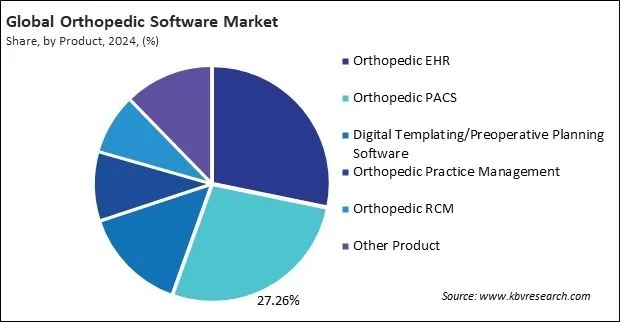
Based on product, the market is characterized into orthopedic EHR, orthopedic PACS, digital templating/preoperative planning software, orthopedic practice management, orthopedic RCM, and others. The orthopedic PACS segment procured 27% revenue share in the market in 2024. This can be attributed to the growing reliance on advanced imaging technologies in orthopedic diagnosis and treatment. Orthopedic PACS enables digital storage, retrieval, and sharing of medical images such as X-rays, MRIs, and CT scans, enhancing collaboration among medical professionals and speeding up the diagnostic process.
Free Valuable Insights: Global Orthopedic Software Market size to reach USD 678.22 Million by 2032
Region-wise, the market is analyzed across North America, Europe, Asia Pacific, and LAMEA. The Europe segment witnessed 29% revenue share in the market in 2024. Several European countries actively invest in digital health technologies and expand their healthcare infrastructure, leading to higher adoption of orthopedic software. The demand is particularly strong in countries like Germany, the UK, and France, with a focus on improving surgical precision, patient care, and post-operative management.
| Report Attribute | Details |
|---|---|
| Market size value in 2024 | USD 450.51 Million |
| Market size forecast in 2032 | USD 678.22 Million |
| Base Year | 2024 |
| Historical Period | 2021 to 2023 |
| Forecast Period | 2025 to 2032 |
| Revenue Growth Rate | CAGR of 5.4% from 2025 to 2032 |
| Number of Pages | 258 |
| Number of Tables | 370 |
| Report coverage | Market Trends, Revenue Estimation and Forecast, Segmentation Analysis, Regional and Country Breakdown, Market Share Analysis, Porter’s 5 Forces Analysis, Company Profiling, Companies Strategic Developments, SWOT Analysis, Winning Imperatives |
| Segments covered | Mode of Delivery, Application, Product, Region |
| Country scope |
|
| Companies Included | Brainlab AG, GE HealthCare Technologies, Inc., Koninklijke Philips N.V., NEXTGEN HEALTHCARE, INC., McKesson Corporation, Veradigm, Inc., eClinicalWorks LLC, IBM Corporation, Stryker Corporation, and Exactech, Inc. |
By Mode of Delivery
By Application
By Product
By Geography
This Market size is expected to reach $678.22 million by 2032.
Growing Focus on Value-Based Healthcare Models and Improved Patient Outcomes are driving the Market in coming years, however, High Implementation Costs of Orthopedic Software Solutions restraints the growth of the Market.
Brainlab AG, GE HealthCare Technologies, Inc., Koninklijke Philips N.V., NEXTGEN HEALTHCARE, INC., McKesson Corporation, Veradigm, Inc., eClinicalWorks LLC, IBM Corporation, Stryker Corporation, and Exactech, Inc.
The expected CAGR of this Market is 5.4% from 2023 to 2032.
The Orthopedic Surgeries segment led the maximum revenue in the Market by Application in 2024, thereby, achieving a market value of $390.1 million by 2032.
The North America region dominated the Market by Region in 2024, thereby, achieving a market value of $275.8 million by 2032, growing at a CAGR of 5 % during the forecast period.
Our team of dedicated experts can provide you with attractive expansion opportunities for your business.







 Unique Offerings