“Global Online Art Market to reach a market value of USD 16.27 Billion by 2032 growing at a CAGR of 6.1%”
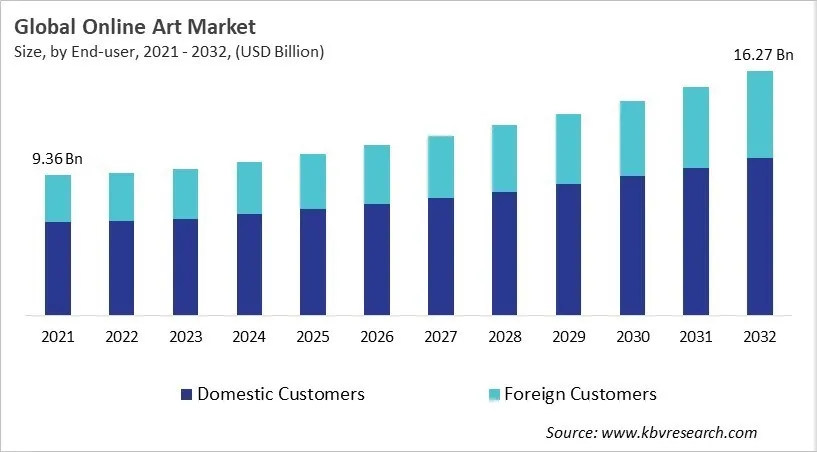
The Global Online Art Market size is expected to reach $16.27 billion by 2032, rising at a market growth of 6.1% CAGR during the forecast period.
The native consumers enjoy some benefits associated with buying art from their own country. It gives them the advantage of paying less, fast delivery, easier return options, and the use of known local payment methods. With the rise of social media and local platforms, many artists are building a strong presence in their home market. Additionally, most of the local art websites contribute to increased sales within the nation.

The rising digitalization has revolutionized how customers search, buy, and enjoy art. At the core of this shift is swift progress of online applications that support artists, collectors, and galleries connect with people all over the globe, without being tensed about distance. This usage of digital tools is the reason behind the growth of the online art market. It makes the process of access and buying of art simple, with a smooth shopping experience.
Globalization has opened new paths to presenting products and services to customers from any part of the world and not just local places. Now people from any location can take part in the auctions and search for new artists and buy from galleries that are miles away from them while sitting at their homes. This shift has provided a whole new lot of opportunities for not only the buyers but also the artists to be seen among a wider range of audience.
One of the major drawbacks of buying online art is that it lacks the sense of touch and vision before purchasing. Additionally, the personal experience of feeling its texture, seeing the colors, and the idea of how it looks in real space is ignored. These small aspects connect the buyers to the art. Without the sense of touch and vision in the buying art online creates uncertainty among the people. This is a serious concern for the buyers who are passionate about art and care a lot about texture, the colors, and brush strokes. Hence, it is a big restraint for the online art market.
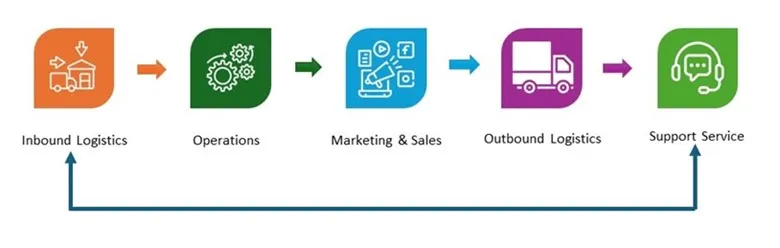
The image illustrates a typical value chain analysis, highlighting the sequential flow of activities that add value to a product or service. It begins with Inbound Logistics, where raw materials and inputs are received and stored. This is followed by Operations, where these inputs are transformed into final products through various production processes. Next comes Marketing & Sales, which involves promoting and selling the products to target customers. Outbound Logistics ensures that finished goods are efficiently distributed to customers. Finally, Support Service provides after-sales support to maintain customer satisfaction and loyalty. Together, these interconnected stages help businesses optimize efficiency, enhance value delivery, and achieve competitive advantage. Thus, the COVID-19 pandemic had a positive impact on the market.
Throughout the COVID-19 pandemic, the online art market grew rapidly. Most people used it for the first time. The lockdowns had shut down the galleries and auction houses all over the globe, online art opened new ways for art lovers and collectors. This shift moved online auctions to the buyers through the apps and websites. The pandemic helped online art sellers to reach a wider audience and bought new customers also.
Based on end-user, the online art market is characterized into domestic customers and foreign customers. The foreign customers segment procured 34% revenue share in the online art market in 2024. The foreign customers segment is very crucial for the market because it facilitates the art of reaching a wider audience and spreads out too many parts of the world. Due to the digital platforms and Non-Fungible Token (NFT) marketplaces. This makes selling and sells art online internationally.
| Category | Details |
|---|---|
| Use Case Title | Confidential |
| Date | 2025 |
| Entities Involved | Confidential |
| Objective | Facilitate the sale and delivery of AI-generated and traditional digital artworks to global collectors via NFT platforms and physical exports. |
| Context and Background | Foreign art buyers are increasingly drawn to unique, story-driven digital artworks from international creators. Online marketplaces are now enabling seamless cross-border trade by integrating payment, blockchain, and logistics infrastructure. |
| Description | Etsy and Makers Place onboarded thousands of non-Western artists and embedded localized pricing for foreign customers. DHL partnered to provide framed and insured international deliveries. Meanwhile, Binance NFT launched a dedicated "Global Voices" collection to promote artists from Southeast Asia and Africa to European and North American collectors. All art pieces included dual digital and physical format options. |
| Key Capabilities Deployed |
|
| Regions Covered |
|
| Benefits |
|
| Source | Confidential |
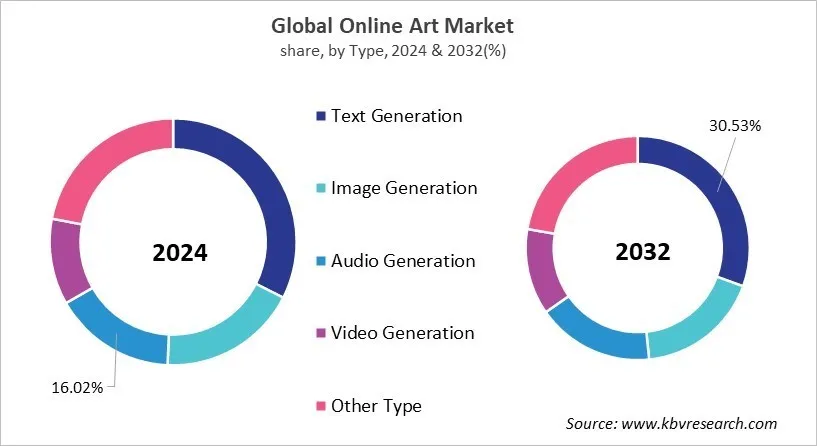
Based on type, the online art market is classified into text generation, image generation, audio generation, video generation, and others. The image generation segment recorded 18% revenue share in the online art market in 2024. The image generation part is very vital in the way people create visual art online. In current scenario, there are many smart tools that generate drawings, art pieces, and digital paintings by text prompts through using AI. These tools are used by many designers, advertisers, and creators to make original art fastly.
Free Valuable Insights: Global Online Art Market Market size to reach USD 16.27 Billion by 2032
Region-wise, the online art market is analyzed across North America, Europe, Asia Pacific, and LAMEA. The North America segment recorded 37% largest revenue share in the online art market in 2024. Due to advanced digital systems, a big art investment culture, and a huge number of e-commerce users, North America has the largest market share of the online art market. The US is the major leader in digital art and consists of many collectors, galleries, and high usage of online methods used by artists to sell their product.
| Report Attribute | Details |
|---|---|
| Market size value in 2024 | USD 10.25 Billion |
| Market size forecast in 2032 | USD 16.27 Billion |
| Base Year | 2024 |
| Historical Period | 2021 to 2023 |
| Forecast Period | 2025 to 2032 |
| Revenue Growth Rate | CAGR of 6.1% from 2025 to 2032 |
| Number of Pages | 254 |
| Number of Tables | 278 |
| Report coverage | Market Trends, Revenue Estimation and Forecast, Segmentation Analysis, Regional and Country Breakdown, Porter’s 5 Forces Analysis, Company Profiling, Companies Strategic Developments, SWOT Analysis, Winning Imperatives |
| Segments covered | End-user, Type, Region |
| Country scope |
|
| Companies Included | Etsy, Inc., Society6, LLC (LEAF'S GROUP Inc.), Amazon.com, Inc., ArtWeb LLC, Saatchi Online, Inc. (LEAF'S GROUP Inc.), eBay, Inc., ArtPal, Art.sy, Inc. (Artsy), Minted LLC, and Singulart |
By End-user
By Type
By Geography
This Market size is expected to reach $16.27 billion by 2032.
Digitization and Technological Advancements are driving the Market in coming years, however, Lack of Tangibility and Physical Inspection restraints the growth of the Market.
Etsy, Inc., Society6, LLC (LEAF'S GROUP Inc.), Amazon.com, Inc., ArtWeb LLC, Saatchi Online, Inc. (LEAF'S GROUP Inc.), eBay, Inc., ArtPal, Art.sy, Inc. (Artsy), Minted LLC, and Singulart
The expected CAGR of this Market is 6.1% from 2023 to 2032.
The Domestic Customers segment led the maximum revenue in the Market by End-user in 2024, thereby, achieving a market value of $10.46 billion by 2032.
The North America region dominated the Market by Region in 2024, thereby, achieving a market value of $5.83 billion by 2032.
Our team of dedicated experts can provide you with attractive expansion opportunities for your business.







 Unique Offerings