“Global Offshore Structural Analysis Software Market to reach a market value of USD 1.55 Billion by 2032 growing at a CAGR of 8.6%”
The Global Offshore Structural Analysis Software Market size is expected to reach USD 1.55 billion by 2032, rising at a market growth of 8.6% CAGR during the forecast period.
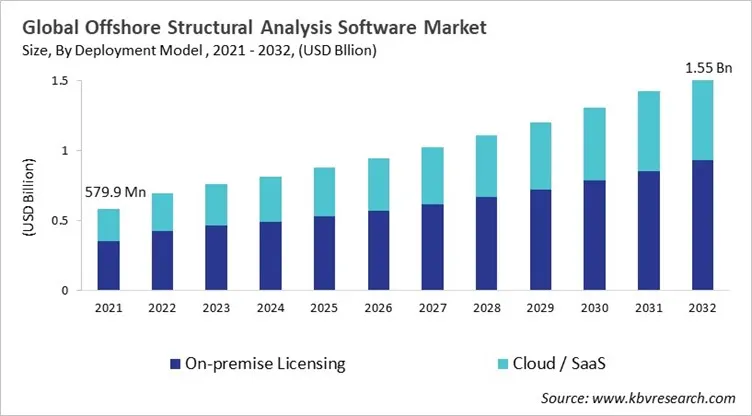
The offshore structural analysis software market came into the existence in 1960s with initial limited uses for marine and offshore platforms, like Sesam, developed in 1965. The growth of oil and gas exploration in the 1970s to 1980s, specifically in North Sea surged the demand for the advance tools that are capable of simulating stress from wind, waves, and currents on highly complex structures like jackets and floating rigs. Over the course of 1990s and 2000s, software had transformed into combined suites covering corrosion, fatigue, hydrodynamics, and mooring analysis, facilitating not only design but also help in safety. Key players such as Bentley and DNV optimized their platforms to meet regulatory frameworks and ensure adherence, with Bentley expanded its offshore capabilities through the acquisition of SACS in 2011.
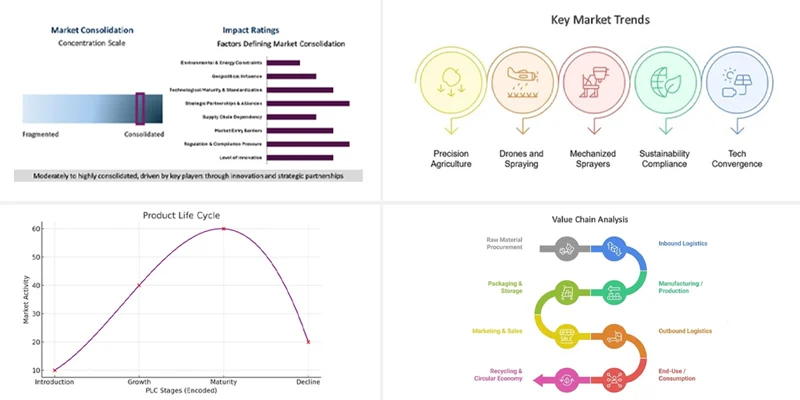
Furthermore, offshore renewable energy, especially wind, has changed the industry a lot in the last few years. New tools have been made available, such as aero-hydro-servo dynamics, turbine fatigue assessment, and floating wind analysis. To improve efficiency and lower engineering costs, vendors are using digital twin technology, cloud computing, and CAD system interoperability more and more. The main trends in the market are a shift toward renewable energy, support for aging assets throughout their lives, and better interoperability. Competition is still mostly between established companies like DNV and Bentley, whose credibility is based on their compliance and technical history. Smaller companies are finding their own niches by offering faster workflows, easier-to-use interfaces, and specialized modules for new areas like floating wind.
The COVID-19 pandemic caused a lot of problems in the offshore structural analysis software market. This was mostly because the oil and gas industry was doing poorly, which caused projects to be delayed, canceled, and exploration budgets to be cut. This directly lowered the need for new software, and many companies put off renewing their licenses and used old tools instead. Remote work problems made it even harder to work together and slowed down complicated engineering workflows. Also, training programs that were interrupted slowed down the use of advanced tools. Supply chain problems and changing priorities also hurt offshore wind projects, which hurt short-term software demand. Software companies' sales fell, which slowed down the development of new products and features. Even big companies were more interested in keeping their customers than in growing, which caused the market to stop for a while. Thus, the COVID -19 pandemic had a Negative impact on the market.

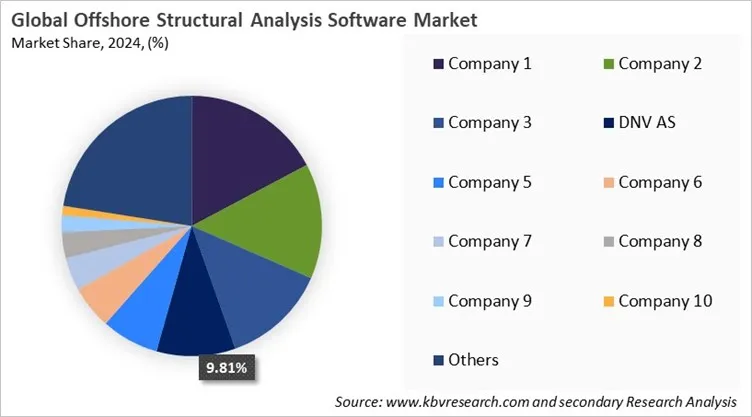
The leading players in the market are competing with diverse innovative offerings to remain competitive in the market. The above illustration shows the percentage of revenue shared by some of the leading companies in the market. The leading players of the market are adopting various strategies in order to cater demand coming from the different industries. The key developmental strategies in the market are Acquisitions, and Partnerships & Collaborations.
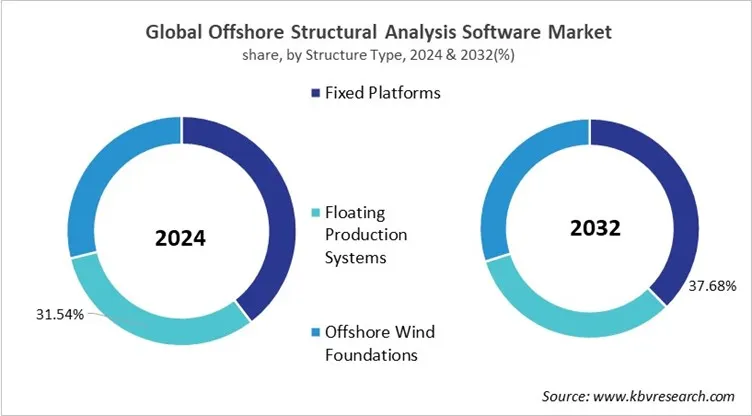
Based on Structure Type, the Offshore Structural Analysis Software Market is segmented into Fixed Platforms, Floating Production Systems, and Offshore Wind Foundations. The Floating Production Systems segment witnessed 32% revenue share in the market in 2024. Floating production systems form another critical area in the offshore structural analysis software market, given their importance in deepwater and ultra-deepwater oil and gas development. These systems include floating production storage and offloading units, semi-submersibles, and tension-leg platforms, all of which require highly specialized analysis due to their dynamic interaction with waves, currents, and mooring systems. Structural analysis software enables engineers to model hydrodynamic behavior, fatigue loading, and station-keeping performance under extreme conditions.
Based on Component, the Offshore Structural Analysis Software Market is segmented into Finite-Element Solvers, Integrated Suites, Hydrodynamic Modules, and Coupled Aero-Hydro-Servo Solvers. The Integrated Suites segment witnessed 33% revenue share in the market in 2024. Integrated suites represent another significant component of the offshore structural analysis software market, combining multiple specialized tools into a single platform. These suites typically bring together finite-element solvers, hydrodynamic modules, fatigue analysis, and code compliance checks, offering end-to-end support for the design, analysis, and lifecycle management of offshore structures. The appeal of integrated suites lies in their ability to streamline workflows, reduce the need for data transfer between separate applications, and minimize modeling errors.
Free Valuable Insights: Global Offshore Structural Analysis Software Market size to reach USD 1.55 Billion by 2032
Region-wise, the Offshore Structural Analysis Software Market is analyzed across North America, Europe, Asia Pacific, and LAMEA. The Europe segment recorded 32% revenue share in the market in 2024. North America and Europe are the most established markets for offshore structural analysis software. This is because of early offshore oil and gas exploration and strict rules and regulations. Advanced offshore engineering skills, a lot of money spent on digital technologies, and more offshore wind projects being built, especially along the U.S. East Coast, are all good things for North America, especially the U.S. and Canada. Europe is still a world leader because of its long history of oil and gas production in the North Sea and its aggressive push into offshore renewable energy sources. Countries like the UK, Norway, Denmark, and Germany are leading the way in offshore wind. This increases the need for advanced software that can handle floating wind platforms, lifecycle analysis, and digital twin integration. The presence of major software companies and classification societies in this area makes adoption even more likely, making sure that international safety and environmental standards are met.
The market is growing quickly in Asia-Pacific and LAMEA, mostly because of new economies and energy transition programs. China, Japan, South Korea, and Australia are leading the way in Asia-Pacific's investment in offshore wind projects and the expansion of offshore oil and gas capabilities. This creates a lot of chances for structural analysis software to be used. The area's focus on floating wind farms and deep-water exploration makes it a key growth center for new, all-in-one analysis solutions. At the same time, Brazil, Saudi Arabia, the UAE, and South Africa are building offshore energy infrastructure to meet rising demand and diversify their energy sources. The oil fields in Brazil that are below the salt and the offshore expansion in the Middle East are two big reasons why software demand is going up. In both regions, more money is going into renewable projects and the need to manage offshore assets over their entire life cycle are expected to keep people using advanced analysis platforms.
| Report Attribute | Details |
|---|---|
| Market size value in 2025 | USD 875.7 Million |
| Market size forecast in 2032 | USD 1.55 Billion |
| Base Year | 2024 |
| Historical Period | 2021 to 2023 |
| Forecast Period | 2025 to 2032 |
| Revenue Growth Rate | CAGR of 8.6% from 2025 to 2032 |
| Number of Pages | 561 |
| Number of Tables | 451 |
| Report coverage | Market Trends, Revenue Estimation and Forecast, Segmentation Analysis, Regional and Country Breakdown, Market Share Analysis, Porter’s 5 Forces Analysis, Company Profiling, Companies Strategic Developments, SWOT Analysis, Winning Imperatives |
| Segments covered | Deployment Model, Structure Type, Component, End-use Industry, Region |
| Country scope |
|
| Companies Included | Bentley Systems, Inc., ANSYS, Inc., Siemens AG, DNV AS, Autodesk, Inc., Ramboll Group A/S, John Wood Group PLC, Dlubal Software GmbH, Stewart Technology Associates and BakerRisk |
By Deployment Model
By Structure Type
By Component
By End-use Industry
By Geography
This Market size is expected to reach USD 1.55 Billion by 2032.
The Offshore structural analysis softwaret market is projected to grow at a CAGR of 8.6% between 2025 and 2032.
Rising offshore oil and gas exploration activities, along with the growth of offshore renewable energy projects, are driving the expansion of offshore infrastructure and technologies.
Bentley Systems, Inc., ANSYS, Inc., Siemens AG, DNV AS, Autodesk, Inc., Ramboll Group A/S, John Wood Group PLC, Dlubal Software GmbH, Stewart Technology Associates and BakerRisk
The Finite-Element Solvers segment is generating the maximum revenue in the Global Offshore Structural Analysis Software Market by Component in 2024; thereby, achieving a market value of $524.1 million by 2032.
The Europe region dominated the Global Offshore Structural Analysis Software Market by Region in 2024, and would continue to be a dominant market till 2032; thereby, achieving a market value of $474 Million by 2032.
Our team of dedicated experts can provide you with attractive expansion opportunities for your business.











 Unique Offerings