North America Power Electronic Testing Market Size, Share & Industry Analysis Report By Provision Type (Test Instruments & Equipment, and Professional Testing Services), By Device Type (Individual Power Provision Types, Multi-Device Modules, and Power Management ICs), By End Use, By Country and Growth Forecast, 2025 - 2032
Report Id: KBV-28529Publication Date: July-2025Number of Pages: 166Report Format: PDF + Excel
Special Offering:
Industry Insights | Market Trends Highest number of Tables | 24/7 Analyst Support
The North America Power Electronic Testing Market would witness market growth of 7.6% CAGR during the forecast period (2025-2032).
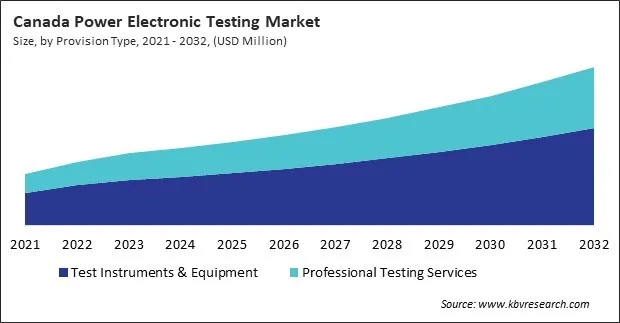
The US market dominated the North America Power Electronic Testing Market by Country in 2024, and would continue to be a dominant market till 2032; thereby, achieving a market value of $2,046.7 million by 2032. The Canada market is experiencing a CAGR of 9.6% during (2025 - 2032). Additionally, The Mexico market would exhibit a CAGR of 8.5% during (2025 - 2032).
North America is the leader in the global power electronic testing market. This is because it has a strong industrial base, a fast-growing market for electric vehicles (EVs), a lot of renewable energy integration, and a very mature electronics and semiconductor ecosystem. The area, which is mostly made up of the US and Canada, is home to important makers of power electronic devices and systems, such as inverters, converters, power modules, and high-voltage parts that are used in the automotive, aerospace, industrial automation, and energy sectors. As increased attention is paid to electrification, efficiency, and modernizing the grid, the need for advanced power electronic testing solutions in North America keeps growing. This includes everything from testing individual components to making sure the whole system is compliant.
Growth Fueled by Electric Vehicles (EVs) and Energy Needs
Charging EV and Parts Are Getting More Powerful: Companies are making stronger chargers and motors as electric cars become more popular. To make sure these parts work safely, they need testing equipment that is stronger and smarter.
Move to higher voltages (400V–800V+): To charge batteries faster and make them work better, car makers are switching to systems with higher voltages. This change means that test labs need new tools to deal with more electrical loads.
Testing needs are going up because of renewable energy: there are more wind farms and solar panels being built. To connect safely to the electric grid, these systems need batteries and inverters that have been carefully tested.
Testing is changing because of new technology
Chips that are smarter need testing that is smarter: Silicon carbide (SiC) and gallium nitride (GaN) are new materials that make electronics faster and more efficient, but they need special tests because they work differently than older parts.
Test systems that can run on their own and are modular Are Getting More Common: Test setups are now often easy to use and controlled by software. This makes it easier and faster to test different parts without having to set everything up again.
Using Digital Twins and Real-Time Data: Labs test things virtually with digital copies of devices (digital twins) and live data tracking. This helps find problems early and make devices work better.
Country Outlook
The United States is the world leader in power electronics innovation, production, and testing. This is because it has a strong manufacturing ecosystem, a lot of research and development infrastructure, and tough goals for reducing carbon emissions. The U.S. market for power electronic testing is doing well because the country is moving toward renewable energy, electric transportation, modernizing the military, and making semiconductors self-sufficient. These changes are driving up the need for testing systems that are fast, automated, and meet industry standards in schools, businesses, and government buildings.
Canada: Power Testing Driven by Clean Energy and Electrification
Clean Energy Push Boosts Testing Demand
Green Power Needs Smart Testing: Canada is growing its solar and wind energy, adding to its strong hydro power. These systems need accurate testing to stay safe and efficient.
EV Growth and Industrial Decarbonization: With more electric vehicles and clean factories, there's a bigger need to test power electronics like chargers and converters.
Stricter Energy Standards: To meet national energy rules, companies and labs are investing in better test equipment that checks for safety and performance.
As Canada uses more solar, wind, and electric vehicles, the need for accurate power electronics testing is growing because of stricter energy standards and the push for cleaner, more efficient industrial operations.
Testing Expands Across Key Sectors
Universities and Labs Are Innovating: Research centers are creating new test methods for the latest power technologies.
Utility Operators Need Reliable Grids: Power companies use testing tools to make sure the grid stays stable as more renewables are added.
OEMs Push for Efficiency: Device makers want to test faster and more accurately to meet energy and cost targets.
Power electronics testing in Canada is growing across universities, utilities, and OEMs, supporting innovation, grid stability, and efficient product development to meet the rising demands of renewable energy and smart systems.
Mexico: Power Electronics Testing Fuels Modern Manufacturing
Growing Demand from Manufacturing and Energy
A Hub for Factories and Exports: Mexico’s rise as a production center means more devices like inverters and motors must be tested before shipment.
Renewables Need Reliable Equipment: With more solar and wind projects, there's a greater need for testing to ensure the energy systems work properly.
Focus on Safe and Efficient Systems: Modern energy and industrial setups require precise testing to meet safety and performance goals.
Mexico's growing manufacturing base and renewable energy projects are increasing the need for power electronics testing to make sure that devices like inverters and motors meet safety, efficiency, and export-ready performance standards.
Testing Infrastructure Keeps Expanding
Energy Grid Upgrades in Progress: Mexico is upgrading its power systems, and testing plays a big role in making sure everything works together smoothly.
Automotive Sector Drives Growth: As more EV parts are made in Mexico, companies need tools to test batteries, inverters, and chargers.
Industrial Applications Require Validation: From factories to power plants, devices are tested to meet global standards before they go live.
Mexico’s expanding testing infrastructure supports power grid upgrades, growing EV production, and industrial validation needs, ensuring all components meet global standards for safety, reliability, and efficient performance.
Based on Provision Type, the market is segmented into Test Instruments & Equipment, and Professional Testing Services. Based on Device Type, the market is segmented into Individual Power Provision Types, Multi-Device Modules, and Power Management ICs. Based on End Use, the market is segmented into Automotive & Mobility Solutions, Industrial Automation & Machinery, Information & Communication Technology (ICT), Consumer Electronics & Devices, Renewable Power & Utility Networks, Aerospace & Defense Applications, and Other End Use. Based on countries, the market is segmented into U.S., Mexico, Canada, and Rest of North America.
North America Power Electronic Testing Market - Get online access to the report




 Unique Offerings