The North America Loyalty Management Market is expected to reach $5.28 billion by 2027 and would witness market growth of 9.7% CAGR during the forecast period (2025-2032).
The US market dominated the North America Loyalty Management Market by Country in 2024, and would continue to be a dominant market till 2032; thereby, achieving a market value of $6,159.6 million by 2032. The Canada market is experiencing a CAGR of 11.9% during (2025 - 2032). Additionally, The Mexico market would exhibit a CAGR of 11.2% during (2025 - 2032). The US and Canada led the North America Loyalty Management Market by Country with a market share of 76.2% and 11.9% in 2024.
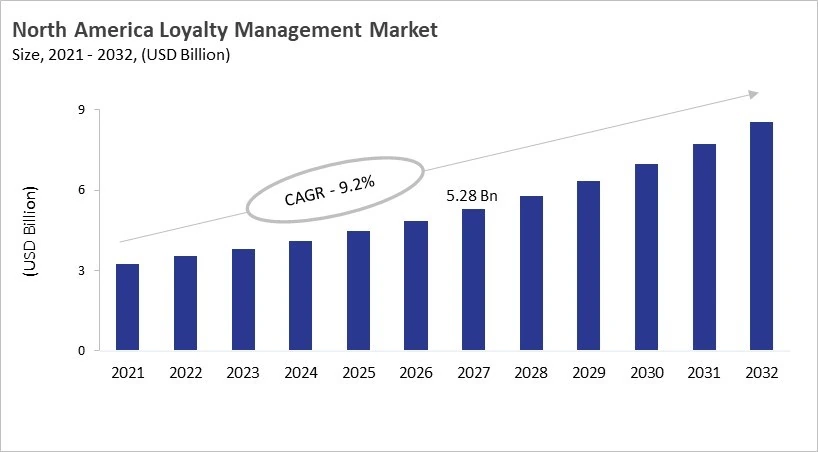
Loyalty management in North America has gone from simple punch-card rewards to very advanced, data-driven systems that keep customers engaged. Structured rewards, such as frequent-flyer miles, tiered benefits, and cashback systems, became more common in the US and Canada as major industries, including retail, travel, hospitality, and financial services, began to adopt them. These programs evolved from transactional models for a single brand to integrated platforms that utilize CRM systems, digital channels, and advanced analytics over time. With the rise of omnichannel engagement, mobile-first platforms, and cloud-based solutions, it is now easy to interact with both online and in-store environments. This change shows that customers are expecting more personalization, convenience, and rewards that are available right away.
Advanced personalization, digital omnichannel integration, and ecosystem-based reward structures are what make up the North American loyalty management landscape today. More and more, businesses use AI and predictive analytics to divide customers into groups, predict what they will do, and give them personalized rewards that encourage long-term emotional engagement instead of just transactional loyalty. Programs that are based on partnerships and coalitions in retail, travel, and financial services add even more value and make it harder to switch. The competition is still very high, and the top companies are setting themselves apart by using more advanced data, offering experiential rewards, and having flexible redemption models. These factors make loyalty management a key part of modern strategies for improving customer experience and making brands stand out from the competition.
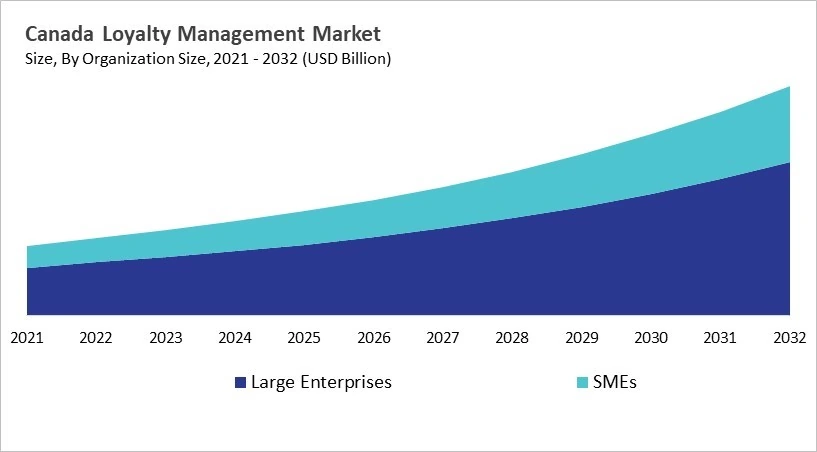
Based on Organization Size, the market is segmented into Large Enterprises and SMEs. The Large Enterprises market segment dominated the Canada Loyalty Management Market by Organization Size is expected to grow at a CAGR of 11.6 % during the forecast period thereby continuing its dominance until 2032. Also, The SMEs market is anticipated to grow as a CAGR of 12.6 % during the forecast period during (2025 - 2032).
Based on Vertical, the market is segmented into Retail & Consumer Goods, BFSI, IT & Telecommunication, Hospitality, Transportation, Media & Entertainment and Other Verticals. Among various US Loyalty Management Market by Vertical; The Retail & Consumer Goods market achieved a market size of USD $970.1 Million in 2024 and is expected to grow at a CAGR of 7.4 % during the forecast period. The BFSI market is predicted to experience a CAGR of 8.6% throughout the forecast period from (2025 - 2032).
Free Valuable Insights: The Global Loyalty Management Market will hit USD 25.70 billion by 2032, at a CAGR of 10.3%
The loyalty management market in the United States is one of the most developed and largest in the world. This is because the country has a large consumer economy and a well-developed digital commerce ecosystem. Major stores like Walmart and Target, as well as airlines like Delta Air Lines and American Airlines, have led the way in the widespread use of points-based, tiered, and digitally integrated loyalty programs in retail, travel, banking, and hospitality. Customers want more personalized experiences, mobile-first interactions, and real-time rewards, which has sped up the integration of loyalty platforms with omnichannel systems and AI-driven analytics. Even though enrollment numbers are very high, active participation is still competitive because there are too many programs and memberships that overlap. So, businesses keep coming up with new ideas through partnerships, coalition models, and advanced data strategies to get people more involved while still keeping privacy and security standards.

By Organization Size
By Deployment
By Component
By Vertical
By Country
Our team of dedicated experts can provide you with attractive expansion opportunities for your business.




 Unique Offerings