“Global Menstrual Health Apps Market to reach a market value of USD 6.90 Billion by 2032 growing at a CAGR of 19.9%”
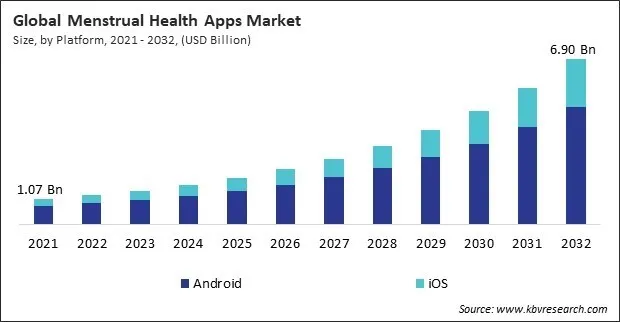
The Global Menstrual Health Apps Market size is expected to reach $6.90 billion by 2032, rising at a market growth of 19.9% CAGR during the forecast period.
Android has emerged as a dominant platform in the global menstrual health apps market due to its widespread usage, affordability, and open-source nature. With a significant share of the global smartphone market, particularly in emerging economies, Android provides an inclusive digital environment that supports women's health management through mobile health applications. Menstrual health apps on Android offer features like cycle tracking, symptom logging, ovulation prediction, reminders, and personalized health insights.
The COVID-19 pandemic significantly accelerated the adoption of digital health technologies, and menstrual health apps were among the primary beneficiaries. With limited access to in-person healthcare services and increasing awareness of self-care, many individuals turned to digital platforms to manage their reproductive health. Menstrual tracking apps, in particular, experienced a surge in downloads as they provided users with remote, private, and convenient tools for tracking cycles, symptoms, and overall wellness. During the pandemic, more users across diverse demographics—including younger adolescents and individuals in rural or underserved regions—began using menstrual health apps. Thus, the COVID-19 pandemic had a positive impact on the market.

The past decade has witnessed a transformative shift in how women perceive and manage their reproductive health. Across the globe, particularly in emerging markets and urban areas, there has been a significant rise in awareness about menstrual hygiene, reproductive health, and the broader implications of hormonal health. As women become more informed, there is an increasing tendency toward proactive health management, especially through digital tools that offer real-time insights, reminders, and tracking features. In conclusion, as women take greater control of their health with a proactive and informed mindset, menstrual health apps are increasingly viewed not just as utilities, but as essential tools in maintaining hormonal and reproductive wellness.
Additionally, The evolution of digital health tools has been catalyzed by significant technological breakthroughs, particularly in the realms of mobile computing, artificial intelligence (AI), and data analytics. Menstrual health apps have capitalized on these advancements to offer personalized, predictive, and increasingly accurate user experiences. Instead of simply tracking dates, modern apps now analyze patterns across multiple cycles, track mood and symptom variability, and even predict fertility windows with impressive precision. In conclusion, the fusion of AI, analytics, and digital integrations has transformed menstrual health apps from simple trackers into intelligent wellness companions, greatly boosting their market appeal.
One of the most pressing restraints for the menstrual health apps market is the concern around data privacy and user security. These apps typically collect extremely sensitive personal information, ranging from menstrual cycles and fertility windows to sexual activity, mood, medication, and even lifestyle habits. For many users, especially in regions with weak privacy legislation or cultural sensitivities around reproductive health, the risk of data misuse is a significant deterrent to adoption. In conclusion, as long as concerns around digital surveillance, data commodification, and regulatory uncertainty persist, privacy and security will remain a critical obstacle to broader user adoption and market trust in menstrual health apps.
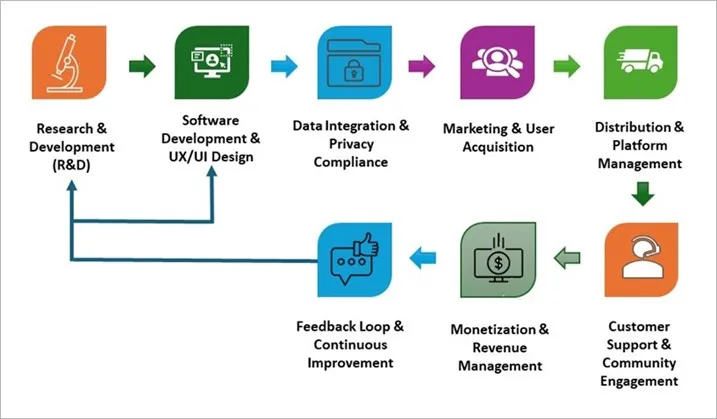
The value chain of the Menstrual Health Apps Market begins with Research & Development (R&D) to innovate accurate and reliable health tracking technologies. This is followed by software development and UX/UI design, focusing on creating user-friendly, intuitive apps. Data integration and privacy compliance ensure secure handling of sensitive user data. Marketing and user acquisition drive awareness and downloads, while distribution and platform management handle app availability across platforms. Post-launch, customer support and community engagement foster trust and user retention. Monetization and revenue management sustain the business, with a feedback loop and continuous improvement process feeding insights back into R&D and development for ongoing optimization.
Based on platform, the menstrual health apps market is characterized into Android and iOS. The iOS segment procured 28% revenue share in the menstrual health apps market in 2024. The iOS platform, while catering to a comparatively smaller user base, is known for its premium app ecosystem and high user engagement. Menstrual health apps on iOS often emphasize sleek design, robust privacy features, and seamless integration with other Apple health services.
| Category | Details |
|---|---|
| Use Case Title | Confidential |
| Date | 2025 |
| Entities Involved | Confidential |
| Objective | Provide integrated hormonal, lifestyle, and fertility data insights to users via iOS-exclusive HealthKit APIs. |
| Context and Background | Apple’s iOS platform is dominant in developed markets and among users who actively engage in health and wellness tracking through wearables and apps. This creates an opportunity to build high-value, privacy-centric digital health ecosystems that combine menstrual data with broader lifestyle metrics for research and real-time insights. |
| Description | Clue collaborated with Apple and Mount Sinai to enhance its iOS app with deep integrations into Apple’s HealthKit and ResearchKit frameworks. The upgraded solution allowed users to link menstrual symptoms, ovulation cycles, sleep data, and fitness logs into a cohesive dashboard. Using data from Apple Watch and other sensors, the app could detect early signs of hormonal imbalance or fertility windows, and notify users with predictive alerts. Clue also supported secure iCloud storage and enabled anonymized data sharing with research institutions to improve fertility studies. The integration delivered a seamless user experience for individuals seeking a clinically-informed view of their reproductive health. |
| Key Capabilities Deployed |
|
| Regions Covered |
|
| Benefits |
|
| Source | Confidential |
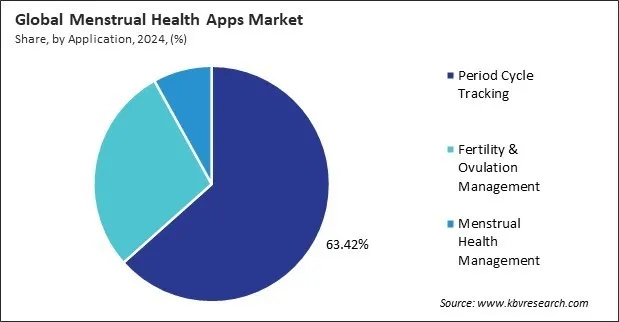
On the basis of application, the menstrual health apps market is classified into period cycle tracking, fertility & ovulation management, and menstrual health management. The fertility & ovulation management segment recorded 29% revenue share in the menstrual health apps market in 2024. The fertility and ovulation management application serves a more targeted group of users, primarily those planning pregnancies or looking to avoid conception naturally. These apps utilize menstrual data, body temperature, hormonal cues, and ovulation prediction algorithms to guide users on their most fertile days.
Free Valuable Insights: Global Menstrual Health Apps Market size to reach USD 6.90 Billion by 2032
Region-wise, the menstrual health apps market is analyzed across North America, Europe, Asia Pacific, and LAMEA. The North America segment recorded 37% revenue share in the menstrual health apps market in 2024. North America represents a significant region in the menstrual health apps market, driven by high smartphone penetration, widespread digital literacy, and increasing awareness of women’s health. The region benefits from a strong presence of established health tech companies and startups that continually innovate in the femtech space.
| Report Attribute | Details |
|---|---|
| Market size value in 2024 | USD 1.64 Billion |
| Market size forecast in 2032 | USD 6.90 Billion |
| Base Year | 2024 |
| Historical Period | 2021 to 2023 |
| Forecast Period | 2025 to 2032 |
| Revenue Growth Rate | CAGR of 19.9% from 2025 to 2032 |
| Number of Pages | 229 |
| Number of Tables | 256 |
| Report coverage | Market Trends, Revenue Estimation and Forecast, Segmentation Analysis, Regional and Country Breakdown, Porter’s 5 Forces Analysis, Company Profiling, Companies Strategic Developments, SWOT Analysis, Winning Imperatives |
| Segments covered | Platform, Application, Region |
| Country scope |
|
| Companies Included | Flo Health Inc., Maven Clinic Co., Willow Blossom Holdco Limited (ELVIE), NaturalCycles Nordic AB, Glow, Inc., BioWink GmbH (Clue), Awesome Health Inc. (Ava App), Feminina Group, Inc. (Gennev), Joii Limited, and Fitbit, Inc. (Google LLC) |
By Platform
By Application
By Geography
This Market size is expected to reach $6.90 billion by 2032.
Increasing Health Awareness and Proactive Self-Care Among Women are driving the Market in coming years, however, Data Privacy and Security Concerns restraints the growth of the Market.
Flo Health Inc., Maven Clinic Co., Willow Blossom Holdco Limited (ELVIE), NaturalCycles Nordic AB, Glow, Inc., BioWink GmbH (Clue), Awesome Health Inc. (Ava App), Feminina Group, Inc. (Gennev), Joii Limited, and Fitbit, Inc. (Google LLC)
The expected CAGR of this Market is 19.9% from 2023 to 2032.
The Android segment led the maximum revenue in the Market by Platform in 2024, thereby, achieving a market value of $4.9 billion by 2032.
The North America region dominated the Market by Region in 2024, and would continue to be a dominant market till 2032; thereby, achieving a market value of $2.4 billion by 2032.
Our team of dedicated experts can provide you with attractive expansion opportunities for your business.





 Unique Offerings