“Global Medical Disinfectant Wipes Market to reach a market value of USD 10.91 Billion by 2032 growing at a CAGR of 8.1%”
The Global Medical Disinfectant Wipes Market size is expected to reach $10.91 billion by 2032, rising at a market growth of 8.1% CAGR during the forecast period.
In the medical disinfectant wipes market, the B2B (business-to-business) distribution channel plays a pivotal role in bridging manufacturers with institutional buyers such as hospitals, clinics, diagnostic laboratories, nursing homes, and pharmaceutical companies. This channel is characterized by high-volume, contract-based transactions that ensure consistent supply of hygiene-critical products for healthcare environments.
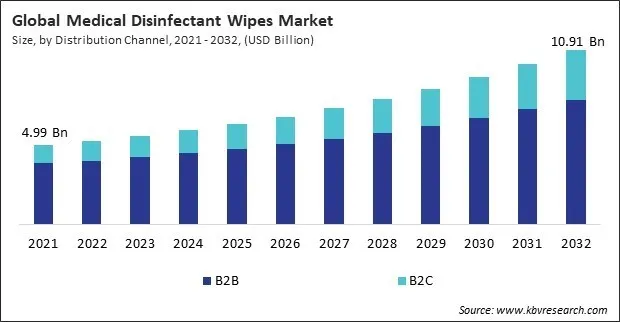
During the COVID-19 pandemic, public and institutional awareness regarding hygiene and sanitation significantly increased. Individuals, businesses, and healthcare providers prioritized surface cleanliness as a key measure to prevent the transmission of the virus. As a result, medical disinfection wipes experienced a sharp rise in demand across both clinical and non-clinical settings. Hospitals, clinics, diagnostic labs, and even households integrated disinfection wipes into their daily hygiene routines, marking a notable uptick in consumption volumes. The pandemic served as a catalyst for innovation in the medical wipes sector. Manufacturers responded to the surging demand by accelerating the development of more effective, skin-safe, and virus-killing formulations. Thus, the COVID-19 pandemic had a positive impact on the market.
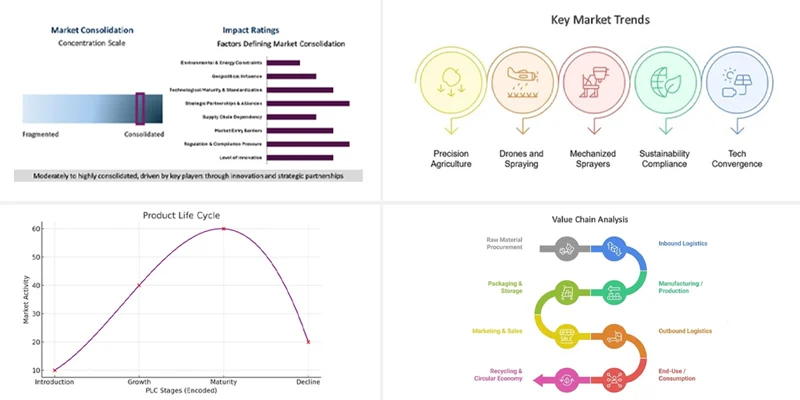

Healthcare-associated infections (HAIs) have become a global concern across clinical settings—from hospitals and ambulatory surgical centers to long-term care facilities and outpatient clinics. HAIs, including bloodstream infections, pneumonia, urinary tract infections, and surgical site infections, not only elevate patient morbidity and mortality but also impose significant financial burdens on healthcare systems. A central focus in addressing HAIs is environmental hygiene, particularly the disinfection of high-touch surfaces such as bed rails, infusion pumps, doorknobs, and medical equipment. In conclusion, the unrelenting threat posed by HAIs—combined with regulatory pressure and heightened awareness post-COVID—makes surface disinfection a top priority.
Additionally, The global surge in surgical volumes, driven by population aging, chronic disease prevalence, and elective surgery demand, has had a significant cascading effect on disinfection practices. Each surgical procedure, whether major or minor, mandates rigorous sterilization of environments and equipment before, during, and after use. Medical disinfection wipes have become indispensable for maintaining operating room hygiene and minimizing surgical site infection (SSI) risk. To conclude, the growing volume of surgeries and the decentralization of healthcare services toward outpatient models amplify the need for quick, reliable disinfection.
The medical disinfection wipes market operates in an environment of high regulatory scrutiny, especially in developed regions such as North America, Europe, and parts of Asia-Pacific. These regions impose strict standards related to the safety, efficacy, and environmental impact of disinfectant products. Medical-grade wipes are used in highly sensitive areas such as operating rooms, intensive care units, and patient wards—any lapse in efficacy or safety can have serious consequences for patient health. In conclusion, the intricate and evolving landscape of global regulatory standards acts as a major bottleneck in the medical disinfection wipes market.
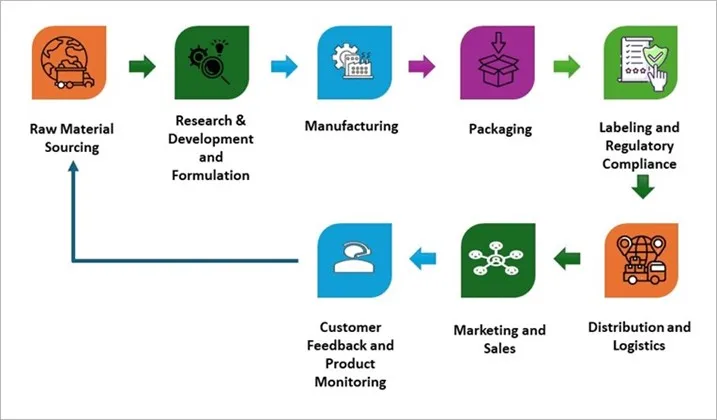
The value chain of the Medical Disinfectant Wipes Market starts with raw material sourcing, ensuring high-quality, safe materials for production. This is followed by research, development, and formulation, where effective disinfectant solutions are developed. The manufacturing phase produces the final wipes, which are then packaged for protection and convenience. Labeling and regulatory compliance ensures the products meet health standards and regulations. Products move through distribution and logistics to reach markets, supported by marketing and sales activities. Finally, customer feedback and product monitoring provide insights for continuous improvement, feeding back into raw material and formulation adjustments.
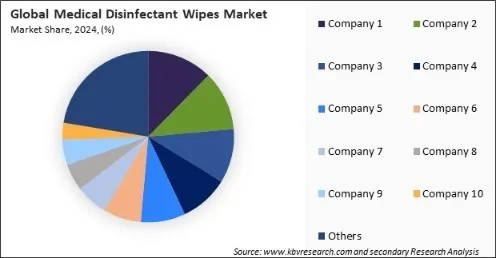
The leading players in the market are competing with diverse innovative offerings to remain competitive in the market. The above illustration shows the percentage of revenue shared by some of the leading companies in the market. The leading players of the market are adopting various strategies in order to cater demand coming from the different industries. The key developmental strategies in the market are Acquisitions, and Partnerships & Collaborations.
Based on distribution channel, the medical disinfectant wipes market is characterized into B2B and B2C. The B2C segment procured 25% revenue share in the medical disinfectant wipes market in 2024. The B2C (Business-to-Consumer) segment also holds a notable share of the medical disinfectant wipes market, largely due to increasing consumer awareness about hygiene and infection prevention. Individuals and households have become more proactive in maintaining cleanliness in personal spaces, especially in the wake of public health crises.
| Category | Details |
|---|---|
| Use Case Title | Confidential |
| Date | 2025 |
| Entities Involved | Confidential |
| Objective | Boost retail availability and consumer feedback for improved engagement and stock efficiency |
| Context and Background | High consumer demand post-pandemic; need for responsive retail logistics and brand protection |
| Description | Smart shelf tech and QR-linked feedback used to optimize restocking, marketing, and counterfeit protection |
| Key Capabilities Deployed |
|
| Regions Covered | U.S., U.K., Southeast Asia |
| Benefits |
|
| Source | Confidential |
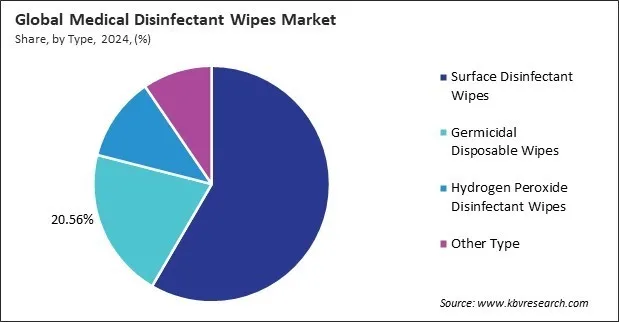
Based on type, the medical disinfectant wipes market is segmented into surface disinfectant wipes, germicidal disposable wipes, hydrogen peroxide disinfectant wipes and others. The germicidal disposable wipes segment acquired 21% revenue share in the medical disinfectant wipes market in 2024. The germicidal disposable wipes segment represents a substantial portion of the market due to their effectiveness in delivering high-level disinfection in a convenient, single-use format. These wipes are specifically designed to kill a wide range of microorganisms, including more resilient pathogens like Mycobacterium tuberculosis and various viruses.
On the basis of application, the medical disinfectant wipes market is segmented into hospitals & clinics, dental clinic, nursing home, and others. The dental clinic segment recorded 23% revenue share in the medical disinfectant wipes market in 2024. The dental clinic segment holds a notable position in the market due to the unique infection control challenges presented by dental procedures. Dental environments involve frequent exposure to saliva, blood, and aerosolized particles, all of which necessitate rigorous surface disinfection between patients.
Free Valuable Insights: Global Medical Disinfectant Wipes Market size to reach USD 10.91 Billion by 2032
Region-wise, the medical disinfectant wipes market is analyzed across North America, Europe, Asia Pacific, and LAMEA. The North America segment witnessed 35% revenue share in the medical disinfectant wipes market in 2024. The North American market region leads the medical disinfectant wipes market supported by a mature healthcare system, well-established hygiene protocols, and a high level of consumer awareness regarding infection control. Hospitals, long-term care facilities, and outpatient centers across the United States and Canada extensively use medical disinfectant wipes to maintain sterile environments and comply with regulatory standards.
| Report Attribute | Details |
|---|---|
| Market size value in 2024 | USD 5.91 Billion |
| Market size forecast in 2032 | USD 10.91 Billion |
| Base Year | 2024 |
| Historical Period | 2021 to 2023 |
| Forecast Period | 2025 to 2032 |
| Revenue Growth Rate | CAGR of 8.1% from 2025 to 2032 |
| Number of Pages | 374 |
| Number of Tables | 470 |
| Report coverage | Market Trends, Revenue Estimation and Forecast, Segmentation Analysis, Regional and Country Breakdown, Market Share Analysis, Porter’s 5 Forces Analysis, Company Profiling, Companies Strategic Developments, SWOT Analysis, Winning Imperatives |
| Segments covered | Distribution Channel, Type, Application, Region |
| Country scope |
|
| Companies Included | Steris PLC, 3M Company, The Clorox Company, Metrex Research, LLC (Envista Holdings Corporation), Reckitt Benckiser Group PLC, PDI Healthcare, Inc., Kimberly-Clark Corporation, Sunshine Global LLC, Maxill, Inc., and Weiman Products, LLC (The Carlyle Group) |
By Distribution Channel
By Type
By Application
By Geography
This Market size is expected to reach $10.91 billion by 2032.
Rising Prevalence Of Healthcare-Associated Infections (Hais) are driving the Market in coming years, however, Stringent Regulatory Compliance And Approval Processes restraints the growth of the Market.
Steris PLC, 3M Company, The Clorox Company, Metrex Research, LLC (Envista Holdings Corporation), Reckitt Benckiser Group PLC, PDI Healthcare, Inc., Kimberly-Clark Corporation, Sunshine Global LLC, Maxill, Inc., and Weiman Products, LLC (The Carlyle Group)
The expected CAGR of this Market is 8.1% from 2023 to 2032.
The Surface Disinfectant Wipes segment led the maximum revenue in the Market by Type in 2024, thereby, achieving a market value of $6.0 billion by 2032.
The North America region dominated the Market by Region in 2024, and would continue to be a dominant market till 2032; thereby, achieving a market value of $3.7 billion by 2032.
Our team of dedicated experts can provide you with attractive expansion opportunities for your business.







 Unique Offerings