“Global Loyalty Management Market to reach a market value of USD 25.70 Billion by 2032 growing at a CAGR of 10.3%”
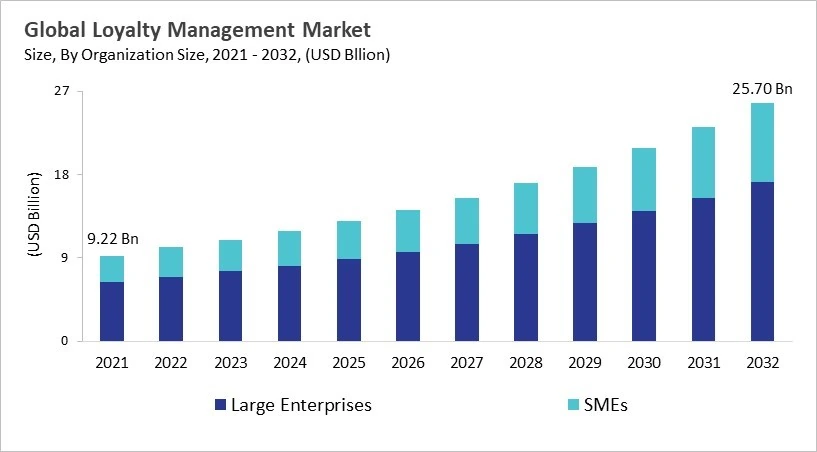
The Global Loyalty Management Market size is estimated at $12.94 billion in 2025 and is expected to reach $25.70 billion by 2032, rising at a market growth of 10.3% CAGR during the forecast period (2025-2032). This growth is based on the fast digital transformation of the retail, BFSI, hospitality, and e-commerce sectors, the growing use of AI-driven personalization, and the rising demand from consumers for reward-based engagement.
Customer loyalty has developed from simple repeat-purchase incentives into a technology-enabled discipline crucial for long-term business growth. Initially, loyalty efforts emphasized basic rewards like punch cards, stamps, and points, majorly supporting repeat transactions. Loyalty programs became integrated into wider customer relationship management strategies, shifting focus from transactions to long-term relationships. The growth of digital technologies further evolved loyalty management, allowing personalization, real-time data tracking, and seamless engagement across mobile, online, and in-store channels. Loyalty management platforms combine analytics, CRM, and omnichannel engagement to propel emotional loyalty using AI and data to deliver tailored experiences and predict customer needs.
Modern loyalty strategies are defined by omnichannel integration, personalization, and experience-driven engagement. Enterprises largely shift from one-size-fits-all rewards to data-driven, personalized offers that align with individual customer preferences. Omnichannel loyalty ensures reward redemption and consistent recognition across all touchpoints, improving convenience and reducing friction. Brands prioritize emotional connections through experiential benefits like events, exclusive access, and partnerships. The competitive landscape for the loyalty management market depends on AI capabilities, advanced analytics, and the ability to create meaningful, emotionally resonant consumer experiences.

The Loyalty Management Market took an insignificant blow during the COVID-19 pandemic, mostly because people spent less money and physical stores in important areas like retail, hospitality, and travel had to close for a short time. Lockdowns and travel restrictions made it much harder to earn and redeem loyalty points. This hurt airlines and hotel chains the most, so they extended the validity of their programs to keep customers. Small and medium-sized businesses had trouble with their finances, which delayed investments and slowed down the adoption of advanced loyalty solutions. Vendors, on the other hand, had longer sales cycles. Even with these problems, the quick move toward digital and mobile-based loyalty programs, which was helped by the growth of e-commerce, helped lessen the losses. As restrictions were lifted, businesses brought back advertising campaigns and ways to get customers involved, which helped the market stabilize and slowly bounce back. Thus, the COVID-19 pandemic had a mild negative impact on the market.
Based on Organization Size, the market is segmented into Large Enterprises and SMEs. The SMEs segment attained 32% revenue share in the loyalty management market in 2024. The SMEs segment held a meaningful presence in the global loyalty management market, supported by the growing recognition of structured loyalty programs as essential tools for customer acquisition and retention. Small and medium-sized enterprises increasingly adopted cost-effective, cloud-based loyalty solutions to improve customer engagement and streamline promotional activities.
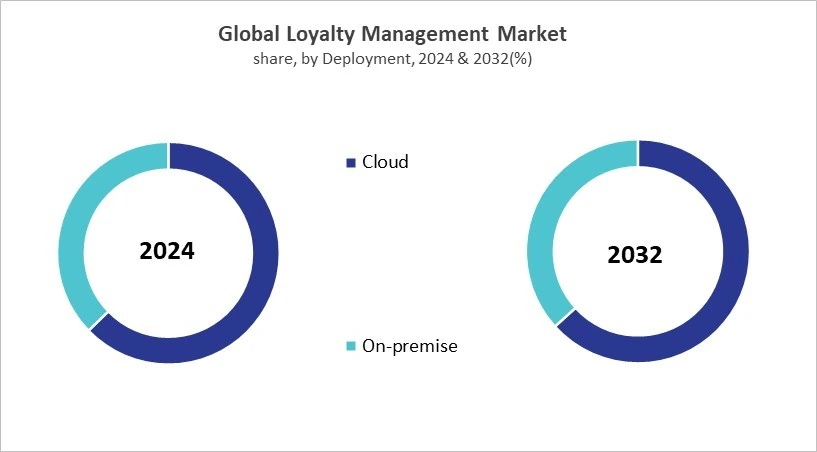
Based on Deployment, the market is segmented into Cloud and On-premise. The on-premise segment recorded 37% revenue share in the loyalty management market in 2024. The on-premise segment maintained a notable presence in the global loyalty management market, supported by organizations prioritizing greater control over data security, customization, and infrastructure management. Enterprises with established IT frameworks opted for on-premise deployments to ensure compliance with internal policies and regulatory requirements.
Free Valuable Insights: Loyalty Management Market Size to reach $25.70 by 2032
Region-wise, the loyalty management market is analyzed across North America, Europe, Asia Pacific, and LAMEA. The North America segment recorded 35% revenue share in the loyalty management market in 2024. The loyalty management market is estimated to experience significant growth in the North America and Europe regions. This is because of increasing consumer spending, advanced digital infrastructure, and widespread adoption across various industries like banking, travel, retail, and telecom. The regional market is further expanding owing to large usage of mobile-based rewards, robust omnichannel ecosystems, and early integration of analytics and AI. Regional consumers commonly participate in multiple loyalty programs and cloud-based platforms. Businesses leverage sophisticated personalization with the aim of retaining customers and enhancing engagement. Also, Europe loyalty management market is expanding, driven by widespread program adoption across Western economies and a strong regulatory focus on data privacy that shapes compliant and transparent loyalty solutions. Regional nations such as Germany, France, and the UK propel demand for coalition loyalty systems tailored to diverse consumer behaviours.
In the Asia Pacific and LAMEA region, the loyalty management market is expected to capture prominent growth in the upcoming years. This is because of mobile commerce, rapid digitalization, and expanding e-commerce ecosystems in the market, where loyalty programs are largely data-driven. Mobile commerce expansion encourages instant reward redemption and app-based loyalty engagement. Moreover, the LAMEA loyalty management market is showcasing positive growth opportunities. This is due to accelerating smartphone penetration, widespread fintech innovations, and regional enterprises adopting loyalty strategies to compete more effectively. Accelerating smartphone and internet usage broadens access to digital loyalty programs.
| Report Attribute | Details |
|---|---|
| Market size value in 2025 | USD 12.94 Billion |
| Market size forecast in 2032 | USD 25.70 Billion |
| Base Year | 2024 |
| Historical period | 2021 to 2023 |
| Forecast Period | 2025 to 2032 |
| Revenue Growth Rate | CAGR of 10.3% from 2025 to 2032 |
| Number of Pages | 602 |
| Tables | 544 |
| Report Coverage | Market Trends, Revenue Estimation and Forecast, Segmentation Analysis, Regional and Country Breakdown, Porter’s 5 Forces Analysis, Company Profiling, Companies Strategic Developments, SWOT Analysis, Winning Imperatives |
| Segments Covered | Organization Size, Deployment, Component, Software Type, Vertical, Region |
| Country Scope |
|
| Companies Included | ICF International, Inc., Oracle Corporation, Epsilon Data Management, LLC (Publicis Groupe), IBM Corporation, Salesforce, Inc., SAP SE, Comarch S.A., Tibco Software, Inc. (Vista Equity Partners Management, LLC), MicroStrategy, Inc., and Capillary Technologies India Limited |
By Organization Size
By Deployment
By Component
By Vertical
By Geography
The loyalty management market is valued at USD 12.94 billion in 2025 and is projected to reach USD 25.70 billion by 2032. This growth represents a compound annual growth rate of 10.3% during the forecast period from 2025 to 2032.
The Large Enterprises segment dominates the loyalty management market by organization size, capturing the maximum revenue in 2024. This segment is expected to achieve a market value of $17.2 billion by 2032, driven by substantial investments in advanced customer engagement technologies and integrated marketing platforms.
The leading companies in the loyalty management market include ICF International, Inc., Oracle Corporation, and Epsilon Data Management, LLC (Publicis Groupe). These vendors represent the top tier of providers offering comprehensive loyalty management solutions and services.
North America leads the global loyalty management market and is expected to maintain its dominant position through 2032. The region is projected to achieve a market value of $8.5 billion by 2032, while the Asia Pacific region is anticipated to grow at the fastest rate of 10.8% CAGR during 2025-2032.
The market growth is primarily fueled by escalating demand for personalized customer experiences and omnichannel engagement driving loyalty program adoption. Digital transformation and technology innovation are also key catalysts, enabling businesses to create more sophisticated and effective customer retention strategies.
The Cloud segment is experiencing a CAGR of 10.4% during the forecast period. This growth is driven by increasing demand for scalable, flexible, and cost-effective deployment models that allow businesses to implement loyalty management solutions without significant infrastructure investments.
Our team of dedicated experts can provide you with attractive expansion opportunities for your business.








 Unique Offerings