“Global Latex Mattress Market to reach a market value of USD 13.33 Billion by 2032 growing at a CAGR of 3.9%”
The Global Latex Mattress Market size is expected to reach USD 13.33 billion by 2032, rising at a market growth of 3.9% CAGR during the forecast period.
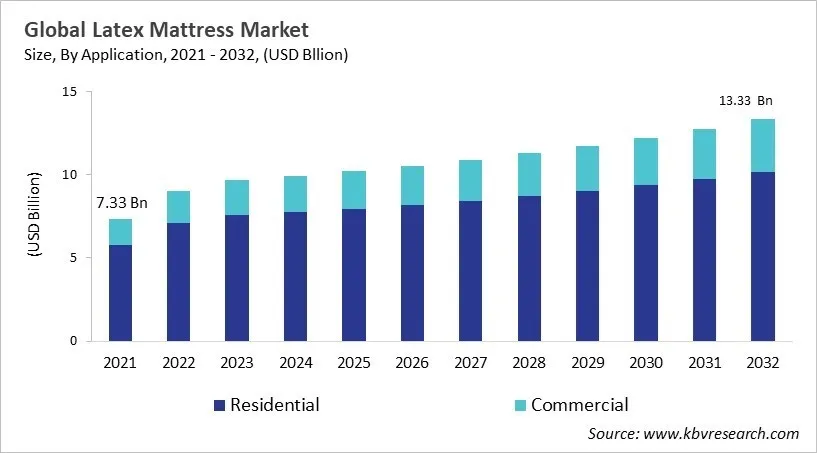
The latex mattress market has been expanded to a profitable industry due to factors like sustainability, health, and innovation. Latex mattresses have gained substantial popularity in Europe and North America because of their durability, eco friendliness, and hypoallergenic properties. This is mainly because of the rising environmental awareness and changing consumer preferences due to strict safety regulations. The global latex mattress market is evolving across hospitality and residential sectors with the support of innovations such as breathable open-cell technology, hybrid design, and zoned comfort. Furthermore, the growth of e-commerce and direct-to-consumers sectors has enabled brands to expand their global reach along with addressing the personalized comfort needs via certifications like GREENGUARG, OEKO-TEX, and GOLS. Some of the key elements supporting market growth are ergonomic support, technological advancements, and sustainability.
The latex mattress market seems to be increasingly competitive with the presence of vertically integrated OEMs, traditional brands, and fast-paced online startups. Key players are dominating the market through vertical integration, eco-certification, expanding production hubs to fulfil regional regulations, and decreased shipping time. Moreover, collaborations with the health and hospitality industry and multi-channel retail strategies are also helping players in the market to expand their reach. E-commerce distributors such as Brooklyn Bedding and Avocado are using influencer marketing, digital engagement, and mattress-in-a-box models to capture market and compete with existing market players. The diversity in the market provides both luxury and budget-friendly offerings, resulting in an innovation-driven, dynamic segment.
At first, the COVID-19 pandemic hurt the latex mattress market because of delays in the supply chain, factory closures, store closures, and less demand for hospitality. But the crisis later increased demand because people were more concerned with their health, cleanliness, and comfort at home. This made people more interested in high-end, hypoallergenic latex mattresses. The market recovery was helped by the rise of e-commerce and trial-based direct-to-consumer models. However, overall growth was limited by problems in the economy as a whole.

Based on Application, the market is segmented into Residential and Commercial. In 2024, the Commercial segment had a 28.9% share of the market. This part includes uses in hospitality, healthcare, and institutional fields, where long-lasting comfort, cleanliness, and hygiene are very important. Hotels and resorts are using latex mattresses to give their guests the best sleep possible. Hospitals and care facilities, on the other hand, like latex because it kills germs and relieves pressure.
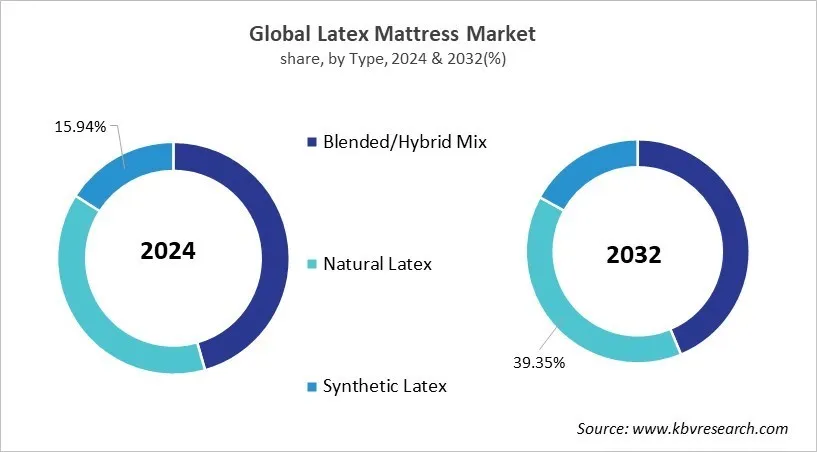
Based on Type, the market is segmented into Blended/Hybrid Mix, Natural Latex, and Synthetic Latex. In 2024, the Natural Latex segment made up 38.4% of the market's revenue. Natural latex comes from the sap of rubber trees. It is known for being comfortable, biodegradable, and not causing allergies. People who care about the environment and people who are sensitive to chemicals like it. As more people want bedding materials that are organic and free of toxins, natural latex is becoming more popular with high-end buyers and people who live an eco-friendly lifestyle.
Free Valuable Insights: Global Latex Mattress Market size to reach USD 13.33 Billion by 2032
Based on Region, the market is segmented into North America, Europe, Asia Pacific, and LAMEA. The North America segment procured the 35.3% revenue share in the market in 2024. The region benefits from strong government support, early integration of virtualization technologies, and high IT spending across industries. The presence of major technology firms and data centers further boosts growth. Cloud adoption and enterprise digitalization are also key contributing factors. The latex mattress market in North America is witnessing promising growth due to the increasing awareness among consumers regarding sleep health, growing demand for hypoallergenic and eco-friendly products, and rising adoption of premium bedding solutions. Regional nations such as Canada and the United States are experiencing significant expansion both online as well as offline because organic and blended latex mattresses are gaining popularity among the sustainability-focused and health-conscious population of the region. Additionally, in Europe, the latex mattress market is also experiencing expansion in nations such as France, Germany, and the United Kingdom amid the rising acceptance because of high environmental standards, preference of natural & chemical-free sleep products, and stringent quality regulations. Consumers in Europe region show interest in high-quality products, majorly supported by specialty bedding retailers and resilient distribution networks.
The Asia Pacific latex mattress market is predicted to have steady growth as a result of increasing middle-class populations, urbanization, and growing spendable incomes in nations such as Thailand, Malaysia, India, and China. Also, the region gets an advantage from propinquity to natural latex sources, ensuring supply stability and competitive pricing. In addition to this, the LAMEA region is also an evolving market for latex mattresses due to increasing demand for premium bedding in Mexico and Brazil. In the Middle East, the growth of hospitality and luxury residential industries are supporting market expansion. Rising awareness and developing retail infrastructure is supporting the adoption of the latex mattress market in Africa.
| Report Attribute | Details |
|---|---|
| Market size value in 2024 | USD 9.92 Billion |
| Market size forecast in 2032 | USD 13.33 Billion |
| Base Year | 2024 |
| Historical Period | 2021 to 2023 |
| Forecast Period | 2025 to 2032 |
| Revenue Growth Rate | CAGR of 3.9% from 2025 to 2032 |
| Number of Pages | 371 |
| Number of Tables | 351 |
| Report coverage | Market Trends, Revenue Estimation and Forecast, Segmentation Analysis, Regional and Country Breakdown, Porter’s 5 Forces Analysis, Company Profiling, Companies Strategic Developments, SWOT Analysis, Winning Imperatives |
| Segments covered | Application, Type, Distribution Channel, Region |
| Country scope |
|
| Companies Included | PlushBeds Inc., Brooklyn Bedding, LLC (Cerberus Capital Management, L.P.), Avocado Mattress, LLC, Sleep Number Corporation, Resident Home, LLC (Awara), Miami Mattress, Commerzilla, LLC (Turmerry), Latex Mattress Factory, SleepEZ USA Inc., and Savvy Rest, Inc. |
By Application
By Type
By Distribution Channel
By Geography
This Market size is expected to reach $13.33 billion by 2032.
Health, Comfort & Hypoallergenic Benefits are driving the Market in coming years, however, High Initial Cost & Economical Barriers restraints the growth of the Market.
PlushBeds Inc., Brooklyn Bedding, LLC (Cerberus Capital Management, L.P.), Avocado Mattress, LLC, Sleep Number Corporation, Resident Home, LLC (Awara), Miami Mattress, Commerzilla, LLC (Turmerry), Latex Mattress Factory, SleepEZ USA Inc., and Savvy Rest, Inc.
The expected CAGR of this Market is 3.9% from 2023 to 2032.
The Blended/Hybrid Mix segment led the maximum revenue in the Market by Type in 2024, thereby, achieving a market value of USD 5.82 billion by 2032.
The North America region dominated the Market by Region in 2024, thereby, achieving a market value of USD 4.51 billion by 2032.
Our team of dedicated experts can provide you with attractive expansion opportunities for your business.












 Unique Offerings