The Latin America, Middle East and Africa Native Advertising Market would witness market growth of 14.5% CAGR during the forecast period (2025-2032).
The Brazil market dominated the LAMEA Native Advertising Market by Country in 2024, and would continue to be a dominant market till 2032; thereby, achieving a market value of $7,473 million by 2032. The Argentina market is showcasing a CAGR of 15.5% during (2025 - 2032). Additionally, The UAE market would register a CAGR of 12.7% during (2025 - 2032). The Brazil and Argentina led the LAMEA Native Advertising Market by Country with a market share of 35.8% and 12.7% in 2024.The South Africa market is expected to witness a CAGR of 15.5% during throughout the forecast period.
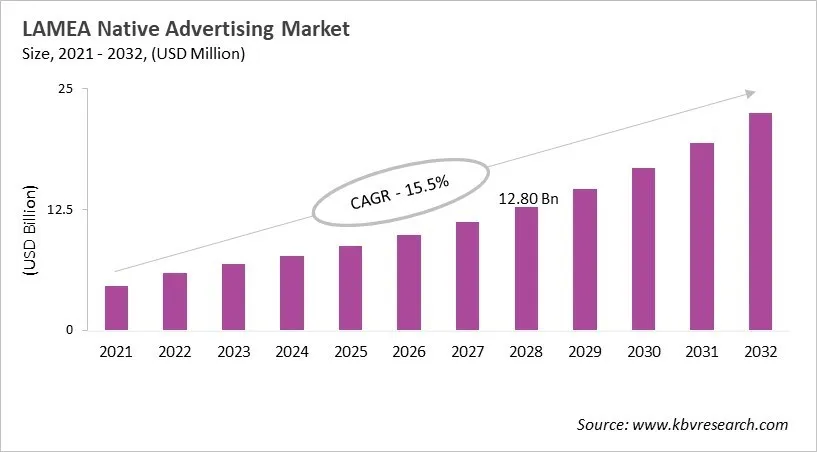
In the LAMEA region, native advertising has grown from simple sponsored posts to a complex, programmatic, and platform-driven part of digital marketing. Smartphone use, social media growth, and publishers' need for higher-yield formats drove early adoption in Latin America. In the Middle East and Africa, growth happened in urban areas with high mobile engagement and ad spending. Native formats have evolved from basic sponsored stories to in-feed, in-app, and contextual placements that fit in perfectly with editorial content, making them more engaging and easier to see. Programmatic scale, platform productization, and data-driven creative have been important factors. They have made it easier for advertisers to reach large audiences while using machine learning, guided templates, and local creative studios to make campaigns that are culturally relevant.
Some of the most important trends in the market are programmatic native at scale, hyper-localized creative, and measurement that follows privacy rules. Programmatic buying and automated optimization make it possible for fast-paced native campaigns to run across many publishers. Localization makes sure that messages work for people who speak different languages, have different cultural backgrounds, and are in different markets. Changes in privacy laws and the end of third-party cookies have sped up the use of contextual targeting, first-party data, and brand-lift measurement to check how well a campaign is doing. Market leaders, such as global platforms, specialized native networks, and local publishers, focus on partnerships, data-driven insights, premium branded content studios, and product innovation to create native advertising experiences that can be scaled, are relevant, and can be measured. Competition is fueled by global reach, contextual targeting capabilities, and local authenticity, with agencies and regional DSPs connecting creative, technological, and measurement solutions.
Based on Platform, the market is segmented into Closed Platforms, Open Platforms and Hybrid Platform. With a compound annual growth rate (CAGR) of 13% over the projection period, the Closed Platforms Market, dominate the UAE Native Advertising Market by Platform in 2024 and would be a prominent market until 2032. The Hybrid Platform market is expected to witness a CAGR of 13.5% during (2025 - 2032).
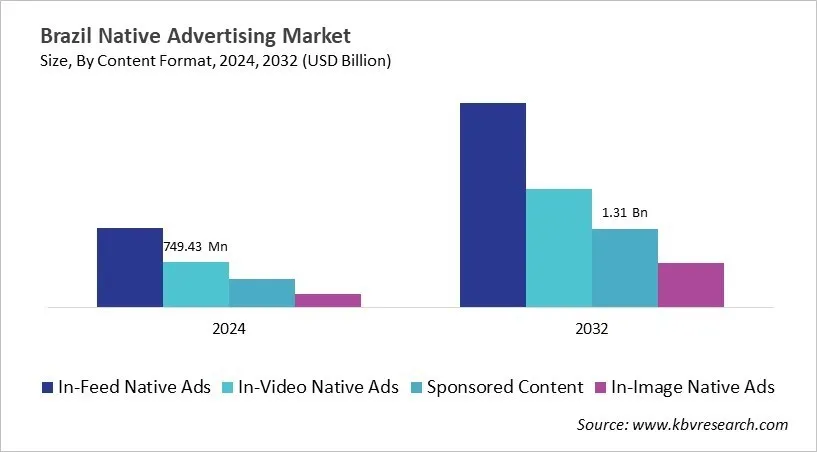
Based on Content Format, the market is segmented into In-Feed Native Ads, In-Video Native Ads, Sponsored Content and In-Image Native Ads. Among various Brazil Native Advertising Market by Content Format; The In-Feed Native Ads market achieved a market size of USD $1324.7 Million in 2024 and is expected to grow at a CAGR of 12.9 % during the forecast period. The Sponsored Content market is predicted to experience a CAGR of 14% throughout the forecast period from (2025 - 2032).
Free Valuable Insights: The Worldwide Native Advertising Market is Projected to reach USD 263.84 Billion by 2032, at a CAGR of 13.0%
Brazil's native advertising market is always changing and is very focused on mobile devices. Brands use in-feed posts, sponsored content, and video-native formats to reach a culturally diverse and socially active population. A lot of people use smartphones and social media, and there is a strong influencer economy. This makes people want real, localized stories that mix editorial voice with shoppable or call-to-action elements. Market trends show that creators should work together, mobile-first video content is becoming more popular, and commerce-linked native units are becoming more common. Advertisers are also putting more emphasis on engagement and brand lift than on impressions. There is competition from global social media platforms, local publishers, and quick-moving digital agencies. Trust, editorial credibility, and cultural relevance are some of the most important things that set them apart. Regulatory frameworks and privacy concerns also affect targeting strategies. This encourages publishers and platform owners to work together to create campaigns that are both legal and effective.

By Platform
By Content Format
By End Use
By Country
Our team of dedicated experts can provide you with attractive expansion opportunities for your business.



 Unique Offerings