The Latin America, Middle East and Africa Monoclonal Antibodies In Veterinary Health Market would witness market growth of 19.8% CAGR during the forecast period (2025-2032).
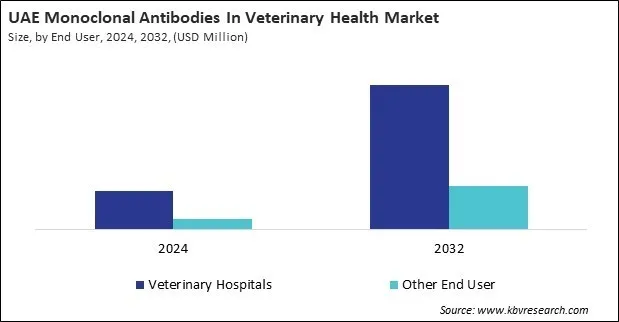
The Brazil market dominated the LAMEA Monoclonal Antibodies In Veterinary Health Market by Country in 2024, and would continue to be a dominant market till 2032; thereby, achieving a market value of $105.9 million by 2032. The Argentina market is showcasing a CAGR of 21.2% during (2025 - 2032). Additionally, The UAE market would register a CAGR of 18.4% during (2025 - 2032).
The LAMEA region is witnessing a growing shift towards the adoption of monoclonal antibodies (mAbs) in veterinary health, driven by increasing awareness of animal welfare and a rising demand for effective, targeted treatments. In many urban centers across Latin America and the Middle East, companion animal ownership has surged, leading to increased veterinary visits and demand for innovative therapies.
Monoclonal antibodies, known for their precision and long-acting effects, are gradually replacing conventional therapies in treating conditions like osteoarthritis, chronic inflammation, and dermatological disorders in dogs and cats. This shift indicates a trend toward modernization in veterinary care across the region. One major trend in LAMEA is the expansion of veterinary biologic manufacturing and technology transfer.
Brazil represents the largest veterinary monoclonal antibody (mAb) market in Latin America, driven by rapid urbanization, increasing pet adoption, and a modernizing animal healthcare sector. Companion animal ownership, particularly dogs, has soared in recent years, aligning with a growing preference for advanced veterinary care. This transformation has positioned mAbs as a critical therapeutic innovation, especially for chronic inflammatory and dermatologic conditions in canines. The country's veterinary clinics and hospitals are increasingly equipped with diagnostic tools and treatment capabilities that facilitate biologic therapy administration.
Argentina's monoclonal antibodies market for veterinary health is a developing segment within Latin America. With increasing awareness about pet health and a growing base of companion animal owners, the country shows a steady rise in demand for biologic therapies. Pet humanization is a key driver, particularly in urban centers like Buenos Aires and Córdoba, where pet owners are increasingly investing in premium care solutions. While veterinary infrastructure in rural areas remains uneven, major cities have witnessed substantial growth in private clinics offering cutting-edge treatments such as mAb therapy.
The UAE’s monoclonal antibodies market in veterinary health is in a rapid growth phase, fueled by high pet ownership rates among expatriates and affluent Emirati families. The country’s well-developed veterinary infrastructure, with numerous advanced pet clinics and hospitals, provides a strong foundation for the introduction and adoption of biologic therapies like monoclonal antibodies. Pet humanization trends, especially in cities like Dubai and Abu Dhabi, have made owners increasingly receptive to high-value treatments that offer precision care, especially for dermatological and orthopedic conditions. Thus, LAMEA remains an emerging market where limited infrastructure and regulatory variability present challenges, but urbanization and rising animal health concerns are fostering gradual growth.
Free Valuable Insights: The Worldwide Monoclonal Antibodies In Veterinary Health Market is Projected to reach USD 4.33 Billion by 2032, at a CAGR of 18.5%
Based on Animal Type, the market is segmented into Dogs and Other Animal Type. Based on Scope, the market is segmented into Dermatology, Pain, and Other Scope. Based on End User, the market is segmented into Veterinary Hospitals and Other End User. Based on countries, the market is segmented into Brazil, Argentina, UAE, Saudi Arabia, South Africa, Nigeria, and Rest of LAMEA.

By Animal Type
By Scope
By End User
By Country
Our team of dedicated experts can provide you with attractive expansion opportunities for your business.



 Unique Offerings