The Latin America, Middle East and Africa Maca Extract Market would witness market growth of 9.5% CAGR during the forecast period (2025-2032).
The Brazil market dominated the LAMEA Maca Extract Market by Country in 2024, and would continue to be a dominant market till 2032; thereby, achieving a market value of $25.7 million by 2032. The Argentina market is expected to witness a CAGR of 10% during (2025 - 2032). Additionally, The UAE market is expected to witness a CAGR of 8.4% during (2025 - 2032). The Brazil and Argentina led the LAMEA Maca Extract Market by Country with a market share of 32.9% and 14.6% in 2024. The Nigeria market is expected to witness a CAGR of 11.4% during throughout the forecast period.
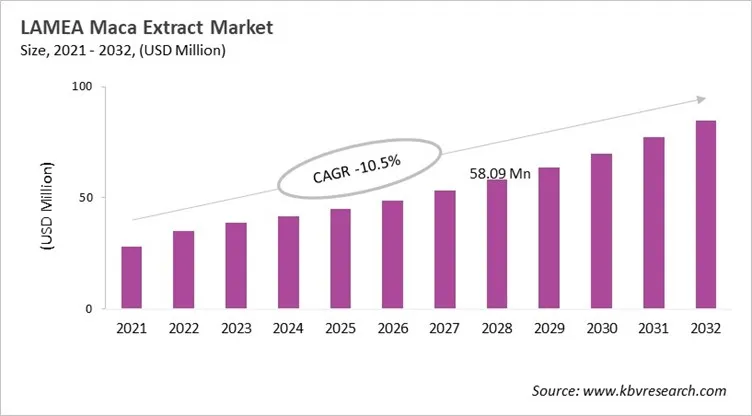
The LAMEA maca extract market grew slowly as people in Latin America, the Middle East, and Africa learned more about Andean plants. The Peruvian government helped the economy grow in the early years by encouraging exports and trade with Brazil and other Latin American countries. As more people became aware of their health, the demand for plant-based, adaptogenic supplements grew. This led manufacturers in the area to add maca to capsules, powders, drinks, and health blends. In the Middle East, maca became popular because people were interested in high-quality herbal remedies. In Africa, especially South Africa, urban wellness trends and easier access to imports helped it become more popular. Maca went from being a niche ingredient to a well-known supplement across LAMEA thanks to stronger rules and better education for consumers.
Some important market trends are more demand for natural supplements, more variety in products, and more focus on sustainability and traceability. Companies added maca to functional drinks, sports nutrition, and vitality blends that were made to fit the tastes of different regions. To build trust, the main players focused on working with certified Peruvian OEM suppliers, following the rules, and marketing based on education. Expanding to pharmacies, health stores, and online stores made it easier to get to. Brands are setting themselves apart in the LAMEA region by getting organic certification, coming up with new formulations, being open about where they get their ingredients, and positioning themselves as premium products.
Based on Product Form, the market is segmented into Powder, Capsules, Liquid Extracts, Tinctures, and Functional Foods. The Powder market segment dominated the Brazil Maca Extract Market by Product Form is expected to grow at a CAGR of 7.8 % during the forecast period thereby continuing its dominance until 2032. Also, The Tinctures market is anticipated to grow as a CAGR of 9.8 % during the forecast period during (2025 - 2032).
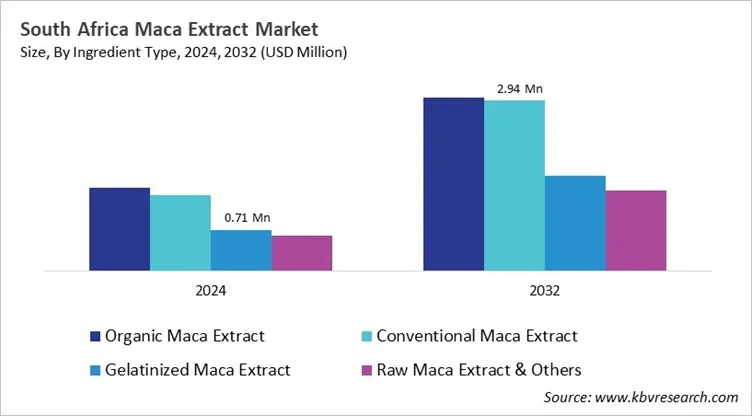
Based on Ingredient Type, the market is segmented into Organic Maca Extract, Conventional Maca Extract, Gelatinized Maca Extract, and Raw Maca Extract & Others. Among various South Africa Maca Extract Market by Ingredient Type; The Organic Maca Extract market achieved a market size of USD $1.4 Million in 2024 and is expected to grow at a CAGR of 9.8 % during the forecast period. The Raw Maca Extract & Others market is predicted to experience a CAGR of 11% throughout the forecast period from (2025 - 2032).
Based on End-User Demographics, the market is segmented into Health-Conscious Consumers, Athletes & Fitness Enthusiasts, General Consumers, Older Adults, and Vegetarians & Vegans. With a compound annual growth rate (CAGR) of 9.8% over the projection period, the Health-Conscious Consumers Market, dominate the Saudi Arabia Maca Extract Market by End-User Demographics in 2024 and would be a prominent market until 2032. The Older Adults market is expected to witness a CAGR of 11.6% during (2025 - 2032).
Free Valuable Insights: The Worldwide Maca Extract Market is Projected to reach USD 572.62 Million by 2032, at a CAGR of 8.4%
Brazil is one of the fastest growing maca extract markets in Latin America. This is because more people are learning about natural supplements, there is a strong fitness culture, and more people are interested in plant-based wellness products. People in Brazil eat a lot of maca for energy, hormonal balance, athletic performance, and reproductive health. This fits well with the country's growing nutraceutical sector. Demand is also getting stronger because more people are joining the middle class and taking supplements. The country's active sports and fitness scene makes people more likely to use natural performance enhancers, and health problems related to stress make people more interested in adaptogenic products. ANVISA's strict rules make products more trustworthy and give consumers more confidence. There is a lot of demand for maca powders and capsules, and their use in drinks and functional foods is also on the rise. Long-term market growth is still happening because people want organic, ethically sourced Peruvian maca and e-commerce is growing quickly.

By Product Form
By Application
By Ingredient Type
By End-User Demographics
By Distribution Channel
By Country
Our team of dedicated experts can provide you with attractive expansion opportunities for your business.




 Unique Offerings