The Latin America, Middle East and Africa Loyalty Management Market is expected to reach $1.56 billion by 2028 and would witness market growth of 11.4% CAGR during the forecast period (2025-2032).
The Brazil market dominated the LAMEA Loyalty Management Market by Country in 2024, and would continue to be a dominant market till 2032; thereby, achieving a market value of $500 million by 2032. The Argentina market is showcasing a CAGR of 12.7% during (2025 - 2032). Additionally, The UAE market would register a CAGR of 10.4% during (2025 - 2032). The Brazil and UAE led the LAMEA Loyalty Management Market by Country with a market share of 22.8% and 16.1% in 2024. The South Africa market is expected to witness a CAGR of 12.3% during throughout the forecast period.
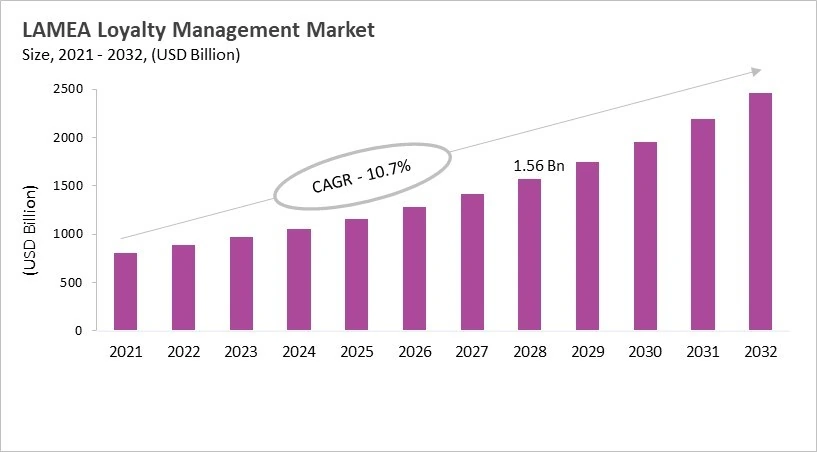
The LAMEA Loyalty Management Market has changed from frequent flyer programs that focused on airlines and hotels to full engagement ecosystems that use data and are built into retail, banking, and telecom platforms. Tier-based rewards were first used by national carriers in Latin America and the Middle East, but they became more popular because of quick changes in retail, efforts to include everyone in the economy, and government-led digital transformation. Saudi Vision 2030 and the UAE Digital Government Strategy helped fintech and e-commerce grow. Brazil's Pix instant payment system made it possible to integrate rewards at the transaction level in real time. Mobile money platforms like M-Pesa have grown in popularity across Sub-Saharan Africa, making it easier to deliver loyalty through telecom-driven ecosystems instead of traditional card networks. Regulatory frameworks like Lei Geral de Proteção de Dados and the Protection of Personal Information Act have also affected how programs are designed by requiring secure digital infrastructure and data governance based on consent.
Today, the market is all about mobile-first engagement, coalition loyalty ecosystems, and omnichannel integration that is backed up by advanced analytics. Global companies like Comarch and Mastercard compete with regional banks and telecom companies. They do this by focusing on API-driven platforms, cloud-native architectures, and following the rules as ways to stand out. Partnerships between retailers, airlines, telecom companies, and banks make it possible to redeem rewards across many sectors, which boosts customer engagement and lifetime value. Localization strategies, like travel-related perks in the Gulf and mobile airtime rewards in Africa, show how important it is to be able to adapt to different cultures. Overall, the pace of digital transformation, the growth of financial inclusion, and collaboration between industries are more important than saturation in LAMEA.
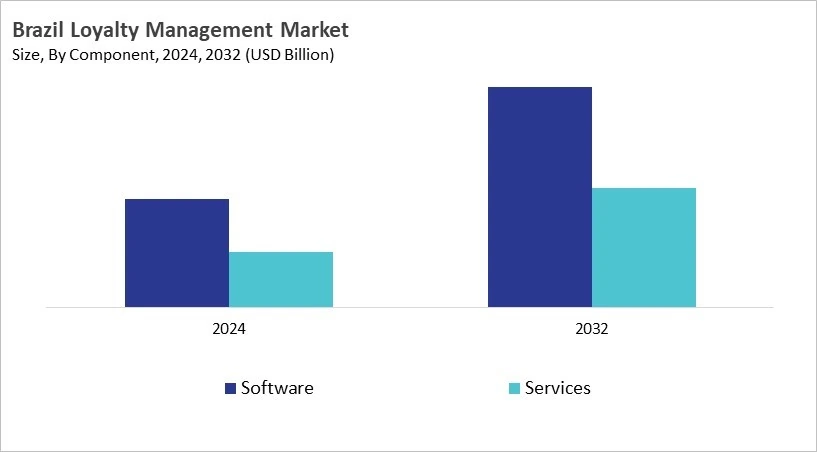
Based on Component, the market is segmented into Software and Services. The Software market segment dominated the Brazil Loyalty Management Market by Component is expected to grow at a CAGR of 9.5 % during the forecast period thereby continuing its dominance until 2032. Also, The Services market is anticipated to grow as a CAGR of 10.2 % during the forecast period during (2025 - 2032).
Based on Vertical, the market is segmented into Retail & Consumer Goods, BFSI, IT & Telecommunication, Hospitality, Transportation, Media & Entertainment and Other Verticals. With a compound annual growth rate (CAGR) of 11% over the projection period, the Retail & Consumer Goods Market, dominate the Argentina Loyalty Management Market by Vertical in 2024 and would be a prominent market until 2032. The Media & Entertainment market is expected to witness a CAGR of 14.9% during (2025 - 2032).
Free Valuable Insights: Loyalty Management Market Size Worth USD 25.70 billion by 2032
Brazil is the leader in the Latin American loyalty management market because it has a large retail sector, a modern banking system, and more people are using digital payments. Coalition programs like Petrobras Premium and LATAM Pass show how points-based systems are becoming more common in areas like fuel, travel, and retail spending. Major retailers like Magazine Luiza use CRM-driven strategies to improve customer engagement across all channels. The widespread use of Pix under Banco Central do Brasil, along with the growth of digital banking, supports cashback and card-linked rewards. This is made possible by the high number of smartphones and the fact that people are saving money. The LGPD framework's rules for data use shape how people use data responsibly. At the same time, trends favor app-based platforms, gamification, real-time promotions, and partnerships across sectors. Overall, the competition between fuel companies, banks, airlines, and stores shows that the digital world is always changing and that businesses are focused on keeping customers and growing their ecosystems.

By Organization Size
By Deployment
By Component
By Vertical
By Country
Our team of dedicated experts can provide you with attractive expansion opportunities for your business.




 Unique Offerings