The Latin America, Middle East and Africa Digital Lending Platform Market is expected to reach $2.71 billion by 2029 and would witness market growth of 29.7% CAGR during the forecast period (2025-2032).
The Brazil market dominated the LAMEA Digital Lending Platform Market by Country in 2024, and would continue to be a dominant market till 2032; thereby, achieving a market value of $1,811.1 million by 2032. The Argentina market is showcasing a CAGR of 30.7% during (2025 - 2032). Additionally, The UAE market would register a CAGR of 28.5% during (2025 - 2032). The Brazil and UAE led the LAMEA Digital Lending Platform Market by Country with a market share of 32.9% and 15.1% in 2024. The South Africa market is expected to witness a CAGR of 30.8% during throughout the forecast period.
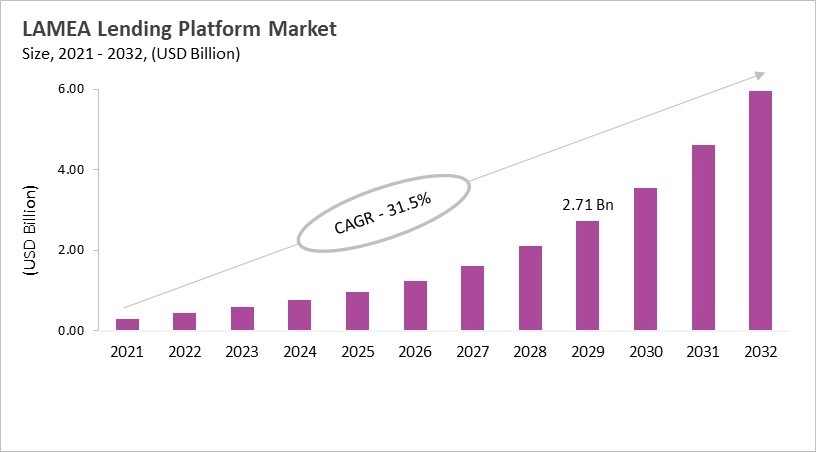
Digital lending platforms are changing the way financial services work in Latin America, the Middle East, and Africa (LAMEA) by making it easier for people to get credit through mobile and web-based channels. Fintech adoption, smartphone use, and policies that help people who don't have bank accounts get access to financial services are all driving growth. In Latin America, fintech ecosystems in places like Brazil and Mexico offer loans to individuals and small businesses. In Africa, digital lending builds on strong mobile money networks. Fintech strategies and regulatory sandboxes that encourage innovation and e-KYC adoption are helping Middle Eastern markets grow. More and more, governments see digital lending as a part of larger plans for digital finance and economic growth. These things are changing traditional lending into digital models that are faster and more open to everyone.
Some important trends are lending that focuses on financial inclusion, new rules, and using advanced analytics and other types of data. Platforms use mobile-first delivery, machine learning, and non-traditional data to figure out how risky a loan is and find borrowers who don't have formal credit histories. Digital accessibility, partnerships with banks and mobile operators, and proactive engagement with regulators are some of the strategic priorities of the top players. Fintech startups, traditional banks upgrading their systems, and mobile money providers adding credit services are all in the running. User experience, risk analytics, and localized solutions are what set us apart. The LAMEA digital lending market is still dynamic, driven by new ideas, and very much in line with goals for inclusive growth.
Based on Component, the market is segmented into Solutions, and Services. The Solutions market segment dominated the Brazil Digital Lending Platform Market by Component is expected to grow at a CAGR of 28 % during the forecast period thereby continuing its dominance until 2032. Also, The Services market is anticipated to grow as a CAGR of 29.6 % during the forecast period during (2025 - 2032).
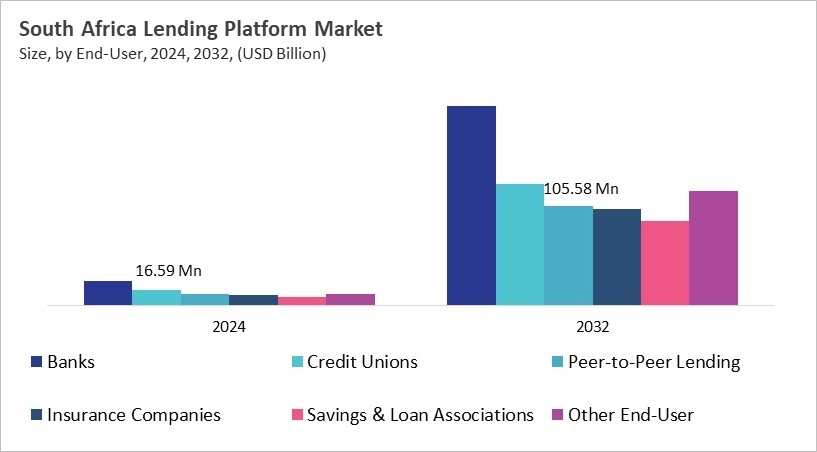
Based on End-User, the market is segmented into Banks, Credit Unions, Peer-to-Peer Lending, Insurance Companies, Savings & Loan Associations, and Other End-User. Among various South Africa Digital Lending Platform Market by End-User; The Banks market achieved a market size of USD $26.6 Million in 2024 and is expected to grow at a CAGR of 29.6 % during the forecast period. The Savings & Loan Associations market is predicted to experience a CAGR of 32.1% throughout the forecast period from (2025 - 2032).
Free Valuable Insights: Digital Lending Platform Market Size Worth USD 6.10 billion by 2032
Brazil has become one of the most advanced digital lending markets in the LAMEA region because a lot of people use smartphones and digital banking, and there is a lot of unmet credit demand from small businesses and consumers. PIX and Open Finance are two examples of Central Bank projects that make it possible to share data in real time and speed up credit checks. Regulatory changes that support digital identity and e-signatures have made it easier to get loans and built trust. Some important trends are the rise of BNPL and short-term merchant loans, as well as the use of embedded lending in e-commerce and wallets. Using AI and data analytics with alternative data makes underwriting more accurate. Fintech leaders like Nubank and Mercado Pago and modernized traditional banks are in a lot of competition with each other. Ongoing investment in open finance and digital infrastructure is expected to sustain Brazil’s leadership in digital lending across LAMEA.

By Deployment
By Component
By End-User
By Country
Our team of dedicated experts can provide you with attractive expansion opportunities for your business.



 Unique Offerings