The Latin America, Middle East and Africa Digital Experience Platform Market would witness market growth of 14.6% CAGR during the forecast period (2025-2032).
The Brazil market dominated the LAMEA Digital Experience Platform Market by Country in 2024, and would continue to be a dominant market till 2032; thereby, achieving a market value of $613.6 million by 2032. The Argentina market is showcasing a CAGR of 16.2% during (2025 - 2032). Additionally, The UAE market would register a CAGR of 13.5% during (2025 - 2032). The Brazil and UAE led the LAMEA Digital Experience Platform Market by Country with a market share of 22.8% and 15.1% in 2024. The South Africa market is expected to witness a CAGR of 15.8% during throughout the forecast period.
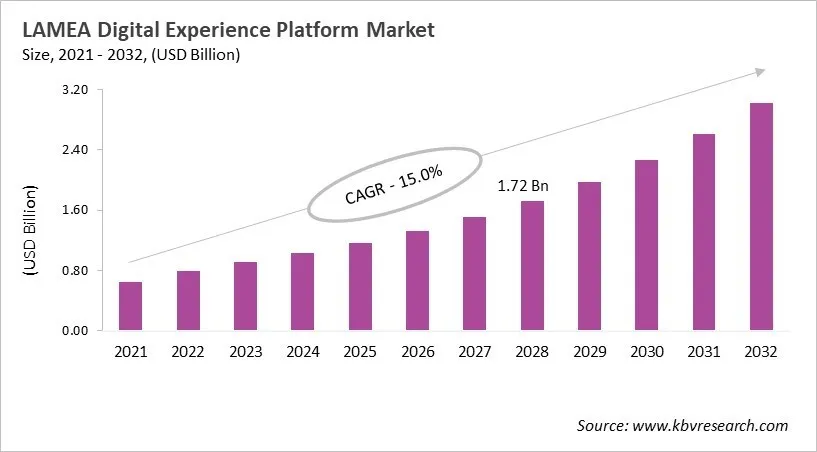
The Digital Experience Platform (DXP) market in LAMEA has grown quickly because of government-led digitalization, more mobile connectivity, and more people using e-commerce. Digital infrastructure, interoperability, and citizen-centered services are important parts of regional strategies in Latin America, Africa, and the Middle East. This makes platforms that bring together content, data, and analytics across multiple channels very popular. Companies are increasingly choosing cloud-native and composable DXP architectures because they are more flexible, can grow with the company, and meet new data privacy rules. In fast-digitizing economies, mobile-first, payments-enabled experiences are the most important for keeping customers engaged.
There is a lot of competition in the area, and it is driven by partnerships. Global enterprise vendors, cloud-native specialists, and regional integrators are all trying to get a bigger share of the market. To make implementation easier and meet different regulatory and language needs, vendors focus on localization, regional cloud investments, and managed-service models. Strategic partnerships with telcos, payment processors, and systems integrators make the ecosystem stronger. Composable, API-first solutions make it easy to connect to local systems. In general, the LAMEA DXP landscape shows that the market is maturing and full of opportunities. This is due to public digital priorities, private-sector innovation, and a growing focus on providing personalized, compliant omnichannel experiences.
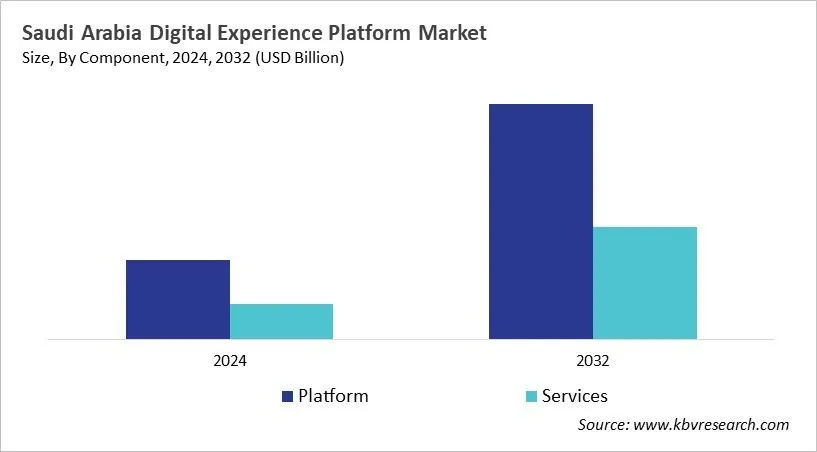
Based on Component, the market is segmented into Platform, and Services. The Platform market segment dominated the Saudi Arabia Digital Experience Platform Market by Component is expected to grow at a CAGR of 14.8 % during the forecast period thereby continuing its dominance until 2032. Also, The Services market is anticipated to grow as a CAGR of 15.8 % during the forecast period during (2025 - 2032).
Based on End-Use Industry, the market is segmented into Retail, BFSI, IT & Telecom, Healthcare, Manufacturing, and Other End-Use Industry. Among various Brazil Digital Experience Platform Market by End-Use Industry; The BFSI market achieved a market size of USD $43 Million in 2024 and is expected to grow at a CAGR of 11.6 % during the forecast period. The Manufacturing market is predicted to experience a CAGR of 13.4% throughout the forecast period from (2025 - 2032).
Free Valuable Insights: The Worldwide Digital Experience Platform Market is Projected to reach USD 36.85 Billion by 2032, at a CAGR of 13.3%
Brazil is an important market for Digital Experience Platforms (DXPs) in Latin America because the government is working hard to digitalize the country, there are a lot of people who are connected, and mobile devices are becoming more popular. The GOV.BR portal shows how serious the country is about getting more people involved through digital channels. More and more businesses in retail, BFSI, and telecom are using DXPs to create consistent, personalized experiences across many touchpoints. The widespread use of the Pix payment system, data residency rules, and better cloud infrastructure are all helping to make cloud-native, composable DXPs more popular. As analytics-driven personalization and AI-powered engagement become more important, competition is between global vendors and local integrators who focus on localization, compliance, and making sure that Brazilian systems work well with each other.

By Component
By Application
By Deployment
By End-Use Industry
By Country
Our team of dedicated experts can provide you with attractive expansion opportunities for your business.



 Unique Offerings