“Global Industrial Automation Services Market to reach a market value of USD 373.92 Billion by 2032 growing at a CAGR of 10.4%”
The Global Industrial Automation Services Market size is expected to reach $373.92 billion by 2032, rising at a market growth of 10.4% CAGR during the forecast period.
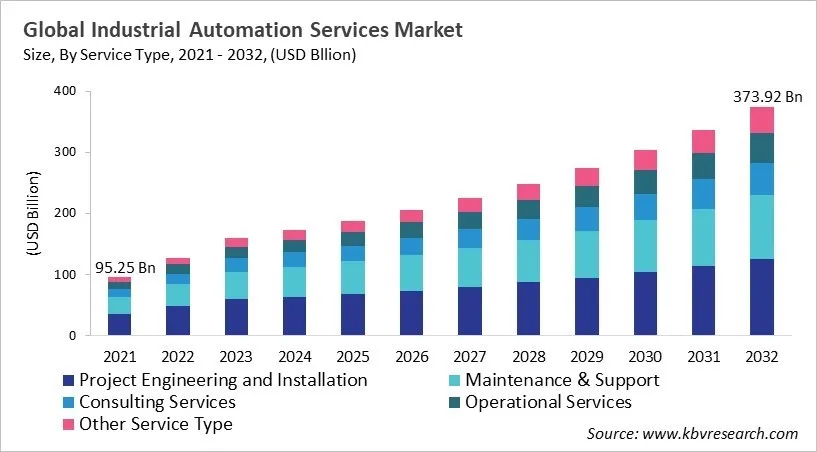
The industrial automation services market has experienced significant development, transition from robotic integration and programmable logic controllers (PLCs) for repetitive tasks in industries like heavy machinery, and automotive, to comprehensive, Industry 4.0-enabled solutions. Early adoption of industrial automation service is supported by government initiatives promoting smart manufacturing, industrial digitization, and digital skills developments, especially in advanced economies. OEMs played a key role by providing specialized control systems, and process monitoring solutions, allowing manufacturers to improve precision, safety, and operational efficiency. Automation services expanded to include machine learning, AI, IoT, and cloud-based analytics, enabling predictive maintenance, optimized production workflows, and real-time monitoring.
The industrial automation services market is supported by trends including digital integration through IoT and cloud platforms, the adoption of collaborative robots for flexible, safer operations, and AI-enabled predictive maintenance and process optimization. Key players implement strategies focused on innovation, service diversification, and partnerships, investing in cloud, R&D, and edge-enabled solutions to cater to varying industrial needs. The market competition seems to be intense, backed by technology innovation, service quality, regional adoption rates, and integration capabilities, with established OEMs and developing players continuously improving solutions to address global industrial modernization and maintain leadership and digital transformation objectives.
The major strategies followed by the market participants are Partnership as the key developmental strategy to keep pace with the changing demands of end users. For instance, In May, 2025, ABB Ltd. Robotics partnered with JOT Automation to deliver a flexible, automated assembly line for ABB Smart Power’s new switchgear range. The system uses ABB robots for multi-model production without retooling, aligning with industrial automation services for long-term manufacturing efficiency. Additionally, In May, 2025, Honeywell International, Inc. partnered with Teradyne Robotics to provide intelligent automation solutions, combining AMRs, cobots, and warehouse software to streamline logistics and warehousing operations across the Americas and Europe, reducing costs, improving productivity, and enhancing safety in material handling processes.
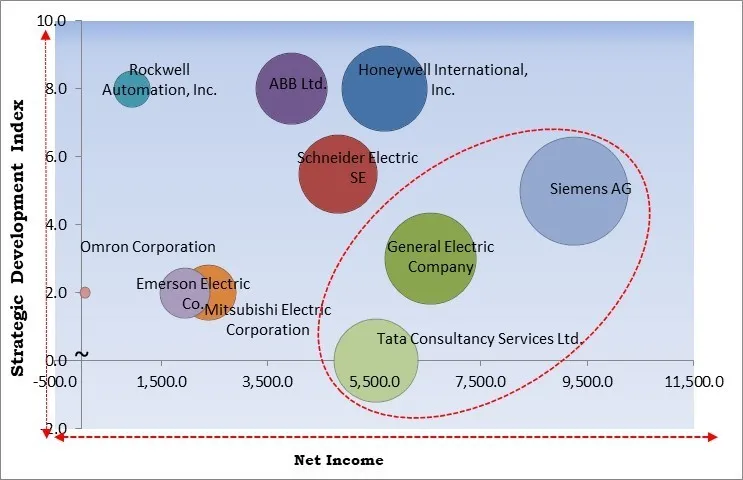
Based on the Analysis presented in the KBV Cardinal matrix; Siemens AG, General Electric Company and Tata Consultancy Services Ltd. are the forerunners in the Industrial Automation Services Market. Companies such as Honeywell International, Inc., Schneider Electric SE and ABB Ltd. are some of the key innovators in Industrial Automation Services Market. In September, 2024, Siemens AG and Merck partnered to advance smart manufacturing through digital transformation using Siemens Xcelerator. Their collaboration focuses on modular, flexible production, boosting efficiency, sustainability, and innovation, positioning Siemens as a preferred supplier for Merck’s industrial automation services worldwide.
The COVID-19 pandemic had a big effect on the market for industrial automation services, especially at the start of the outbreak. Lockdowns and restrictions on the workplace stopped manufacturing, which pushed back automation projects and on-site services. Travel bans and social distancing made it harder to get to facilities, which made installation, commissioning, and maintenance work harder. There weren't enough automation hardware and spare parts because of problems in the supply chain, which slowed down project work. A lot of businesses cut back on capital spending and put off upgrading their automation systems so they could focus on staying alive in the short term. Because of this, there was less need for consulting, integration, and support services. Service quality and operational efficiency were also hurt by a lack of workers, health problems, and interrupted training. Thus, the COVID-19 pandemic had a negative impact on the market.
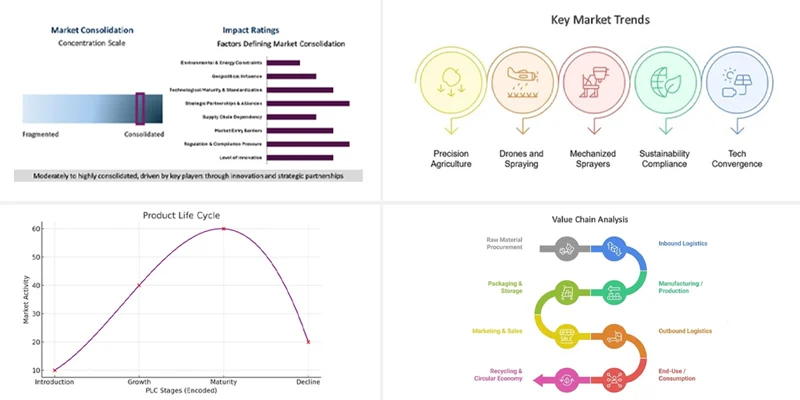

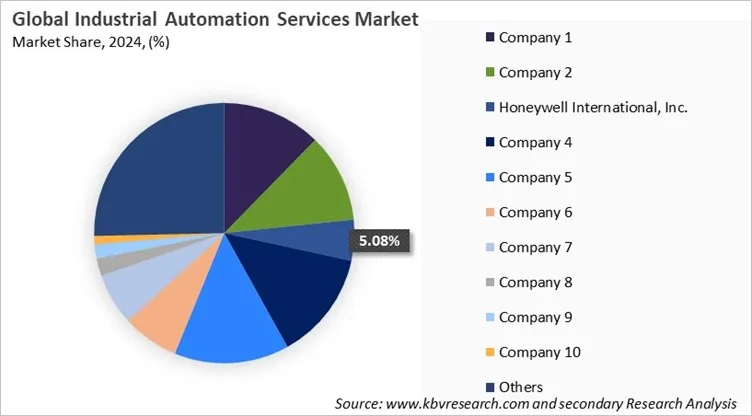
The leading players in the market are competing with diverse innovative offerings to remain competitive in the market. The above illustration shows the percentage of revenue shared by some of the leading companies in the market. The leading players of the market are adopting various strategies in order to cater demand coming from the different industries. The key developmental strategies in the market are Acquisitions, and Partnerships & Collaborations.
Free Valuable Insights: Industrial Automation Services Market size to reach USD 373.92 Billion by 2032
Based on product type, the industrial automation services market is segmented into DCS, SCADA, PLC, and others. The SCADA segment attained 29% revenue share in the market in 2024. The SCADA (supervisory control and data acquisition) segment represents an important area of industrial automation services, particularly due to its ability to facilitate large-scale remote monitoring, control, and data visualization for operational assets distributed across multiple production and field locations.
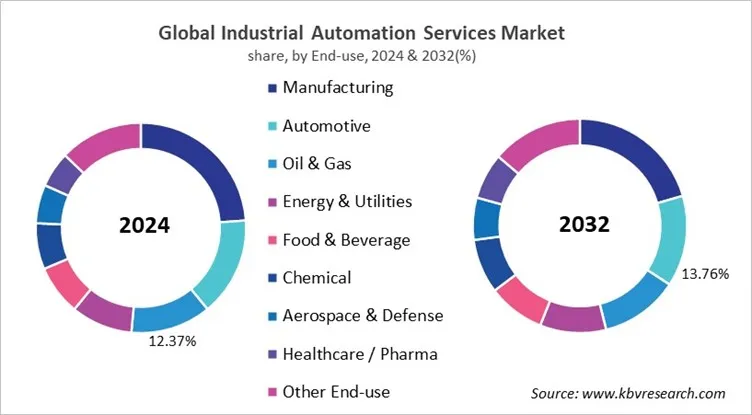
Based on end-use, the industrial automation services market is segmented into manufacturing, automotive, oil & gas, energy & utilities, food & beverage, chemical, aerospace & defense, healthcare / pharma, and other end-use. The automotive segment attained 15% revenue share in the market in 2024. The automotive segment is shaped by extensive integration of industrial automation services into vehicle assembly operations, engine production, parts manufacturing, welding lines, robotic painting, and end-of-line testing. The sector incorporates automation to support precision-based engineering, improve production speed, and enable modular manufacturing structures capable of adapting to design variations and customization demands.
Region-wise, the industrial automation services market is analyzed across North America, Europe, Asia Pacific, and LAMEA. The Asia Pacific segment recorded 40% revenue share in the market in 2024. The industrial automation services market is expected to grow at a substantial rate in North America and Europe. The region benefits from well-established industrial infrastructure, advanced manufacturing ecosystems, and strong government support for Industrial 4.0 initiatives. Enterprises in these markets largely adopt AI-based predictive maintenance, IoT-enabled platforms, and collaborative robotics to enhance operational safety, productivity, and efficiency. System integrators and OEMs offer end-to-end services, from system design and integration to lifecycle management and real-time monitoring, catering to industries like aerospace, pharmaceuticals, automotive, and energy. Business publication highlights that cloud adoption, digitalization, and data-driven decision making are some of the key drivers of automation growth in Europe and North America, with innovation hubs and strong R&D surging technology deployment.
In the Asia Pacific and LAMEA region, the industrial automation services market is projected to capture significant expansion. The growth is driven by developing industrialization, rising investment in smart manufacturing, and government modernization programs. Regional nations such as Japan, China, and India are adopting advanced automation technologies to improve productivity, optimize labor costs, and support high-volume manufacturing. Furthermore, the LAMEA region is experiencing increasing investment in infrastructure modernization and industrial digitization, especially in industries like mining, oil & gas, chemicals, food & beverages. Service providers and OEMs focus on scalable and modular solutions that accommodate diverse workforce capabilities and production scales. The adoption of cloud analytics, IoT, AI, and collaborative robotics is surging as manufacturers are looking for operational flexibility, cost-efficiency, and compliance with environmental and safety regulations, thereby offering lucrative growth opportunities across the region.
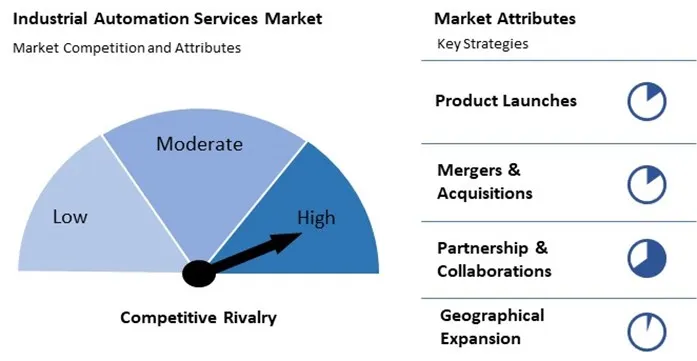
The Industrial Automation Services Market is highly competitive, driven by rapid technology adoption and demand for efficiency improvements across sectors. Key players focus on differentiating through advanced solutions, customization, and strong service networks. Innovation, cost optimization, and integration capabilities are critical competitive factors. Market rivalry intensifies as entrants strive to offer flexible, scalable services and enhance customer support, pushing continuous improvement and strategic partnerships to capture diverse industry needs.
| Report Attribute | Details |
|---|---|
| Market size value in 2025 | USD 187.62 Billion |
| Market size forecast in 2032 | USD 373.92 Billion |
| Base Year | 2024 |
| Historical Period | 2021 to 2023 |
| Forecast Period | 2025 to 2032 |
| Revenue Growth Rate | CAGR of 10.4% from 2025 to 2032 |
| Number of Pages | 623 |
| Number of Tables | 445 |
| Report coverage | Market Trends, Revenue Estimation and Forecast, Segmentation Analysis, Regional and Country Breakdown, Competitive Landscape, Market Share Analysis, Porter’s 5 Forces Analysis, Company Profiling, Companies Strategic Developments, SWOT Analysis, Winning Imperatives |
| Segments covered | Product Type, Service Type, End-use, Region |
| Country scope |
|
| Companies Included | ABB Ltd., Rockwell Automation, Inc., Honeywell International, Inc., Schneider Electric SE, Siemens AG, Mitsubishi Electric Corporation, Emerson Electric Co., Omron Corporation, General Electric Company and Tata Consultancy Services Ltd. |
By Service Type
By End Use
By Product Type
By Geography
The market size is projected to reach USD 373.92 billion by 2032.
The industrial automation services market is projected to grow at a CAGR of 10.4% between 2025 and 2032.
Rising demand for operational efficiency and cost optimization, accelerated by rapid adoption of AI, IoT, cloud, and analytics technologies.
ABB Ltd., Rockwell Automation, Inc., Honeywell International, Inc., Schneider Electric SE, Siemens AG, Mitsubishi Electric Corporation, Emerson Electric Co., Omron Corporation, General Electric Company and Tata Consultancy Services Ltd.
The Project Engineering and Installation segment is leading the Global Industrial Automation Services Market by Service Type in 2024, growing at a CAGR of 9 % during the forecast period.
The Asia Pacific region dominated the Global Industrial Automation Services Market by Region in 2024, and would continue to be a dominant market till 2032; thereby, achieving a market value of $152.70 billion by 2032.
Our team of dedicated experts can provide you with attractive expansion opportunities for your business.







 Unique Offerings