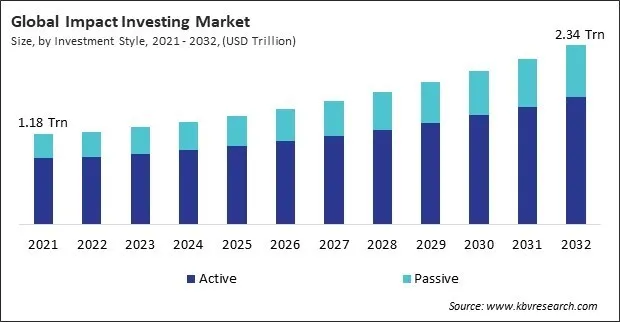
“Global Impact Investing Market to reach a market value of USD 2.34 Trillion by 2032 growing at a CAGR of 7.5%”
The Global Impact Investing Market size is expected to reach $2.34 trillion by 2032, rising at a market growth of 7.5% CAGR during the forecast period.
They focus on careful checks, measuring impact, and staying involved to make sure everything matches their goals. This way of working attracts investors who want both profit and clear, trackable impact. It is often linked with big investors, foundations, and wealthy people who want their money to have a smart purpose.
The major strategies followed by the market participants are Acquisition as the key developmental strategy to keep pace with the changing demands of end users. For instance, In May, 2025, TPG announced its acquisition of Peppertree Capital Management, expanding its reach in digital infrastructure investing. The move complements TPG’s impact strategy by aligning infrastructure investment with sustainable development goals, reinforcing its commitment to scalable, purpose-driven growth across sectors like connectivity, energy, and environmental sustainability. Additionally, In February, 2025, Bain Capital, LP. announced the acquisition of Mitsubishi Tanabe Pharma signals a potential shift toward socially responsible healthcare investment. With an emphasis on pharmaceutical innovation and patient-centric outcomes, the deal aligns with impact investing goals—delivering financial returns while addressing critical global health challenges and improving drug access and medical equity worldwide.
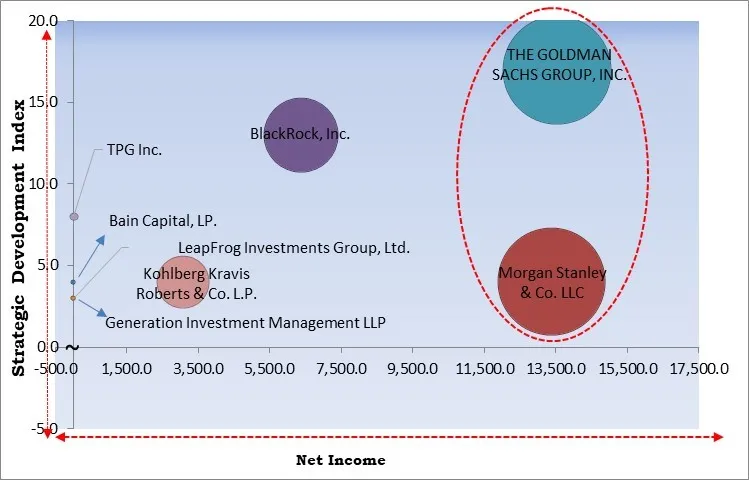
Based on the Analysis presented in the KBV Cardinal matrix; THE GOLDMAN SACHS GROUP, INC. and Morgan Stanley & Co. LLC are the forerunners in the Market. In April, 2025, THE GOLDMAN SACHS GROUP, INC. announced the acquisition of Atlas SSI, a water management solutions firm. The move supports Goldman’s impact investment strategy by addressing critical environmental challenges like water conservation and infrastructure resilience, furthering its commitment to sustainable and scalable environmental solutions. Companies such as BlackRock, Inc., Kohlberg Kravis Roberts & Co. L.P., and TPG Inc. are some of the key innovators in Market.
The COVID-19 pandemic, even with its problems for the world’s economy, had a small positive effect on the market. During this time, investors saw how important it is to have strong and fair business models. This change made more people look for investments that bring profit but also help with social and environmental good. The health crisis made people more aware of big gaps and climate risks, so many asset owners and big investors started putting money into impact-focused portfolios. So, the COVID-19 pandemic gave the market a mild positive push.

Over the last twenty years, the world has seen a big rise in awareness about social inequality, damage to nature, and business responsibility. This has grown a lot because of more media stories, climate reports from groups like the Intergovernmental Panel on Climate Change (IPCC), easy access to information online, and strong local activism. Because of this, higher awareness is now a key reason that supports and pushes the growth of impact investing in many places and types of investments.
Governments and international groups are now putting in place helpful rules that make it easier and more attractive for investors to choose impact-focused plans. Things like new rules, tax breaks, reporting needs, and green finance policies show how government help has become a big support for impact investing. So, government action and clear rules are not just in the background — they are active drivers that set the speed and size of the global impact investing market.
One of the biggest challenges stopping the market from growing faster is the lack of clear and common rules for how to define, measure, and share impact. While money results are easy to track with clear numbers like ROI, EPS, and IRR, social and environment work is harder to measure because it depends on the situation and can feel unclear. In the end, until there are better and shared ways to say what impact really means, how to measure it, and how to report it, this will stay a big block for the growth of impact investing.
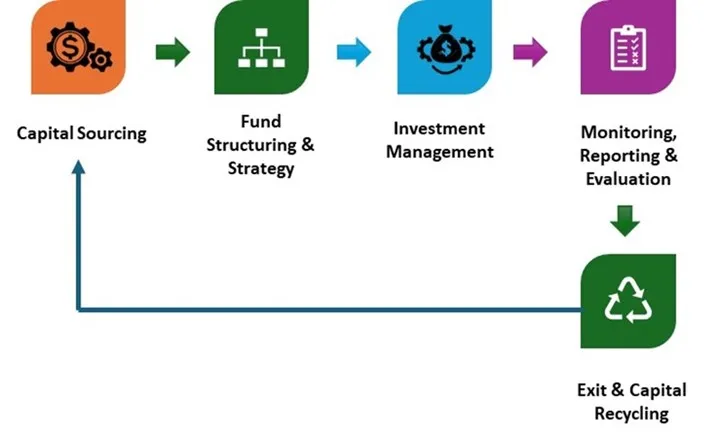
The value chain of the Market, as illustrated, involves a cyclical process beginning with Capital Sourcing, where funds are mobilized from various investors. This is followed by Fund Structuring & Strategy, in which investment vehicles and thematic focus areas are defined. Investment Management then allocates capital to targeted enterprises or projects aligned with social and environmental goals. Monitoring, Reporting & Evaluation ensures impact and financial performance are tracked and assessed. The process culminates in Exit & Capital Recycling, where successful investments are exited, and capital is redeployed into new initiatives. The cycle then restarts, reinforcing sustainable and scalable impact.
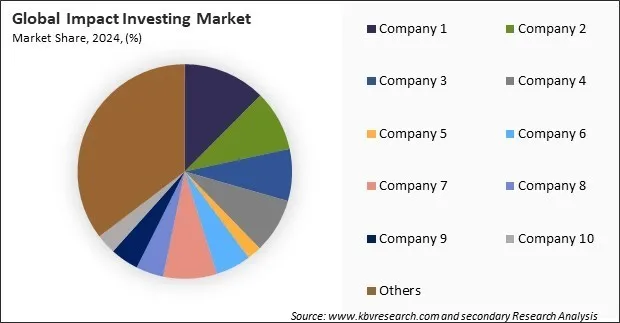
The leading players in the market are competing with diverse innovative offerings to remain competitive in the market. The above illustration shows the percentage of revenue shared by some of the leading companies in the market. The leading players of the market are adopting various strategies in order to cater demand coming from the different industries. The key developmental strategies in the market are Acquisitions.
Free Valuable Insights: Global Impact Investing Market size to reach USD 2.34 Trillion by 2032
Based on investment style, the impact investing market is characterized into active and passive. The passive segment procured 27% revenue share in the market in 2024. The passive investment style in the market means putting money into things like exchange-traded funds (ETFs) or index funds that follow a special impact-focused index. This style does not mean choosing individual companies or getting directly involved in single projects.
| Category | Details |
|---|---|
| Use Case Title | Confidential |
| Date | 2025 |
| Entities Involved | Confidential |
| Objective | Provide scalable, cost-efficient, and transparent access to impact-oriented investment through passive ESG-integrated index strategies and smart beta products. |
| Context and Background | As demand for sustainable investing surged globally, passive funds gained traction for offering easy access to ESG-aligned portfolios. These strategies rely on pre-defined rules to screen, weight, and rebalance holdings based on ESG factors or SDG alignment. They enable mass-market participation without the cost or complexity of active management. |
| Description | Asset managers offer passive impact products tracking indices such as MSCI ACWI Low Carbon Target, FTSE4Good, or S&P 500 ESG. Funds apply exclusion criteria (e.g., fossil fuels, weapons), positive ESG scoring, or SDG-linked revenue screens. Smart beta variants tilt weights toward firms with higher sustainability performance. Rebalancing occurs quarterly or semi-annually using automated ESG datasets. These funds also support regulatory compliance with frameworks like SFDR and TCFD. |
| Key Capabilities Deployed |
|
| Regions Covered |
|
| Benefits |
|
| Source | Confidential |
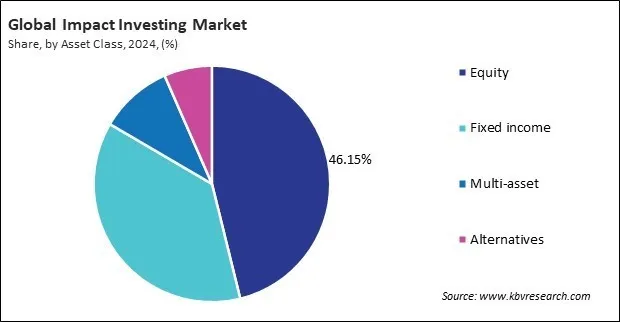
On the basis of asset class, the impact investing market is classified into equity, fixed income, multi-asset, and alternatives. The multi-asset segment procured 10% revenue share in the market in 2024. The multi-asset class means having a mixed portfolio that puts money into different things like stocks, bonds, and cash. This mix helps keep a good balance of risk, returns, and positive impact. This way, investors can reach their impact goals and also enjoy the safety of diversification.
By investor type, the impact investing market is divided into institutional investors and retail investors. The retail investors segment garnered 32% revenue share in the market in 2024. The retail investors group is made up of individual people who put their money into the market through mutual funds, ETFs, and crowdfunding sites. These investors now want their money choices to fit with their own values and beliefs.
Based on offerings, the impact investing market is segmented into equity offerings, bond funds, ETFs/index fund, and alternatives/hedge funds. The bond funds segment acquired 29% revenue share in the market in 2024. The bond funds segment has investment funds that invest in fixed-income bonds to help pay for projects that make a positive impact. These can be green bonds, social bonds, or sustainability bonds that help build clean energy, stronger infrastructure, and more social housing.
Region-wise, the impact investing market is analyzed across North America, Europe, Asia Pacific, and LAMEA. The North America segment recorded 39% revenue share in the market in 2024. The North America segment leads the market, supported by a well-established ecosystem of institutional investors, regulatory frameworks, and a strong culture of corporate social responsibility. The presence of numerous ESG-focused funds, foundations, and financial institutions in the U.S. and Canada has driven substantial capital allocation toward impact-oriented investments.
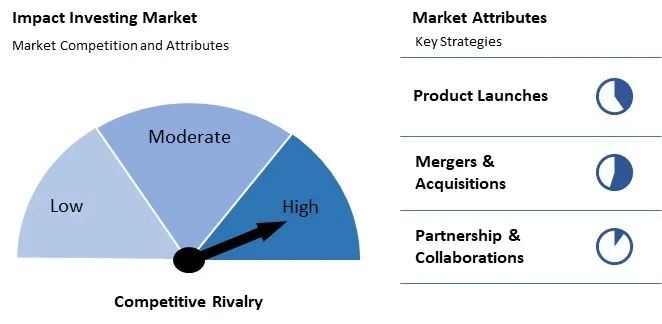
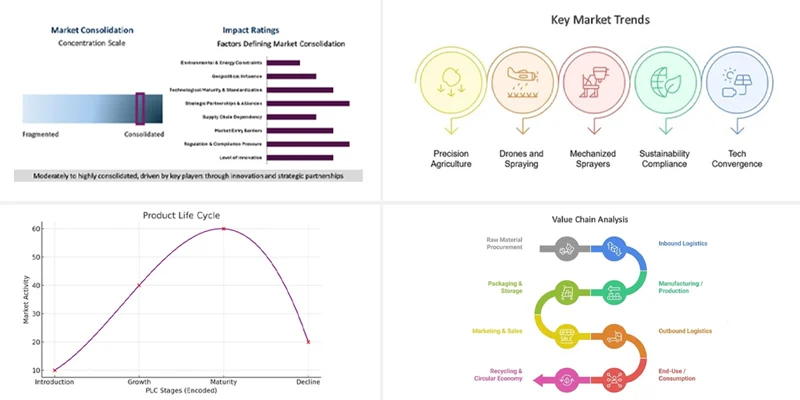
The impact investing market is very competitive because more people want socially responsible and sustainable investments. The market is still spread out, with many small and mid-sized firms, NGOs, and big investors all trying to grow. New ideas, clear reporting, real impact results, and strong ESG focus help companies stand out. This creates a lively space for new players and special investment plans to grow.
| Report Attribute | Details |
|---|---|
| Market size value in 2024 | USD 1.34 Trillion |
| Market size forecast in 2032 | USD 2.34 Trillion |
| Base Year | 2024 |
| Historical Period | 2021 to 2023 |
| Forecast Period | 2025 to 2032 |
| Revenue Growth Rate | CAGR of 7.5% from 2025 to 2032 |
| Number of Pages | 360 |
| Number of Tables | 456 |
| Report coverage | Market Trends, Revenue Estimation and Forecast, Segmentation Analysis, Regional and Country Breakdown, Competitive Landscape, Market Share Analysis, Porter’s 5 Forces Analysis, Company Profiling, Companies Strategic Developments, SWOT Analysis, Winning Imperatives |
| Segments covered | Investment Style, Asset Class, Investor Type, Offerings, Region |
| Country scope |
|
| Companies Included | BlackRock, Inc., THE GOLDMAN SACHS GROUP, INC., Bain Capital, LP., Morgan Stanley & Co. LLC, Vital Capital, Generation Investment Management LLP, TPG Inc., Kohlberg Kravis Roberts & Co. L.P., LeapFrog Investments Group, Ltd., and Community Investment Management LLC |
By Investment Style
By Asset Class
By Investor Type
By Offerings
By Geography
This Market size is expected to reach $2.34 trillion by 2032.
Growing Awareness of Social and Environmental Challenges are driving the Market in coming years, however, Lack of Standardized Metrics and Measurement Frameworks restraints the growth of the Market.
BlackRock, Inc., THE GOLDMAN SACHS GROUP, INC., Bain Capital, LP., Morgan Stanley & Co. LLC, Vital Capital, Generation Investment Management LLP, TPG Inc., Kohlberg Kravis Roberts & Co. L.P., LeapFrog Investments Group, Ltd., and Community Investment Management LLC
The expected CAGR of this Market is 7.5% from 2023 to 2032.
The Active market led the maximum revenue in the Market by Investment Style in 2024, thereby, achieving a market value of $1,662.1 Billion by 2032.
The North America region dominated the Market by Region in 2024, thereby, achieving a market value of $873.2 Billion by 2032.
Our team of dedicated experts can provide you with attractive expansion opportunities for your business.






 Unique Offerings