“Global Fortified Rice Market to reach a market value of USD 18.17 Billion by 2032 growing at a CAGR of 7.2%”
The Global Fortified Rice Market size is expected to reach $18.17 billion by 2032, rising at a market growth of 7.2% CAGR during the forecast period.
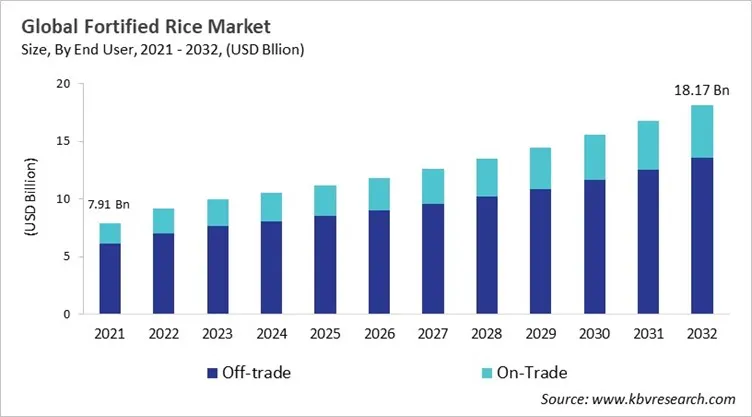
The global fortified rice market has grown as a public health measure to help people who rely on rice as a main food source and have low levels of micronutrients. Rice fortification started as small pilot projects and donor-led initiatives in Asia and Latin America. Now, it has grown into large-scale government-led programs backed by organizations like the World Health Organization (WHO), the Food and Agriculture Organization (FAO), and the World Food Programme. Fortification became more effective thanks to improvements in extrusion technology that embedded nutrients into rice kernels. This made sure that the nutrients stayed stable during cooking and that people still liked the rice. Fortified rice became a part of national food distribution, school feeding, and humanitarian aid programs over time. It helped people who were lacking in iron, folate, and vitamin A and became a cheap way to get nutrition.
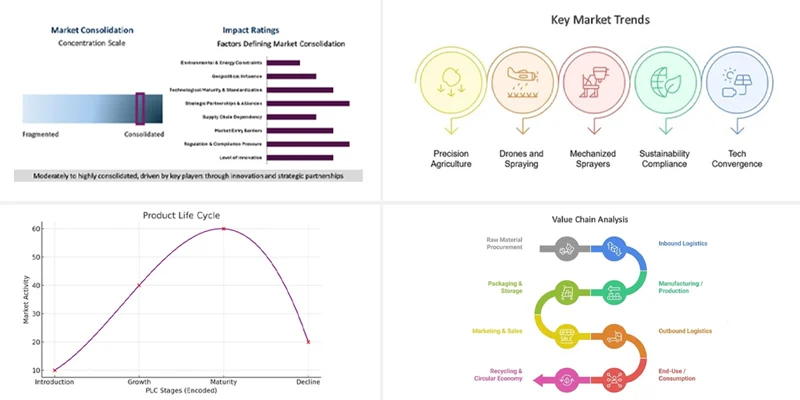
The market is changing because of three main trends: the government is making fortification a standard practice through safety nets; advanced processing technologies are being used more; and emergency feeding is becoming more common. Governments and international organizations focus on regulatory requirements, partnerships between the public and private sectors, consumer acceptance, and monitoring systems as part of their strategies. In most consumer markets, competition is based on brands, but in this one, it's based on scaling programs, lowering costs, and making sure everyone follows the rules. The fortified rice market works through collective action, and progress is measured by how well programs reach people who are at risk and reduce hidden hunger, not by how much of the market share they have.
Due to supply chain failures, labor shortages, and trade restrictions, the COVID-19 pandemic caused disruptions in the global market for fortified rice, slowing production and delaying international shipments. Access for vulnerable populations was further restricted by the suspension of school feeding and nutrition programs, and fortification efforts were put under pressure by growing expenses and budget reallocations in low-income nations. Nonetheless, the crisis also highlighted the significance of nutrition security, leading governments and international organizations to reaffirm their commitments to fortifying staple foods. Despite logistical difficulties, humanitarian organizations such as the World Food Programme increased the use of fortified rice in relief operations, maintaining demand. Long-term, the pandemic boosted domestic extrusion facility investments and policy support, reaffirming fortified rice as a vital instrument for public health resilience. Thus, the COVID -19 pandemic had a Negative impact on the market.

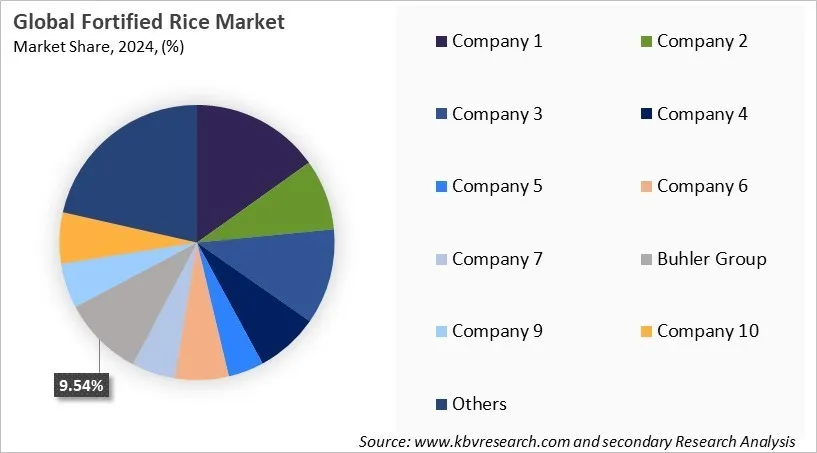
The leading players in the market are competing with diverse innovative offerings to remain competitive in the market. The above illustration shows the percentage of revenue shared by some of the leading companies in the market. The leading players of the market are adopting various strategies in order to cater demand coming from the different industries. The key developmental strategies in the market are Acquisitions, and Partnerships & Collaborations.
Based on End User, the market is segmented into Off-trade (Supermarkets & Hypermarkets, Convenience Stores, Online stores, Specialty Stores, and Other Off-trade Type) and On-Trade. The On-Trade segment procured 23.5% revenue share in the market in 2024. Demand here is shaped by wellness-oriented menus, portion consistency, and the ability to standardize nutrition across large volumes. Chefs and nutrition teams value fortification that withstands varied cooking methods without altering taste or texture. Procurement policies, traceability requirements, and vendor audits influence supplier selection and long-term contracts. Tourism recovery, corporate events, and public feeding programs expand placements across outlets and dayparts.
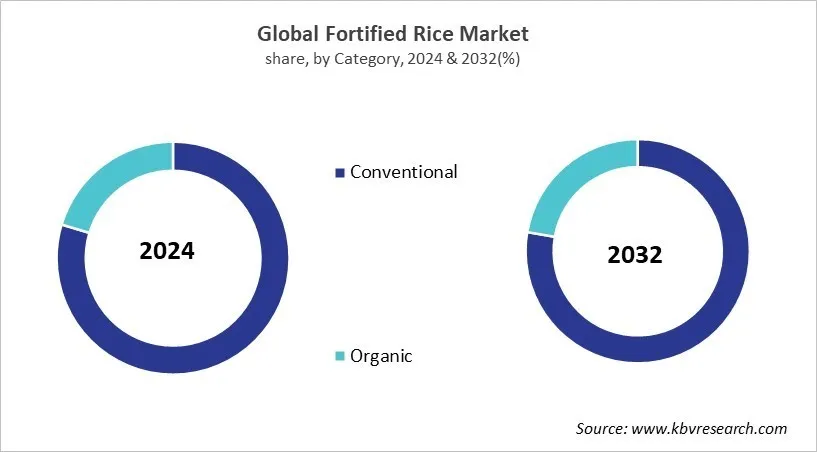
Based on Category, the market is segmented into Conventional and Organic. The organic segment recorded 20.3% revenue share in the market in 2024. The organic category represents a smaller but steadily expanding space, driven by health-conscious consumers who prioritize clean labels, traceable sourcing, and lower synthetic input profiles. Brands in this segment emphasize third-party certifications and transparent supply partnerships to build trust. Distribution often skews toward specialty retailers and e-commerce, where storytelling and detailed product information are easier to convey. Price premiums are supported by perceived quality, sustainability narratives, and limited-run varietals.
Free Valuable Insights: Global Fortified Rice Market size to reach USD 18.17 Billion by 2032
Region-wise, the market is analyzed across North America, Europe, Asia Pacific, and LAMEA. The Asia Pacific segment attained the 55.5% revenue share in the market in 2024. The market is slowly growing in North America and Europe, due to more people are learning about nutrition, there is more demand for functional foods, and there are immigrant communities that eat a lot of rice. In these areas, fortified rice is more of a value-added health product in stores than a major public health intervention. Governments and regulatory bodies establish standards for food fortification; however, rice fortification remains voluntary and driven by commercial interests, with private food companies and specialized health-oriented brands spearheading its adoption.
In the Asia-Pacific and LAMEA regions, fortified rice is a big part of national nutrition security plans. Asia-Pacific is the region that eats the most rice in the world. Countries like India, the Philippines, and Indonesia are using fortified rice in school feeding, public distribution, and safety net programs. The LAMEA region is making progress in different ways. For example, Latin America, led by Costa Rica and Brazil, has successfully added fortified rice to regulated frameworks and institutional feeding. In the Middle East and Africa, on the other hand, adoption is still growing, thanks to humanitarian aid and pilot programs in areas with a lot of need. More and more, governments and aid groups in these areas are using fortified rice to help people who are at risk of anemia, vitamin A, and folate deficiencies.
| Report Attribute | Details |
|---|---|
| Market size value in 2025 | USD 11.14 Billion |
| Market size forecast in 2032 | USD 18.17 Billion |
| Base Year | 2024 |
| Historical Period | 2021 to 2023 |
| Forecast Period | 2025 to 2032 |
| Revenue Growth Rate | CAGR of 7.2% from 2025 to 2032 |
| Number of Pages | 428 |
| Number of Tables | 451 |
| Report coverage | Market Trends, Revenue Estimation and Forecast, Segmentation Analysis, Regional and Country Breakdown, Market Share Analysis, Porter’s 5 Forces Analysis, Company Profiling, Companies Strategic Developments, SWOT Analysis, Winning Imperatives |
| Segments covered | End User, Category, Nutrient, Region |
| Country scope |
|
| Companies Included | DSM-Firmenich, BASF SE, Cargill, Incorporated, Olam International Limited, General Mills Inc., Bunge Limited, KRBL Ltd., Buhler Group, LT Foods Limited, and Wilmar International Ltd |
By End User
By Category
By Nutrient
By Geography
The market size is projected to reach USD 18.17 Billion billion by 2032.
The fortified rice market is projected to grow at a CAGR of 7.2% between 2025 and 2032.
Rising global burden of micronutrient deficiencies coupled with supportive government policies and public distribution programs.
DSM-Firmenich, BASF SE, Cargill, Incorporated, Olam International Limited, General Mills Inc., Bunge Limited, KRBL Ltd., Buhler Group, LT Foods Limited, and Wilmar International Ltd
The Conventional segment led the maximum revenue in the Global Fortified Rice Market by Category in 2024, thereby, achieving a market value of $14.1 billion by 2032.
The Asia Pacific region dominated the Global Fortified Rice Market by Region in 2024, and would continue to be a dominant market till 2032; thereby, achieving a market value of $10.2 billion by 2032.
Our team of dedicated experts can provide you with attractive expansion opportunities for your business.







 Unique Offerings