“Global Event Logistics Market to reach a market value of USD 118.14 Billion by 2032 growing at a CAGR of 6.5%”
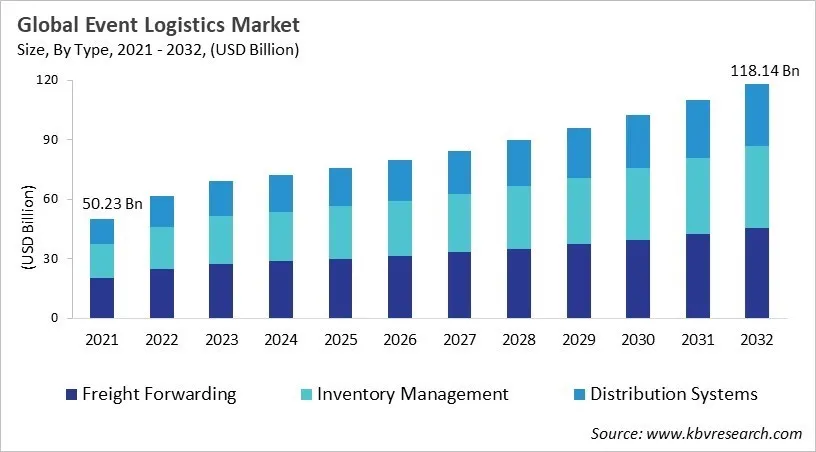
The Global Event Logistics Market size is expected to reach $118.14 billion by 2032, rising at a market growth of 6.5% CAGR during the forecast period.
The event logistics market has an important role to ensure hassle free execution of global and regional events. It includes the transportation, warehousing, clearance from customs authorities, and on-site management. This service caters to a wide range of consumers across sectors, conferences, trade fairs, international and domestics sports tournaments, and even festivals. These event logistics organizations have now updated their offerings with real-time tracking, contingency planning and automated documentation. It has helped the event logistics providers to address the growing complexities and strict timelines. The market is still experiencing an evolution with trends such as AI and IoT enabled digitalization, drive for sustainable practices such as inclusion of electric fleets vehicles as carbon-neutral fleets.
The event logistics market growth is fuelled with the innovation in this sector for e.g. AI-driven route optimization and blockchain for secure documentation, and IoT-enabled smart crates. The market in North America, Europe and growing Asia-Pacific regions are driving the market growth. The efficiency is an important focus are for the market participants. These players are working on last-mile solutions such as delivery robots and micro-hubs, however, increasing fuel prices, regulatory challenges and shortage of skilled labor are few of the factors restraining the market growth. Also, the COVID-19 pandemic in the near past disturbed the market owing to the lockdowns, border closures and transition to the virtual events thereby hurting the market revenues and hence limiting the market growth.

The globalization of the corporate, sports and cultural events is propelling the growth of even logistics market. The globalization of such events has offered a vast pool of opportunities to the event organizers worldwide and reach internal international audiences. Apart from the contracts, the event organizers are also able to showcase their brand to the worldwide audiences rather than restricting the exposure to domestic markets only. Further, the variety of events including sports events such as Formula 1 races, Olympics and FIFA World Cup along with the musical events provide these market participants with the opportunity for offer specialized services to international consumers.
The globalization of the corporate, sports and cultural events is propelling the growth of even logistics market. The globalization of such events has offered a vast pool of opportunities to the event organizers worldwide and reach internal international audiences. Apart from the contracts, the event organizers are also able to showcase their brand to the worldwide audiences rather than restricting the exposure to domestic markets only. Further, the variety of events including sports events such as Formula 1 races, Olympics and FIFA World Cup along with the musical events provide these market participants with the opportunity for offer specialized services to international consumers.
The complexities and risk associated with cross-border and international operations due to the complex phases of customs regulations, a number of compliances majorly for the import-export relates activities, variations in tariffs and varied levels of infrastructure developments poses difficult challenges for the market players. Also, since the international events especially the sports tournaments are hosted in multiple cities. This further adds to the logistical complexities.

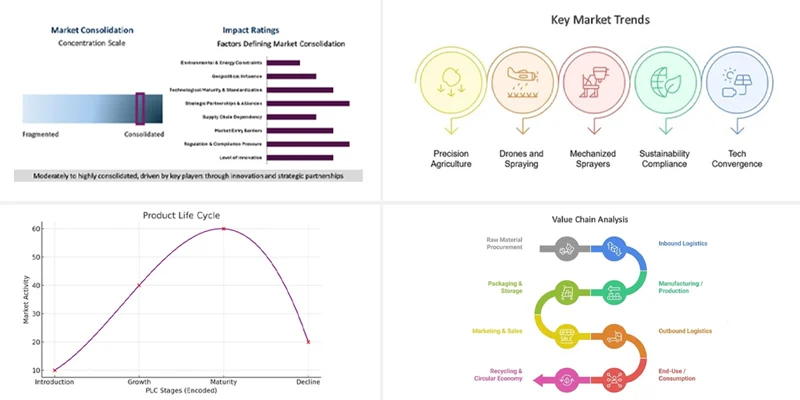
The event logistics market value chain begins with Event Planning & Conceptualization, where strategies are developed to meet client objectives. This is followed by Vendor Coordination & Equipment Sourcing, ensuring timely procurement. Freight Forwarding & Customs Management facilitates international shipping. Next, Onsite Delivery & Installation enables setup, while Event Execution & Real-Time Support ensures smooth operations. Post-event, Teardown, Reverse Logistics & Waste Management is conducted, concluding with Client Reporting & Analysis to evaluate performance and ROI. This structured approach ensures efficient, end-to-end event execution.
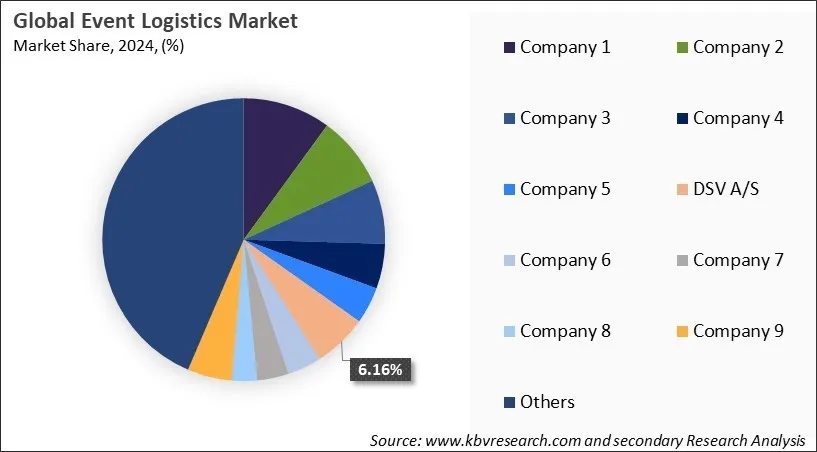
The leading players in the market are competing with diverse innovative offerings to remain competitive in the market. The above illustration shows the percentage of revenue shared by some of the leading companies in the market. The leading players of the market are adopting various strategies in order to cater demand coming from the different industries. The key developmental strategies in the market are Acquisitions, and Partnerships & Collaborations.
The COVID-19 pandemic resulted in the cancellations and postponements for indefinite periods of the events worldwide including exhibitions, concerts, sports tournaments, trade shows, festivals and conferences. With the government enforcing lockdowns and restrictions on gatherings and movements the requirement for transportation, on-site coordination and storage ceased altogether thereby leading to the massive decline in revenues across providers. Hence, the COVID-19 led to the negative impact on the Global Event Logistics Market.
Based on type, the event logistics market is characterized into freight forwarding, inventory management, and distribution systems. The inventory management segment garnered 35% revenue share in the global event logistics market in 2024. The inventory management segment holds the equal importance in the market as it safeguards the event-related goods including promotional materials, staging tools and equipment and merchandise are sufficiently stored, tracked and made available as required. Effective control of inventory assist the organizers in avoiding delays, shortages or excesses thereby maintaining the smooth operations.
| Category | Details |
|---|---|
| Use Case Title | Confidential |
| Date | 2025 |
| Entities Involved | Confidential |
| Objective | Maintain accurate, real-time tracking of sporting equipment, uniforms, sponsor merchandise, and hospitality supplies across decentralized venues. |
| Context and Background | Major events require meticulous tracking of thousands of items across multiple sites. Efficient inventory control ensures on-time availability, reduced shrinkage, and seamless operational flow. |
| Description | DB Schenker partnered with Zebra Technologies to deploy RFID-tagged inventory management for the Paris 2024 Olympics. Each batch of event gear and branded goods was tracked from central warehouses to on-site storerooms at venues. Real-time dashboards helped manage stockouts and avoid duplication. |
| Key Capabilities Deployed |
|
| Regions Covered |
|
| Benefits |
|
| Source | Confidential |
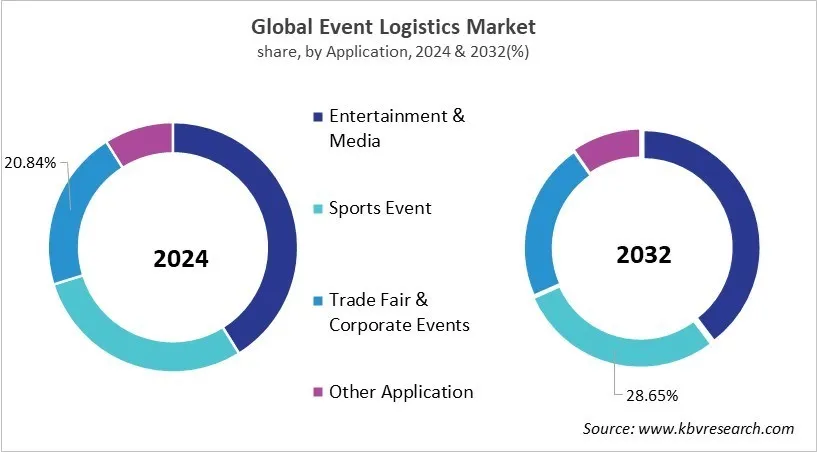
On the basis of application, the market is classified into entertainment & media, sports event, trade fair & corporate events, and others. The sports event segment recorded 29% revenue share in the event logistics market in 2024. The sports event segment is driven by growing popularity of leagues, tournaments and international games. Logistics operations in this segment revolves around venue equipment, transporting sports gear, merchandise, and management of team travel. Such events generally involve the hoisting in multiple cities and countries hence demand secure, punctual and often large scale coordination.
Free Valuable Insights: Global Event Logistics Market size to reach USD 118.14 Billion by 2032
Region-wise, the event logistics market is analyzed across North America, Europe, Asia Pacific, and LAMEA. The North America segment witnessed 38% revenue share in the event logistics market in 2024. The North America region maintains a dominant position in event logistics market fuelled by the establishment of entertainment sector, frequent large sports events and high-profile corporate events majorly in U.S. and Canada.
| Report Attribute | Details |
|---|---|
| Market size value in 2024 | USD 72.21 Billion |
| Market size forecast in 2032 | USD 118.14 Billion |
| Base Year | 2024 |
| Historical Period | 2021 to 2023 |
| Forecast Period | 2025 to 2032 |
| Revenue Growth Rate | CAGR of 6.5% from 2025 to 2032 |
| Number of Pages | 263 |
| Number of Tables | 278 |
| Report coverage | Market Trends, Revenue Estimation and Forecast, Segmentation Analysis, Regional and Country Breakdown, Market Share Analysis, Porter’s 5 Forces Analysis, Company Profiling, Companies Strategic Developments, SWOT Analysis, Winning Imperatives |
| Segments covered | Type, Application, Region |
| Country scope |
|
| Companies Included | Deutsche Post DHL Group (The Deutsche Post AG), Kuehne + Nagel International AG (Kuehne Holding AG), DB Schenker, C.H. Robinson Worldwide, Inc., FedEx Corporation, DSV A/S, Nippon Express Co., Ltd., XPO, Inc., CEVA Logistics (CMA CGM Group), and United Parcel Service of America, Inc. |
By Type
By Application
By Geography
This Market size is expected to reach $118.14 billion by 2032.
Rising Globalization Of Events And Entertainment are driving the Market in coming years, however, High Complexity And Risk In Cross-Border Operations restraints the growth of the Market.
Deutsche Post DHL Group (The Deutsche Post AG), Kuehne + Nagel International AG (Kuehne Holding AG), DB Schenker, C.H. Robinson Worldwide, Inc., FedEx Corporation, DSV A/S, Nippon Express Co., Ltd., XPO, Inc., CEVA Logistics (CMA CGM Group), and United Parcel Service of America, Inc.
The expected CAGR of this Market is 6.5% from 2023 to 2032.
The Freight Forwarding segment captured the maximum revenue in the Market by Type in 2024, thereby, achieving a market value of $45.3 billion by 2032.
The North America region dominated the Market by Region in 2024, and would continue to be a dominant market till 2032; thereby, achieving a market value of $42.9 billion by 2032.
Our team of dedicated experts can provide you with attractive expansion opportunities for your business.







 Unique Offerings