The Europe Personal Identity Management Market would witness market growth of 11.9% CAGR during the forecast period (2025-2032).
The Germany market dominated the Europe Personal Identity Management Market by Country in 2024, and would continue to be a dominant market till 2032; thereby, achieving a market value of $2,580.9 million by 2032. The UK market is exhibiting a CAGR of 10.8% during (2025 - 2032). Additionally, The France market would experience a CAGR of 12.7% during (2025 - 2032). The Germany and UK led the Europe Personal Identity Management Market by Country with a market share of 21.6% and 17.9% in 2024. The Spain market is expected to witness a CAGR of 13.4% during throughout the forecast period.
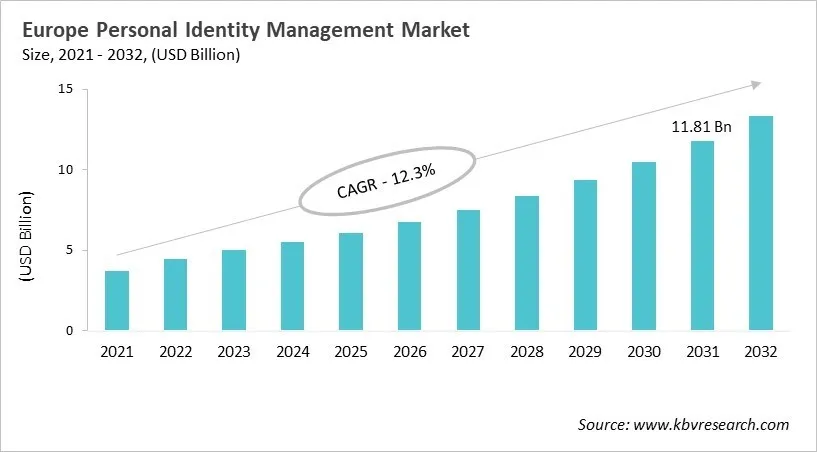
The European Personal Identity Management Market has become a key part of the region's digital economy thanks to strong public policy alignment, strict data protection rules, and safe delivery of digital services. The move from document-based identity systems to digital authentication sped up as e-government services grew and national electronic identity programs were put into place. The eIDAS regulation changed everything by allowing digital identities to be recognized across borders. This turned identity management into a pan-European digital infrastructure. Today, the market is a mix of mature regulations and new technologies that make it possible for public and private sectors to interact safely online.
The rise of digital identity wallets, more biometric integration, and more private-sector use in banking, healthcare, telecommunications, and travel are all examples of how the market is changing right now. Top companies focus on building long-term relationships with governments, coming up with new security measures all the time, and making identity solutions that work on multiple platforms and can grow with the business. Europe's focus on privacy, digital sovereignty, and user control sets its identity ecosystem apart from others around the world. As more mobile- and software-based companies enter the market, competition is getting tougher. However, high regulatory barriers ensure that trust, compliance, and technical expertise are still the most important factors in market leadership.
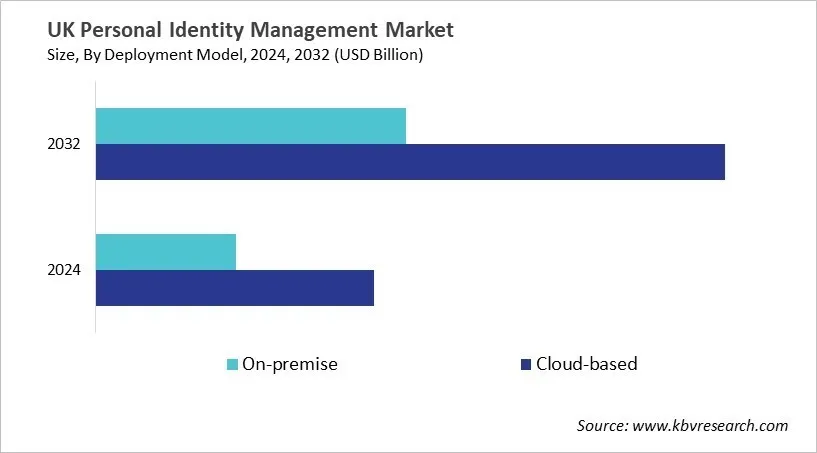
Based on Deployment Model, the market is segmented into Cloud-based, and On-premise. With a compound annual growth rate (CAGR) of 10.9% over the projection period, the Cloud-based Market, dominate the UK Personal Identity Management Market by Deployment Model in 2024 and would be a prominent market until 2032. The On-premise market is expected to witness a CAGR of 10.6% during (2025 - 2032).
Based on Service Type, the market is segmented into Managed Services, and Professional Services. Among various France Personal Identity Management Market by Service Type; The Managed Services market achieved a market size of USD $439.8 Million in 2024 and is expected to grow at a CAGR of 12.4 % during the forecast period. The Professional Services market is predicted to experience a CAGR of 13% throughout the forecast period from (2025 - 2032).
Based on Vertical, the market is segmented into Banking Financial Services and Insurance (BFSI), Government, Healthcare, IT & Telecom, Retail, Energy & Utilities, and Other Verticals. The Banking, Financial Services, and Insurance (BFSI) market segment dominated the Germany Personal Identity Management Market by Vertical is expected to grow at a CAGR of 8.5 % during the forecast period thereby continuing its dominance until 2032. Also, The Government market is anticipated to grow as a CAGR of 9.8 % during the forecast period during (2025 - 2032).
Free Valuable Insights: The Global Personal Identity Management Market will Hit USD 52.94 Billion by 2032, at a CAGR of 12.1%
Germany's Personal Identity Management Market is based on a strong tradition of civil registration and strict data protection rules. It is also highly regulated and focused on security. The national electronic identity card is still the most important part of digital authentication. It lets people safely access e-government services, do financial transactions, and have trusted digital interactions with strong legal protection. Strict privacy laws, government-led security standards, and the need to keep the public's trust high by being open and giving users control over their data all affect how the market grows. Current trends show that digital identity models that combine both mobile and hybrid elements are becoming more popular. These models are supported by technologies that protect privacy and allow for selective data sharing. At the same time, efforts to harmonize European identities are making systems work together while still respecting national sovereignty. Overall, the market has high barriers to entry, competition driven by the public sector, and a stable, long-term focus on infrastructure.

By Application
By Deployment Model
By Service Type
By Vertical
By Country
Our team of dedicated experts can provide you with attractive expansion opportunities for your business.



 Unique Offerings