The Europe Loyalty Management Market is expected to reach $6.05 billion by 2031 and would witness market growth of 10.1% CAGR during the forecast period (2025-2032).
The Germany market dominated the Europe Loyalty Management Market by Country in 2024, and would continue to be a dominant market till 2032; thereby, achieving a market value of $1,302.5 million by 2032. The UK market is exhibiting a CAGR of 9.1% during (2025 - 2032). Additionally, The France market would experience a CAGR of 10.8% during (2025 - 2032). The Germany and UK led the Europe Loyalty Management Market by Country with a market share of 21.6% and 19.9% in 2024. The Spain market is expected to witness a CAGR of 11.4% during throughout the forecast period.
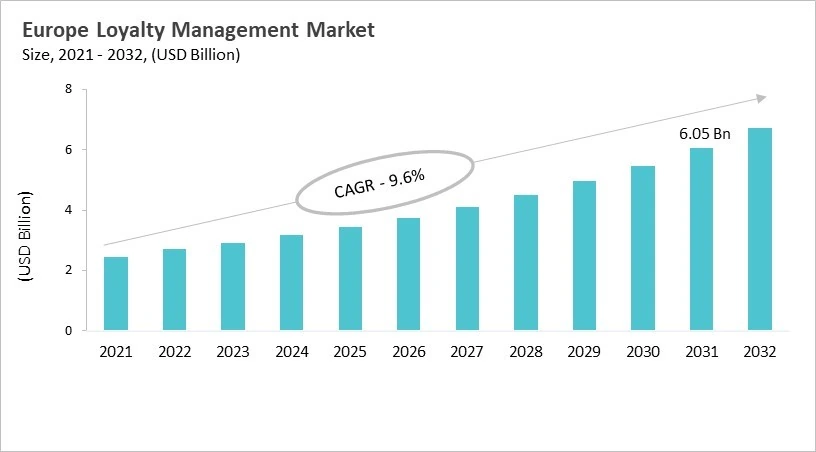
The European Loyalty Management Market has changed from simple, paper-based reward systems to complex, data-driven engagement ecosystems that are in line with the digital transformation of retail, financial services, travel, and telecommunications. Early programs focused on earning points and using physical membership cards. However, the growth of the EU single market and the European Commission's Digital Single Market strategy sped up the use of integrated CRM and digital loyalty platforms. The General Data Protection Regulation (GDPR), which went into effect in 2018, changed the ecosystem in a big way. It forced businesses to build privacy-by-design frameworks, improve cybersecurity, and make consent mechanisms clearer. At the same time, companies like Mastercard that are leading the way in digital payments have built rewards directly into payment systems. The COVID-19 pandemic also sped up online engagement, gamification, and personalized digital incentives.
Omnichannel integration, AI-driven personalization, sustainability alignment, and partnerships between ecosystems in different industries are what define the market today. Comarch and Antavo are two of the best-known providers that focus on scalable cloud-based platforms, modular architectures, and advanced analytics to help businesses create personalized engagement strategies. Competition is based on technological ability, knowledge of how to follow rules, and the ability to integrate with other systems. GDPR makes it harder for new vendors to get in, which is good for established vendors. More and more, loyalty programs include experiential rewards, coalition partnerships, and incentives linked to sustainability. This is because European consumers expect trust, convenience, and shared environmental values. Because of this, the market has changed from retention models based on discounts to customer engagement ecosystems that are based on value, safe, and built into digital platforms.
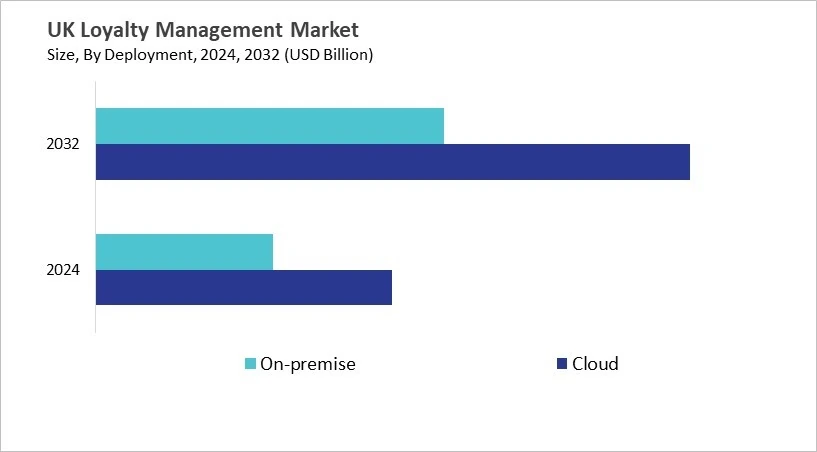
Based on Deployment, the market is segmented into Cloud and On-premise. With a compound annual growth rate (CAGR) of 9.3% over the projection period, the Cloud Market, dominate the UK Loyalty Management Market by Deployment in 2024 and would be a prominent market until 2032. The On-premise market is expected to witness a CAGR of 8.9% during (2025 - 2032).
Based on Vertical, the market is segmented into Retail & Consumer Goods, BFSI, IT & Telecommunication, Hospitality, Transportation, Media & Entertainment and Other Verticals. The Retail & Consumer Goods market segment dominated the Germany Loyalty Management Market by Vertical is expected to grow at a CAGR of 7 % during the forecast period thereby continuing its dominance until 2032. Also, The BFSI market is anticipated to grow as a CAGR of 8.1 % during the forecast period during (2025 - 2032).
Free Valuable Insights: The Worldwide Loyalty Management Market is projected to reach USD 25.70 billion by 2032, at a CAGR of 10.3%
Germany has one of the most developed and organized loyalty management markets in Europe. This is because it has a strong retail ecosystem, a lot of buying power, and a lot of people using digital technology. The country benefits from established coalition programs like Payback and strong enterprise technology support from companies like SAP, which makes it possible to use advanced CRM and analytics tools. Digital and contactless payments are growing, and consumers prefer personalized, value-driven rewards. Strict data protection standards that follow the GDPR also help growth. The move from traditional card-based systems to AI-enabled, app-driven ecosystems, along with subscription-based and coalition partnerships, shows how engagement strategies are changing. Intense competition between retailers, banks, airlines like Miles & More, and fintech companies keeps driving innovation, secure data management, and omnichannel integration, making Germany the best loyalty market in Europe.

By Organization Size
By Deployment
By Component
By Vertical
By Country
Our team of dedicated experts can provide you with attractive expansion opportunities for your business.




 Unique Offerings