The Europe Digital Lending Platform Market is expected to reach $14.08 billion by 2031 and would witness market growth of 27.0% CAGR during the forecast period (2025-2032).
The UK market dominated the Europe Digital Lending Platform Market by Country in 2024, and would continue to be a dominant market till 2032; thereby, achieving a market value of $3,255.5 million by 2032. The Germany market is experiencing a CAGR of 25.9% during (2025 - 2032). Additionally, The France market would exhibit a CAGR of 27.8% during (2025 - 2032). The UK and Germany led the Europe Digital Lending Platform Market by Country with a market share of 20.2% and 20.1% in 2024. The Spain market is expected to witness a CAGR of 28.8% during throughout the forecast period.
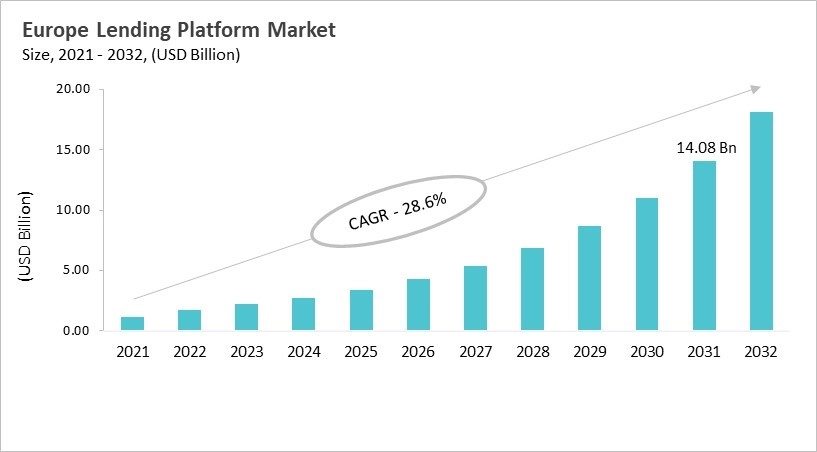
Digital lending has become a key part of Europe's digital finance transformation. This is thanks to new technologies, helpful EU policies, and changing customer expectations. Since the middle of the 2010s, fintech has grown, and strategies like the EU Digital Finance Strategy and open finance frameworks have sped up the process of automating loan origination, approval, and servicing. Along with traditional banks, neobanks and fintech companies now use digital platforms to make it easier for people and small businesses to get credit. Regulatory sandboxes and innovation hubs have made it easier to try new things while keeping things stable and trustworthy. Overall, digital lending has grown naturally as more people use technology, policies support it, and the need for quick, clear, and easy credit services grows.
The digital lending market in Europe is changing in important ways. For example, lending is moving from branches to fully digital platforms, banks and fintech companies are merging, and regulatory oversight is getting stronger. Open APIs and alternative data make it possible to make credit decisions faster and offer more personalized loan products. Institutions are updating their old systems by using cloud infrastructure and automated workflows, and they are also building compliance, fraud prevention, and data protection into the design of their platforms. Competition is getting tougher between traditional banks, fintechs, and neobanks. They are all trying to stand out by offering different user experiences, better technology, and better compliance with rules. These factors make digital lending a permanent part of Europe's financial system in the long term.
Based on End-User, the market is segmented into Banks, Credit Unions, Peer-to-Peer Lending, Insurance Companies, Savings & Loan Associations, and Other End-User. Among various France Digital Lending Platform Market by End-User; The Banks market achieved a market size of USD $134.7 Million in 2024 and is expected to grow at a CAGR of 26.7 % during the forecast period. The Savings & Loan Associations market is predicted to experience a CAGR of 29.2% throughout the forecast period from (2025 - 2032).
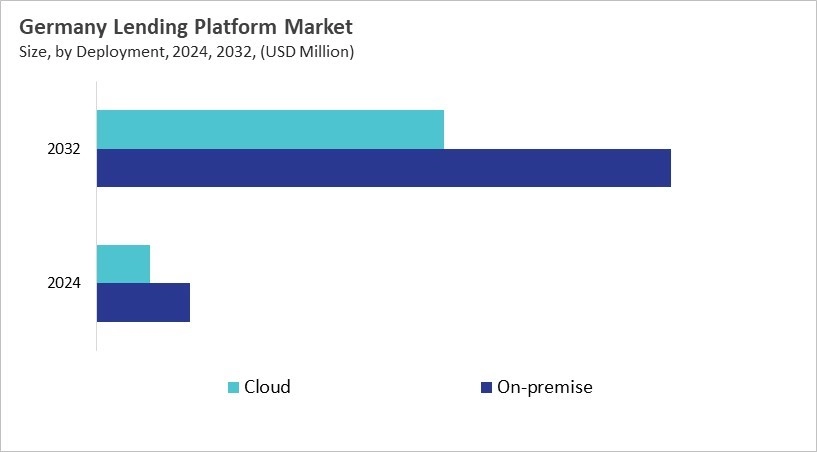
Based on Deployment, the market is segmented into On-premise, and Cloud. The On-premise market segment dominated the Germany Digital Lending Platform Market by Deployment is expected to grow at a CAGR of 25.5 % during the forecast period thereby continuing its dominance until 2032. Also, The Cloud market is anticipated to grow as a CAGR of 26.5 % during the forecast period during (2025 - 2032).
Free Valuable Insights: The Worldwide Digital Lending Platform Market is projected to reach USD 6.10 billion by 2032, at a CAGR of 27.5%
The UK has one of the most developed digital lending markets in the world, thanks to early regulatory leadership from the Financial Conduct Authority and a high level of fintech adoption. Open banking, which is run by the Open Banking Implementation Entity, has made it possible to share data safely, which speeds up loan approvals and makes credit assessments more accurate. Embedded lending, RegTech integration, and AI-based risk management are all trends in the market. Digital lenders are putting credit into increased e-commerce and business platforms. They also use automation to make things run more smoothly and follow the rules. Partnerships with banks and data providers that are planned out help the company grow and reach more people. Fintechs, challenger banks, and traditional banks are all competing fiercely with each other. They set themselves apart by how quickly they come up with new ideas and how well they treat customers. Strict rules help keep things stable, which strengthens the UK's position as Europe's top digital lending center.

By Deployment
By Component
By End-User
By Country
Our team of dedicated experts can provide you with attractive expansion opportunities for your business.



 Unique Offerings