“Global Enterprise Networking Market to reach a market value of USD 289.96 Billion by 2032 growing at a CAGR of 5.9%”
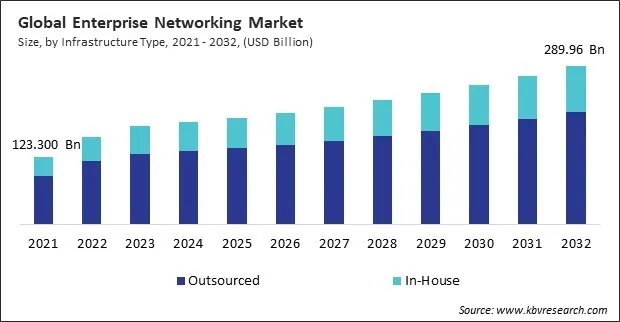
The Global Enterprise Networking Market size is expected to reach $289.96 billion by 2032, rising at a market growth of 5.9% CAGR during the forecast period.
It is often chosen by organizations seeking professional expertise, operational efficiency, and reduced internal resource requirements. Providers typically offer comprehensive solutions that include monitoring, security, updates, and scalability, which are delivered under clearly defined service-level agreements. This model enables businesses to streamline their IT operations while leveraging the capabilities of specialized vendors.
The major strategies followed by the market participants are Partnerships as the key developmental strategy to keep pace with the changing demands of end users. For instance, In June, 2025, Cloudflare, Inc. teamed up with TD SYNNEX, a software publisher company to deliver managed security services across Latin America. This collaboration offers MSSPs Cloudflare’s Zero Trust, SASE, and network security solutions through a unified platform, enhancing cybersecurity, reducing complexity, and supporting secure digital transformation in the region. In May, 2025, Hewlett Packard Enterprise Company teamed up with Vi, a telecommunications company to offer advanced managed services. This collaboration aims to enhance service delivery and provide innovative solutions for businesses. Users can subscribe to daily business and market updates, with notifications that can be easily turned off anytime via browser settings.
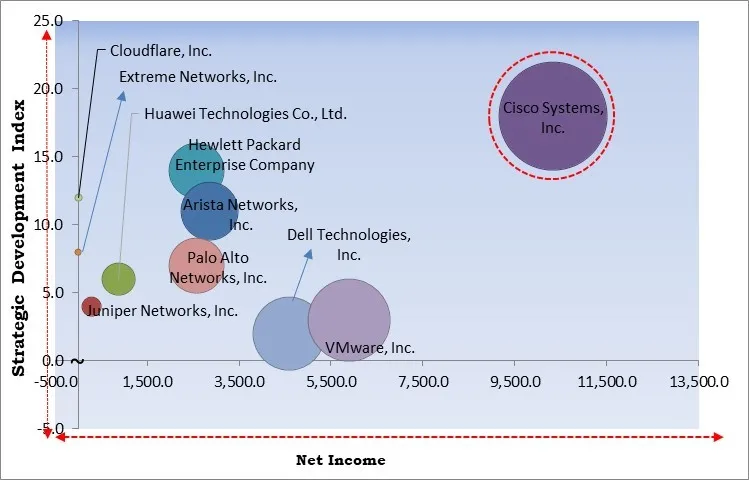
Based on the Analysis presented in the KBV Cardinal matrix; Cisco Systems, Inc. are the forerunners in the Market. In February, 2025, Cisco Systems, Inc. teamed up with NVIDIA, a cloud computing company to simplify AI-ready data center networks. Cisco Silicon One will integrate into NVIDIA’s Spectrum-X platform, enabling enterprises to standardize on a unified architecture. This collaboration aims to accelerate AI adoption through joint solutions, enhanced performance, and simplified deployment across enterprise environments. Companies such as VMware, Inc., Dell Technologies, Inc., and Arista Networks, Inc. are some of the key innovators in this Market.
The COVID-19 pandemic severely disrupted global supply chains, leading to significant delays in the production and delivery of networking hardware. Key components such as semiconductors, routers, and switches faced shortages due to factory shutdowns and transportation restrictions. As a result, many enterprises experienced procurement delays, stalling critical infrastructure upgrades and new deployments. This bottleneck adversely affected networking vendors' ability to fulfill orders, causing revenue losses and slowing market growth. Thus, the COVID-9 pandemic had negative impact on the market.

Enterprise networking has undergone a fundamental shift due to the global pivot to cloud computing and remote work. As organizations transition from on-premises infrastructure to multi-cloud and hybrid cloud environments, traditional networking paradigms are no longer sufficient. Enterprises now require scalable, flexible, and software-defined networking (SDN) solutions that can connect users, devices, and workloads seamlessly across distributed geographies. Thus, cloud-first and hybrid work models are reshaping enterprise networking, fueling demand for agile, scalable, and smart connectivity.
Additionally, as enterprise perimeters dissolve in the age of cloud and mobile workforces, the importance of robust network security has never been higher. Traditional perimeter-based models are being phased out in favor of Zero Trust architectures that presume breach by default. Instead of trusting users and devices based on location or network, Zero Trust continuously verifies identity, context, and risk signals before granting access to any resource. This paradigm shift is catalyzing innovation in enterprise networking infrastructure. Thus, zero trust and compliance demands are making security a core element of enterprise networks, driving smarter, integrated defenses.
Despite the significant benefits of enterprise networking modernization, the associated capital and operational expenditures remain a substantial restraint, especially for mid-sized businesses and organizations with legacy infrastructure. Implementing a modern enterprise network involves large-scale investments across hardware, software, skilled human resources, and long-term maintenance. In conclusion, high implementation and maintenance costs hinder modern network adoption, especially for smaller or legacy-dependent enterprises.
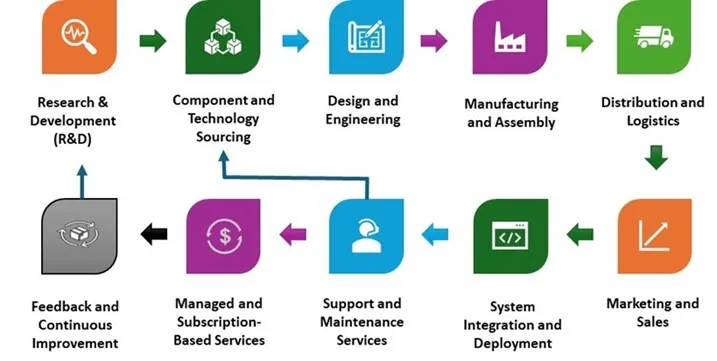
The value chain of this Market begins with Research and Development (R&D), where innovation and new product concepts are initiated. This is followed by Component and Technology Sourcing to acquire essential hardware and software inputs. Design and Engineering then transform these inputs into practical network solutions, which are realized through Manufacturing and Assembly. The finished products are distributed via Distribution and Logistics, reaching the market through effective Marketing and Sales strategies. Once sold, the solutions are implemented through System Integration and Deployment tailored to customer needs. Post-deployment, Support and Maintenance Services ensure continued functionality and customer satisfaction. Additionally, Managed and Subscription-Based Services provide ongoing value and regular updates. Finally, Feedback and Continuous Improvement loops user insights back to the R&D stage, creating a cycle of refinement and innovation that sustains competitiveness in the enterprise networking ecosystem.
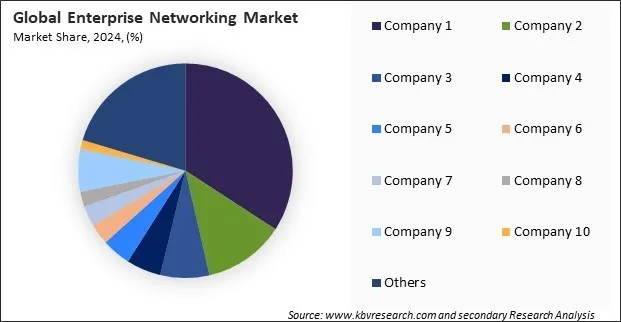
The leading players in the market are competing with diverse innovative offerings to remain competitive in the market. The above illustration shows the percentage of revenue shared by some of the leading companies in the market. The leading players of the market are adopting various strategies in order to cater demand coming from the different industries. The key developmental strategies in the market are Partnerships, Collaborations & Agreements.
Free Valuable Insights: Global Enterprise Networking Market size to reach USD 289.96 Billion by 2032
Based on infrastructure type, the market is characterized into outsourced and in-house. The in-house segment procured 28% revenue share in the market in 2024. The in-house infrastructure segment refers to enterprises that build and manage their networking systems internally using their own IT teams and resources. This setup allows organizations to have direct control over their networking architecture, security protocols, and system configurations.
| Category | Details |
|---|---|
| Use Case Title | Confidential |
| Date | 2025 |
| Entities Involved | Confidential |
| Objective | Enable high-speed, ultra-reliable industrial communication for autonomous operations by deploying an in-house private 5G network across Bosch manufacturing plants. |
| Context and Background | High-precision manufacturing environments require low-latency, deterministic communication. Bosch opted to fully own and operate its private 5G RAN to meet strict security and process control requirements. |
| Description | Nokia deployed a standalone 5G private wireless network, fully hosted on Bosch’s campus. The network supported real-time robotics, digital twins, and edge AI inference engines integrated with Bosch MES and ERP systems. |
| Key Capabilities Deployed |
|
| Regions Covered |
|
| Benefits |
|
| Source | Confidential |
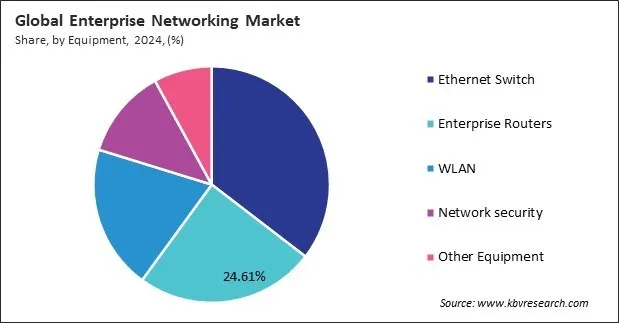
On the basis of equipment, the market is classified into ethernet switch, enterprise routers, WLAN, network security, and others. The ethernet switch segment acquired 35% revenue share in the market in 2024. The ethernet switch segment constitutes a foundational element in the market. Ethernet switches are instrumental in establishing and expanding local area networks (LANs), acting as central hubs for routing data between servers, computers, and other devices within an organization.
Region-wise, the enterprise networking market is analyzed across North America, Europe, Asia Pacific, and LAMEA. The Asia Pacific segment procured 39% revenue share in the enterprise networking market in 2024. The Asia Pacific region holds a dominant position in the market, driven by rapid economic development, extensive digital transformation initiatives, and a surge in enterprise-level IT infrastructure investments.
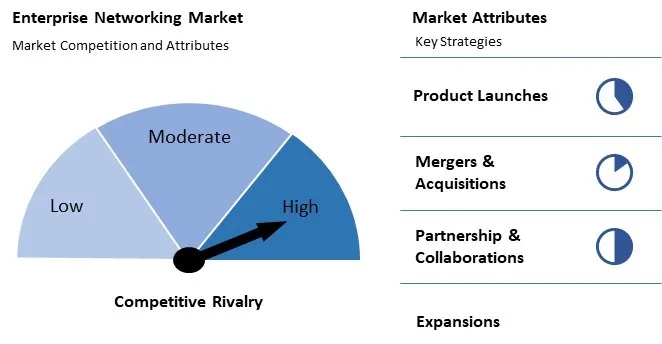
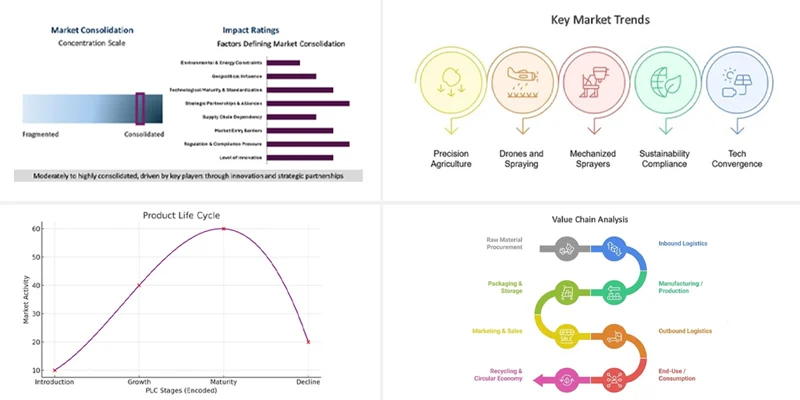
The competition in this market remains dynamic and fragmented. Numerous regional vendors, niche solution providers, and emerging startups drive innovation through specialized offerings, flexible pricing, and localized services. These smaller firms compete by addressing specific industry needs, enhancing network security, and integrating AI and cloud capabilities to attract mid-sized enterprises and underserved market segments.
| Report Attribute | Details |
|---|---|
| Market size value in 2024 | USD 186.40 Billion |
| Market size forecast in 2032 | USD 289.96 Billion |
| Base Year | 2024 |
| Historical Period | 2021 to 2023 |
| Forecast Period | 2025 to 2032 |
| Revenue Growth Rate | CAGR of 5.9% from 2025 to 2032 |
| Number of Pages | 325 |
| Number of Tables | 281 |
| Report coverage | Market Trends, Revenue Estimation and Forecast, Segmentation Analysis, Regional and Country Breakdown, Competitive Landscape, Market Share Analysis, Porter’s 5 Forces Analysis, Company Profiling, Companies Strategic Developments, SWOT Analysis, Winning Imperatives |
| Segments covered | Infrastructure Type, Equipment, Region |
| Country scope |
|
| Companies Included | Cisco Systems, Inc., Hewlett Packard Enterprise Company, Arista Networks, Inc., Juniper Networks, Inc., Dell Technologies, Inc., Extreme Networks, Inc., VMware, Inc. (Broadcom Inc.), Palo Alto Networks, Inc., Huawei Technologies Co., Ltd. (Huawei Investment & Holding Co., Ltd.), and Cloudflare, Inc. |
By Infrastructure Type
By Equipment
By Geography
This Market size is expected to reach $289.96 billion by 2032.
Rising Demand for Cloud-First and Hybrid Work Architectures are driving the Market in coming years, however, High Capital and Operational Costs of Network Modernization restraints the growth of the Market.
Cisco Systems, Inc., Hewlett Packard Enterprise Company, Arista Networks, Inc., Juniper Networks, Inc., Dell Technologies, Inc., Extreme Networks, Inc., VMware, Inc. (Broadcom Inc.), Palo Alto Networks, Inc., Huawei Technologies Co., Ltd. (Huawei Investment & Holding Co., Ltd.), and Cloudflare, Inc.
The expected CAGR of this Market is 5.9% from 2023 to 2032.
The Outsourced segment led the maximum revenue in the Market by Infrastructure Type in 2024, a thereby, achieving a market value of $204.84 billion by 2032.
The Asia Pacific region dominated the Market by Region in 2024, thereby, achieving a market value of $115.89 billion by 2032.
Our team of dedicated experts can provide you with attractive expansion opportunities for your business.












 Unique Offerings