“Global Electric Rice Cooker Market to reach a market value of USD 4.07 Billion by 2032 growing at a CAGR of 9.7%”
The Global Electric Rice Cooker Market size is expected to reach $4.07 billion by 2032, rising at a market growth of 9.7% CAGR during the forecast period. In the year 2024, the market attained a volume of 19530.9 Thousand Units experiencing a growth of 13.4% (2021-2024).
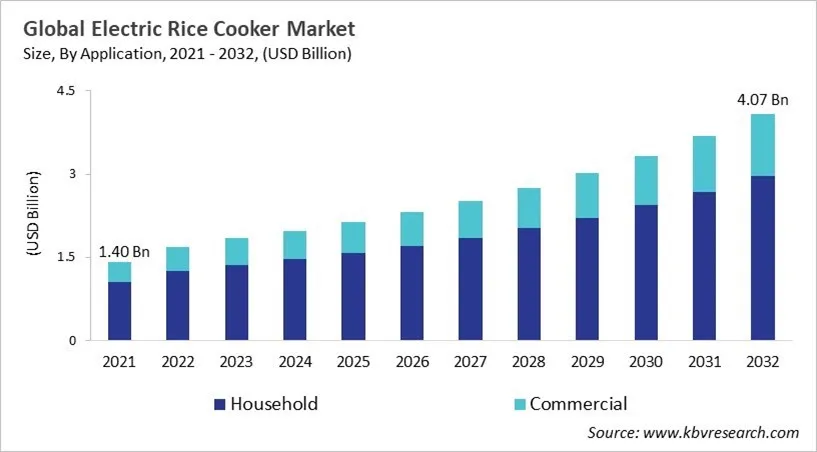
The electric rice cooker market has evolved into a dynamic global appliance segment driven by urbanization, convenience, and diversified culinary habits. As rice cookers gained traction in the emerging markets such as China, Southeast Asia, and Japan, increasing disposable incomes, rising interest in multifunctional cooking, and compact living spaces are some of the elements supporting adoption. The market’s development aligns closely with wider appliance trends that prioritize smart connectivity, sustainability, and energy efficiency. Regulatory frameworks like North America’s energy standards, Europe’s Ecodesign rules, and Asia government initiatives-continue to encourage manufacturing, innovation, and design, influencing brands toward durable, recyclable, and low-consumption products.
The rising wellness-focused cooking trends, demand for app-enabled, multi-use, and AI-assisted rice cookers is increasing, surging technological differentiation, and premiumisation. Asia Pacific is a leading consumption and production hub, witnessing rapid growth supported by expanding e-commerce channels and multicultural cuisines. Omnichannel strategies and digital retailing have reshaped consumer engagement and product visibility, allowing faster launches and targeted marketing. The electric rice cooker is witnessing intensive competition with global and regional brands offering efficient models, affordable for emerging nations. Changing consumer preferences, digital transformation, and sustainability pressures are positioning the electric rice cooker market for innovation-driven, continued global expansion.
The COVID-19 pandemic had a major impact on the growth of the electric rice cooker market. Lockdowns, labor shortages, and supply chain problems slowed down production in important manufacturing countries like China, Japan, and South Korea. The lack of raw materials, rising costs, and limits on international trade made it even harder to make and distribute goods. At the same time, the closing of stores and lower consumer spending caused demand to drop. The hospitality and food service industries, which are major end-users, also saw a big drop, which hurt commercial sales. Even though e-commerce helped a little, the uneven digital infrastructure made it less effective, which led to a temporary drop in both revenue and volume. In general, the pandemic made things harder, which delayed product launches, tech upgrades, and market growth. Thus, the COVID-19 pandemic had a negative impact on the market.

Based on Application, the market is segmented into Household and Commercial. The commercial segment attained 26% revenue share in the electric rice cooker market in 2024. The commercial segment in the electric rice cooker market is influenced by the rising demand from restaurants, hotels, catering services, and other food service establishments. In these settings, electric rice cookers are valued for their ability to prepare large quantities of rice with uniform quality and minimal supervision. Their robust design, higher capacity, and durability make them ideal for continuous usage in professional kitchens. In terms of volume the commercial segment would register 2,909.1 Thousand Units in 2024.
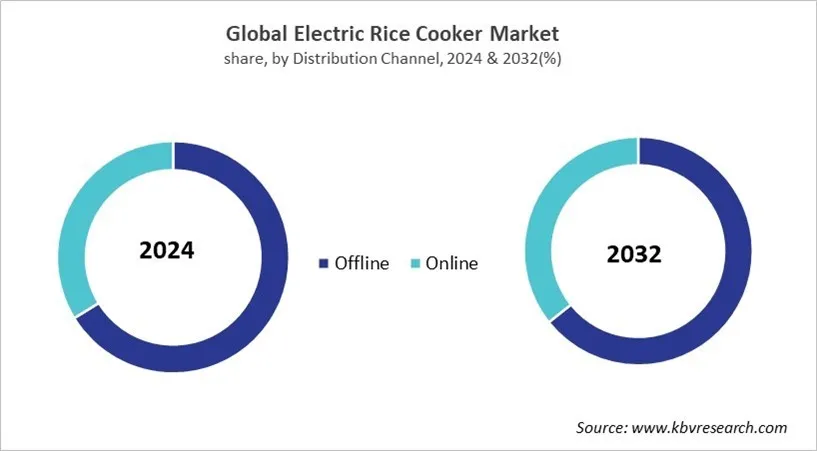
Based on Distribution Channel, the market is segmented into Offline and Online. The online segment recorded 34% revenue share in the electric rice cooker market in 2024. The online segment in the electric rice cooker market has been growing due to the increasing popularity of e-commerce platforms and the shift in consumer behavior toward digital shopping. Online channels provide a wide range of options, easy price comparisons, and access to customer reviews that influence purchasing decisions. The convenience of doorstep delivery, secure payment systems, and frequent promotional offers have further contributed to the rise of online sales.
Free Valuable Insights: Electric Rice Cooker Market size to reach USD 4.07 Billion by 2032
Region-wise, the electric rice cooker market is analyzed across North America, Europe, Asia Pacific, and LAMEA. The Asia Pacific segment gained 52% revenue share in the electric rice cooker market in 2024. The electric rice cooker market is predicted to grow at a steady rate in North America and Europe. The market is driven by increasing multicultural food habits, increasing appeal of convenient, time-saving kitchen applications, and smaller household sizes. In these developed markets, consumers largely prefer multifunctional and smart-connected rice cookers that integrate with wider smart-home ecosystems. Stringent energy-efficiency regulations, a strong emphasis on premium kitchen appliances, and sustainability standards also shape product demand. High-end models with programmable settings, advanced heating technologies, and eco-friendly designs are gaining traction, especially among health-conscious consumers and urban professionals.
In the Asia Pacific and LAMEA region, the electric rice cooker market is estimated to experience growth at a substantial rate in the upcoming years. This is because of strong local manufacturing bases in Japan, South Korea, and China, and high rice intake and established brand loyalty. Innovations in this region, particularly in Korea and Japan, where AI-assisted and premium IH (induction heating) cookers are largely being adopted. Moreover, the LAMEA electric rice cooker market is expanding, backed by rising awareness of convenient cooking technologies, increasing penetration of e-commerce, and rapid urbanization. Further, the rising interest in compact appliances and diversified grains is encouraging the growth of the electric rice cooker market.
| Report Attribute | Details |
|---|---|
| Market size value in 2025 | USD 2.1 Billion |
| Market size forecast in 2032 | USD 4.07 Billion |
| Base Year | 2024 |
| Historical Period | 2021 to 2023 |
| Forecast Period | 2025 to 2032 |
| Revenue Growth Rate | CAGR of 9.7% from 2025 to 2032 |
| Quantitative Data | Volume in Thousand Units, Revenue in USD Billion, and CAGR from 2025 to 2032 |
| Number of Pages | 533 |
| Number of Tables | 670 |
| Report coverage | Market Trends, Revenue Estimation and Forecast, Segmentation Analysis, Regional and Country Breakdown, Porter’s 5 Forces Analysis, Company Profiling, Companies Strategic Developments, SWOT Analysis, Winning Imperatives |
| Segments covered | Application, Distribution Channel, Product, Region |
| Country scope |
|
| Companies Included | TTK Prestige Limited, Zojirushi Corporation, Panasonic Holdings Corporation, Wonderchef Home Appliances Pvt. Ltd., Koninklijke Philips N.V., Breville Group Limited, AB Electrolux, Bajaj Electricals Limited, Newell Brands Inc., and Groupe SEB |
By Application (Volume, Thousand Units, USD Billion, 2021-2032)
By Distribution Channel (Volume, Thousand Units, USD Billion, 2021-2032)
By Product (Volume, Thousand Units, USD Billion, 2021-2032)
By Geography (Volume, Thousand Units, USD Billion, 2021-2032)
This Market size is expected to reach USD 4.07 billion by 2032.
The electric rice cooker market is projected to grow at a CAGR of 9.7% between 2025 and 2032.
Rising disposable incomes and growing middle-class spending, combined with rapid urbanisation, changing household structures, and increasingly time-sensitive lifestyles, are driving strong consumer demand.
TTK Prestige Limited, Zojirushi Corporation, Panasonic Holdings Corporation, Wonderchef Home Appliances Pvt. Ltd., Koninklijke Philips N.V., Breville Group Limited, AB Electrolux, Bajaj Electricals Limited, Newell Brands Inc., and Groupe SEB
The Offline segment led the maximum revenue in the Global Electric Rice Cooker Market by Distribution Channel in 2024, thereby, achieving a market value of $2.6 billion by 2032.
The Asia Pacific region dominated the Global Electric Rice Cooker Market by Region in 2024, and would continue to be a dominant market till 2032; thereby, achieving a market value of $2.2 billion by 2032.
Our team of dedicated experts can provide you with attractive expansion opportunities for your business.









 Unique Offerings