“Global Digital Map Market to reach a market value of USD 66.82 Billion by 2032 growing at a CAGR of 13.1%”
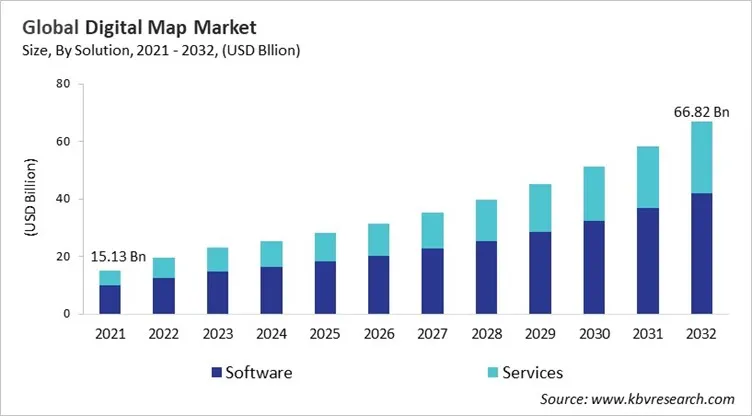
The Global Digital Map Market size is estimated at $28.24 billion in 2025 and is expected to reach $66.82 billion by 2032, rising at a market growth of 13.1% CAGR during the forecast period (2025-2032). The growth of the market can be attributed to an increase in the use of location services, growth of e-commerce and logistics industries, and the growing demand for navigation in smart cities and connected vehicles. New technologies including artificial intelligence (AI), real-time mapping, and cloud platforms will support an increase in demand for mapping across many sectors including transportation, retail, and urban planning.
The digital map market has developed from government-led digitization of traditional cartography into a core component of modern digital infrastructure. Early development was propelled by national mapping agencies and the adoption of GIS, which allows dynamic spatial analysis. Advances in GPS, satellite technology, cloud computing, and internet connectivity transformed digital maps from static datasets into real-time platforms supporting logistics, navigation, location-based services, and urban planning. AI-driven validation, crowdsourcing, and sensor data further improved accuracy and update frequency, while expanding applications into smart cities, autonomous mobility, precision agriculture, disaster management, and public-sector planning.
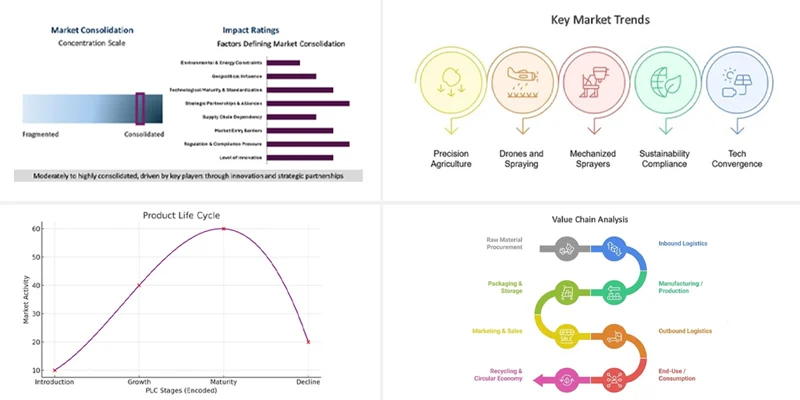
The digital map market is driven by trends like real-time, continuously updated mapping, high-definition and 3D maps, and rising emphasis on interoperability and open data. Key market players are leveraging artificial intelligence, automation, and strategic partnerships to scale map creation, integrate solutions into smart infrastructure and vehicles, and expand into comprehensive location intelligence platforms. The market competition centers on data accuracy, update speed, coverage, and ecosystem integration. Technological complexity and high capital requirements continue to favor established players, while standardization and collaboration sustain trust and innovation across industries.
The COVID-19 pandemic hurt the digital map market, especially in the early days of lockdowns and restrictions on movement. Travel bans and less transportation activity lowered the need for navigation and location-based services in the automotive, tourism, and logistics industries. Market growth slowed even more because of problems in the supply chain and delays in smart city and infrastructure projects. Limited staff made it hard to collect field data and update maps, which hurt the accuracy of the data. Companies put off investing in digital technology because of the economy's uncertainty and lower consumer spending. The market also shrank temporarily because advertising revenue from location-based services was going down. Thus, the COVID-19 pandemic had a Negative impact on the market.

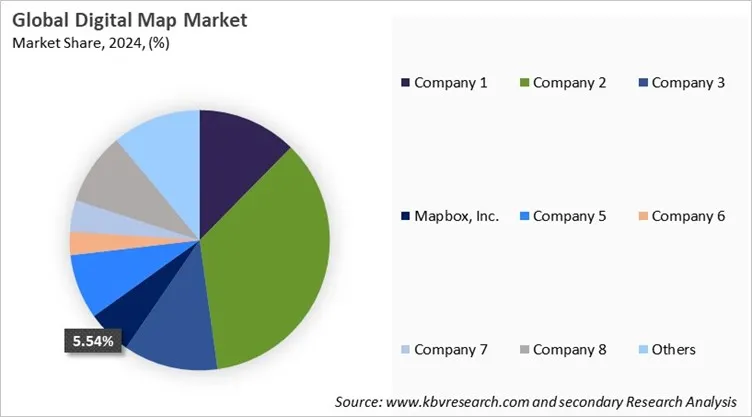
The leading players in the market are competing with diverse innovative offerings to remain competitive in the market. The above illustration shows the percentage of revenue shared by some of the leading companies in the market. The leading players of the market are adopting various strategies in order to cater demand coming from the different industries. The key developmental strategies in the market are Acquisitions, and Partnerships & Collaborations.
Based on solution, the digital map market is characterized into software and services. The services segment attained 36% revenue share in the digital map market in 2024. The services segment includes a wide range of activities that support the deployment, customization, and ongoing operation of digital mapping solutions. These services include consulting, system integration, data customization, technical support, maintenance, and managed services tailored to specific industry requirements.
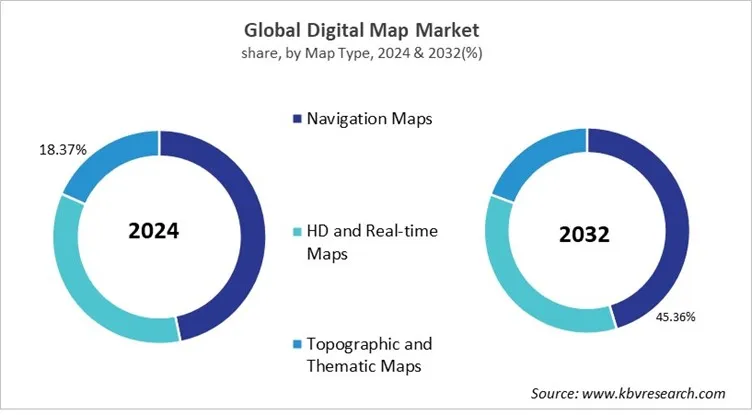
On the basis of map type, the digital map market is classified into navigation maps, HD and real-time maps, and topographic & thematic maps. The HD and real-time maps segment recorded 35% revenue share in the digital map market in 2024. HD and real-time maps are designed to deliver highly detailed, precise, and continuously updated spatial information. These maps play a critical role in advanced driver assistance systems, autonomous vehicles, smart transportation infrastructure, and real-time traffic and environmental monitoring.
Free Valuable Insights: Digital Map Market size to reach USD 66.82 Billion by 2032
Region-wise, the Digital Map Market is analyzed across North America, Europe, Asia Pacific, and LAMEA. The North America segment recorded 35% revenue share in the digital map market in 2024. The digital map market is predicted to grow at a substantial rate in the North America and Europe region. This is due to strong technology ecosystems, advanced digital infrastructure, and high adoption across logistics, automotive, consumer applications, and government. Major tech companies and mapping platforms drive innovations like HD maps, real-time navigation, and geospatial analytics, while investments in smart cities, autonomous vehicles, and IoT further boost demand. Moreover, Europe digital map market is anticipated to expand at a prominent growth rate. The market is supported by sustainable urban development, smart city initiatives, and a robust automotive industry relying on high-precision mapping for ADAS and connectivity. EU policies driving environmental monitoring, open data, and interoperability also encourage digital map adoption across industries.
In the Asia Pacific and LAMEA region, the digital map market is expected to experience expansion at a steady pace. The market is driven by expanding transportation networks, rapid urbanization, widespread IoT and smartphone penetration, and strong government support for smart infrastructure in nations like Japan, China, South Korea, and India. Mapping solutions are largely used in e-commerce, logistics, public services, and autonomous mobility. Furthermore, the LAMEA digital map market is projected to witness a noticeable share during the projection period. The market is experiencing significant demand in urban planning, logistics, utilities, and infrastructure mapping. Brazil, South Africa, and the UAE are propelling digital map projects linked to national development plans and smart city initiatives. Growth in the LAMEA region is further supported by mobile connectivity enhancements and geospatial initiatives, thereby creating growth opportunities.
| Report Attribute | Details |
|---|---|
| Market size value in 2025 | USD 28.24 Billion |
| Market size forecast in 2032 | USD 66.82 Billion |
| Base Year | 2024 |
| Historical Period | 2021 to 2023 |
| Forecast Period | 2025 to 2032 |
| Revenue Growth Rate | CAGR of 13.1% from 2025 to 2032 |
| Number of Pages | 538 |
| Number of Tables | 453 |
| Report coverage | Market Trends, Revenue Estimation and Forecast, Segmentation Analysis, Regional and Country Breakdown, Market Share Analysis, Porter’s 5 Forces Analysis, Company Profiling, Companies Strategic Developments, SWOT Analysis, Winning Imperatives |
| Segments covered | Solution, Map Type, Deployment, End-use Industry, Region |
| Country scope |
|
| Companies Included | Apple, Inc., Google LLC (Alphabet Inc.), HERE Global B.V., Mapbox, Inc., TomTom N.V., Microsoft Corporation, Alibaba Cloud (Alibaba Group Holding Limited) (Amap) and Esri, Inc. |
By Solution
By Map Type
By Deployment
By End-use Industry
By Geography
The market size is projected to reach USD 28.24 Billion by 2032.
The digital map market is projected to grow at a CAGR of 13.1% between 2025 and 2032.
Rapid integration of AI and real-time dynamic mapping, combined with smart cities, urbanization, and industrial digital transformation, is driving adoption.
Apple, Inc., Google LLC (Alphabet Inc.), HERE Global B.V., Mapbox, Inc., TomTom N.V., Microsoft Corporation, Alibaba Cloud (Alibaba Group Holding Limited) (Amap) and Esri, Inc.
The Software segment is leading the Global Digital Map Market by Solution in 2024, thereby, achieving a market value of $42.04 billion by 2032.
The North America region dominated the Global Digital Map Market by Region in 2024, and would continue to be a dominant market till 2032; thereby, achieving a market value of $22.01 billion by 2032.
Our team of dedicated experts can provide you with attractive expansion opportunities for your business.







 Unique Offerings