“Global Dental Practice Management Software Market to reach a market value of USD 5.68 Billion by 2032 growing at a CAGR of 10.5%”
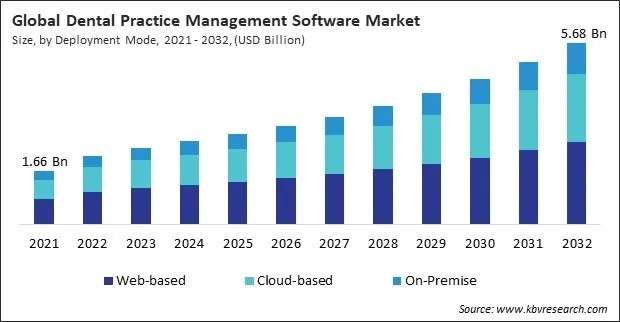
The Global Dental Practice Management Software Market size is expected to reach $5.68 billion by 2032, rising at a market growth of 10.5% CAGR during the forecast period.
Web-based systems strike a good balance between security and accessibility, allowing dental practices to access data anytime, anywhere, as long as they have the right security measures in place. They give you real-time updates and work well with other digital tools, like billing systems and electronic health records. Most of the time, these systems are easy to use, which makes it easier for dental staff to learn how to use them and speeds up the whole process.
The major strategies followed by the market participants are Product Launches as the key developmental strategy to keep pace with the changing demands of end users. For instance, In March, 2025, NEXTGEN HEALTHCARE, INC. unveiled AI-powered tools to improve clinical documentation, patient engagement, and decision support. These innovations are designed to optimize workflows across specialties, including dental practices, enabling more accurate diagnoses and personalized care, ultimately improving the efficiency of dental practice management systems. Additionally, In March, 2025, Carestream Dental LLC unveiled the latest CS 8200 3D Advance Edition, an advanced imaging system offering improved diagnostics and treatment planning. Its high-resolution 3D capabilities enhance clinical workflows, supporting better integration with dental software systems for streamlined practice management and improved patient care.
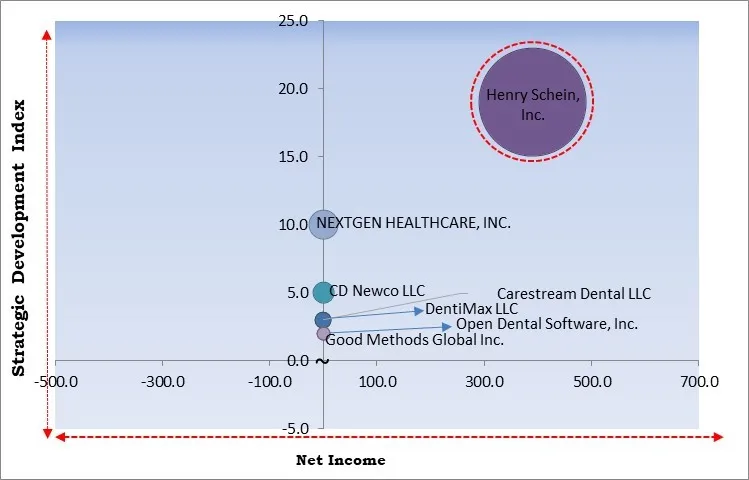
Based on the Analysis presented in the KBV Cardinal matrix; Henry Schein, Inc. is the forerunners in the Market. In September, 2024, Henry Schein, Inc. unveiled the “One Network” program to unify dental practices under a single digital platform. It aims to simplify software integration and enhance interconnectivity among dentists, patients, and partners across multiple tools and solutions. Companies such as NEXTGEN HEALTHCARE, INC., CD Newco LLC, and DentiMax LLC are some of the key innovators in this Market.
During the worst of the COVID-19 pandemic, dental offices all over the world had to close or only work at a small capacity because of lockdown rules and stricter health rules. This caused a big drop in patient visits and elective procedures, which in turn cut the income of dental clinics by a lot. Because of this, many dental offices put off or didn't invest in non-essential technology upgrades, such as dental practice management software (DPMS). So, the COVID-19 pandemic hurt the market.

The global dental industry is going through a big change toward going digital. This is mostly because of the larger trend toward digital health in all medical fields. Dental offices used to rely on paper-based systems and separate tools, but they are quickly moving to integrated software platforms. The need for better regulatory compliance, a better patient experience, and more efficient operations are all driving this change. The growing acceptance of cloud-based tools and the rise of enabling technologies are driving the demand for these Software around the world.
Furthermore, modern patients, especially in cities and developed markets, expect a consumer-level experience in all areas of healthcare, including dental care. Because of this, putting the patient first has become a key part of competitive dental practices. Dental Practice Management Software is leading the way in this change by offering a lot of features that make patients more involved, happy, and loyal. Because of this, the growing focus on patient-centered care and improving the patient experience makes it much more likely that Dental Practice Management Software will be used in both small and large dental practices.
High costs for initial deployment and ongoing subscription fees are one of the biggest problems in this market. Dental clinics often need specialized modules like imaging integration, orthodontic workflow, periodontal charting, and custom treatment planning. This is different from general practice or small clinics, which might only need basic tools. So, the high cost of buying and using dental practice management software is still holding back market growth because it makes it harder for budget-conscious practitioners to get and use it.
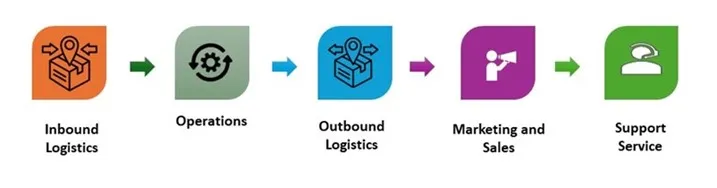
The value chain analysis of this market encompasses five critical stages that collectively drive value creation. It begins with Inbound Logistics, where essential components like code libraries, APIs, and design tools are sourced to build the software. In the Operations phase, development teams focus on programming, testing, and integrating core functionalities such as patient scheduling, billing, and electronic health records (EHR). This is followed by Outbound Logistics, where the software is deployed via cloud platforms or local installations, ensuring accessibility and reliability for dental practices. The Marketing and Sales stage involves promoting the software through digital channels, product demos, and industry partnerships to attract and convert dental clinics. Finally, Support Services play a crucial role in maintaining customer satisfaction by offering training, technical assistance, regular updates, and system enhancements. Together, these stages ensure that DPMS solutions deliver operational efficiency and improved patient care to dental providers.
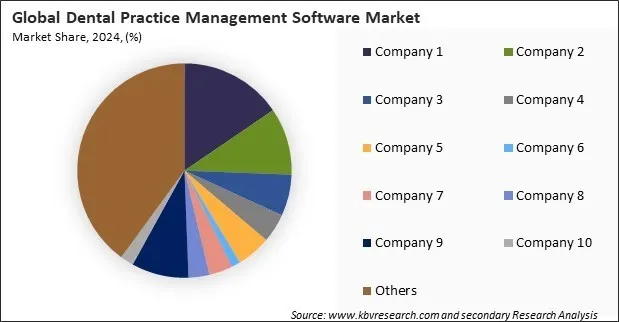
The leading players in the market are competing with diverse innovative offerings to remain competitive in the market. The above illustration shows the percentage of revenue shared by some of the leading companies in the market. The leading players of the market are adopting various strategies in order to cater demand coming from the different industries. The key developmental strategies in the market are Product Launches and Product Expansions.
Free Valuable Insights: Global Dental Practice Management Software Market size to reach USD 5.68 Billion by 2032
Based on deployment mode, the dental practice management software market is characterized into web-based, cloud-based, and on-premise. The cloud-based segment procured 36% revenue share in the market in 2024. Cloud-based dental practice management solutions are becoming more popular because they can grow with your business, get updates automatically, and be accessed from anywhere. These platforms are hosted on servers outside of your company that are managed by service providers. They have strong data security, backup, and disaster recovery features.
| Category | Details |
|---|---|
| Use Case Title | Confidential |
| Date | 2025 |
| Entities Involved | Confidential |
| Objective | Enable centralized operations, data access, and analytics for growing dental chains via cloud-native deployment. |
| Context and Background | As DSOs (Dental Service Organizations) and multi-location clinics scale, they require cloud-based DPMS that supports centralized access, real-time reporting, and seamless updates across all branches. |
| Description | Aspen Dental adopted Curve Dental's cloud-based platform to unify EHRs, billing, inventory, and analytics across 100+ locations. The system was hosted on AWS HealthLake for compliance and scalability. Role-based access allowed clinical and non-clinical staff to work in parallel across departments. Centralized dashboards gave real-time insight into chair utilization, case acceptance rates, and treatment plan conversion. Updates rolled out instantly to all clinics without downtime. Cloud backup and encryption ensured data safety while supporting HIPAA compliance. |
| Key Capabilities Deployed |
|
| Regions Covered |
|
| Benefits |
|
| Source | Confidential |
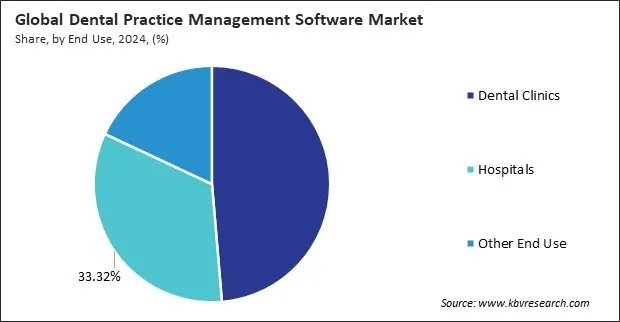
By end use, the dental practice management software market is divided into dental clinics, hospitals, and others. The hospitals segment garnered 33% revenue share in the market in 2024. Hospitals, especially those with specialized dental departments, make up a large part of the market. These places need strong, integrated software that connects dental practice management with the larger hospital information systems. Dental departments in hospitals benefit from having all of their patient records, lab results, imaging data, and referrals from other departments in one place.
On the basis of application, the dental practice management software market is classified into patient communication, invoice/billing, insurance management, payment processing, and others. The invoice/billing segment recorded 22% revenue share in the market in 2024. Invoice and billing features help dental offices make their financial transactions easier by automatically creating and keeping track of invoices for services provided. These features help with itemized billing, applying discounts, tracking services from multiple providers, and getting real-time status updates.
Region-wise, the dental practice management software market is analyzed across North America, Europe, Asia Pacific, and LAMEA. The North America segment recorded 40% revenue share in the market in 2024. North America holds the largest share of this market, supported by a highly digitized healthcare infrastructure and widespread adoption of advanced dental technologies.
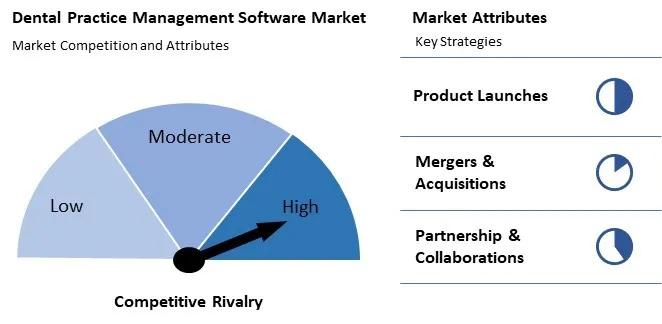
There is a lot of competition in this market. Many regional and up-and-coming vendors are competing fiercely by offering cloud-based, user-friendly, and affordable solutions designed for small to medium-sized clinics. Because it's easy to get into the market and demand for digital dental solutions is rising, competition is getting tougher. Companies have to come up with new ideas quickly and stand out with features, prices, and customer service.
| Report Attribute | Details |
|---|---|
| Market size value in 2024 | USD 2.59 Billion |
| Market size forecast in 2032 | USD 5.68 Billion |
| Base Year | 2024 |
| Historical Period | 2021 to 2023 |
| Forecast Period | 2025 to 2032 |
| Revenue Growth Rate | CAGR of 10.5% from 2025 to 2032 |
| Number of Pages | 339 |
| Number of Tables | 385 |
| Report coverage | Market Trends, Revenue Estimation and Forecast, Segmentation Analysis, Regional and Country Breakdown, Competitive Landscape, Market Share Analysis, Porter’s 5 Forces Analysis, Company Profiling, Companies Strategic Developments, SWOT Analysis, Winning Imperatives |
| Segments covered | Deployment Mode, End Use, Application, Region |
| Country scope |
|
| Companies Included | Henry Schein, Inc., CD Newco LLC (Curve Dental), DentiMax LLC, Open Dental Software, Inc., NEXTGEN HEALTHCARE, INC., iDentalSoft, Inc., Good Methods Global Inc. (CareStack), ACE Dental Software, Carestream Dental LLC (Onex Corporation), and Practice-Web Inc. |
By Deployment Mode
By End Use
By Application
By Geography
This Market size is expected to reach $5.68 billion by 2032.
Increasing Digital Transformation in Dental Practices are driving the Market in coming years, however, High Initial Setup Costs and Subscription Burden restraints the growth of the Market.
Henry Schein, Inc., CD Newco LLC (Curve Dental), DentiMax LLC, Open Dental Software, Inc., NEXTGEN HEALTHCARE, INC., iDentalSoft, Inc., Good Methods Global Inc. (CareStack), ACE Dental Software, Carestream Dental LLC (Onex Corporation), and Practice-Web Inc.
The expected CAGR of this Market is 10.5% from 2023 to 2032.
The Dental Clinics segment led the maximum revenue in the Market by End Use in 2024, thereby, achieving a market value of $3.00 billion by 2032.
The North America region dominated the Market by Region in 2024, thereby, achieving a market value of $2.18 billion by 2032.
Our team of dedicated experts can provide you with attractive expansion opportunities for your business.












 Unique Offerings