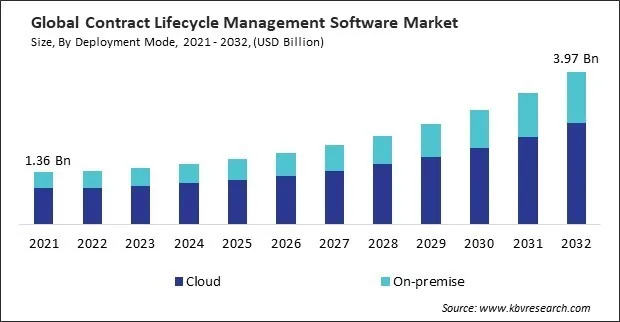
“Global Contract Lifecycle Management Software Market to reach a market value of USD 3.97 Billion by 2032 growing at a CAGR of 12.8%”
The Global Contract Lifecycle Management Software Market size is expected to reach $3.97 billion by 2032, rising at a market growth of 12.8% CAGR during the forecast period.
These platforms usually come with automatic updates, better security tools, and can work well with other cloud systems like CRM and ERP. People like them because they have low start-up costs, need very little IT work, and can change fast when the business needs something new. This makes them great for all kinds of businesses, especially ones with remote teams or workers in different places.
The major strategies followed by the market participants are Product Launches as the key developmental strategy to keep pace with the changing demands of end users. For instance, In April, 2025, DocuSign, Inc. unveiled AI agents to streamline the contract lifecycle, enhancing efficiency in drafting, negotiating, and managing agreements. These AI tools automate key processes, reduce manual tasks, and accelerate contract workflows, positioning DocuSign as a leader in intelligent contract management solutions for businesses. Additionally, In May, 2025, CobbleStone Systems Corp. unveiled its enhanced VISDOM+ AI Chatbot, revolutionizing CLM with OpenAI-powered features. It offers intelligent system navigation, automated clause generation, and compliance support, streamlining contract management for legal and procurement teams, boosting efficiency, and ensuring consistency in clause libraries.
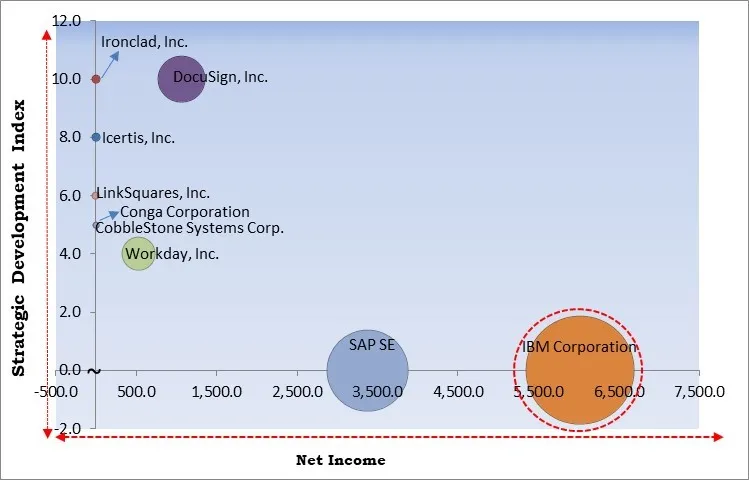
Based on the Analysis presented in the KBV Cardinal matrix; IBM Corporation is the forerunner in the Contract Lifecycle Management Software Market. Companies such as SAP SE, DocuSign, Inc., and Workday, Inc. are some of the key innovators in this Market.
The COVID-19 pandemic had a big negative effect on the global Contract Lifecycle Management (CLM) software market. When the virus first spread in early 2020, lockdowns and money worries made companies stop spending on things that were not urgent. Many businesses put digital projects, like CLM setups, on hold so they could focus on staying open. Because of this, plans to buy new software were paused or dropped. Also, procurement and legal teams, who use CLM tools the most, were too busy dealing with crisis contracts, new risks, and staying within rules. So, COVID-19 slowed down the CLM market in a big way.

In today’s global business world, companies handle more and more contracts across different teams, vendors, clients, and countries. This big rise in contract numbers also brings more complex work because of new rules, deals with other countries, and talks with many parties. Contracts are not just legal papers anymore — they are now key assets that manage business ties, risks, rule-following, and money flow. Because of this, CLM software is now very important for companies that want to lower legal risks, work better and faster, and stay in control of all their contracts.
The push for digital change in all industries is deeply changing how contracts are made, handled, and checked. Companies no longer want separate systems and paper files. Now, they want digital tools that work well with their other business systems — like CRM tools such as Salesforce, ERP systems like SAP, document storage, and e-signature tools like DocuSign or Adobe Sign. So, companies building digital setups now see CLM as a must-have part for smooth, automated, and smart contract work.
Even though CLM software has clear benefits, one big thing that stops many from using it — especially small and medium businesses (SMEs) — is the high upfront cost to get it running. Things like license fees, setup work, training, and long-term help can all add up and cost a lot. Because of this, high setup costs and tricky integration slow down the growth of the CLM software market, mainly for mid-sized companies and in growing markets.
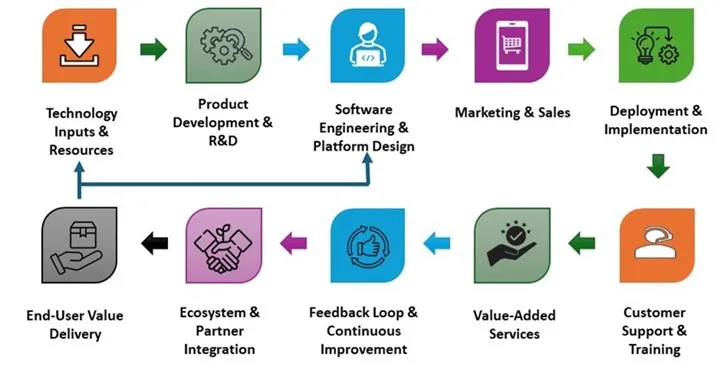
The value chain of this Market consists of ten key stages. It begins with Technology Inputs & Resources, followed by Product Development & R&D to innovate and build core capabilities. These feed into Software Engineering & Platform Design, which shapes the functionality and user interface. The software is then promoted through Marketing & Sales, and rolled out via Deployment & Implementation. Customer Support & Training ensures users adopt and use the software effectively, while Value-Added Services enhance the overall offering. A Feedback Loop & Continuous Improvement mechanism drives ongoing enhancements. Integration with external systems happens through Ecosystem & Partner Integration, culminating in End-User Value Delivery, where the software delivers measurable benefits to customers.
Free Valuable Insights: Global Contract Lifecycle Management Software Market size to reach USD 3.97 Billion by 2032
Based on deployment mode, the contract lifecycle management software market is characterized into cloud and on-premise. The on-premise segment procured 31% revenue share in the market in 2024. The on-premise segment means CLM software that is set up and looked after inside a company’s own systems. This way is chosen by companies that want full control of their data, have strict rules to follow, or work in highly controlled industries.
| Category | Details |
|---|---|
| Use Case Title | Confidential |
| Date | 2025 |
| Entities Involved | Confidential |
| Objective | Provide fully controlled and customizable CLM environments for organizations with strict data residency, security, or legacy infrastructure requirements. |
| Context and Background | On-premise CLM systems are still preferred by sectors with stringent compliance norms such as defense, government, and energy. These systems ensure full ownership of contract data, customized workflows, and deeper control over integrations and access management. |
| Description | Large enterprises deploy on-premise CLM platforms within their firewalls, often integrated with private data centers and legacy ERP systems. IT teams maintain infrastructure, updates, and security, ensuring compliance with internal governance and regulatory standards (e.g., ITAR, HIPAA, GDPR). |
| Key Capabilities Deployed |
|
| Regions Covered |
|
| Benefits |
|
| Source | Confidential |
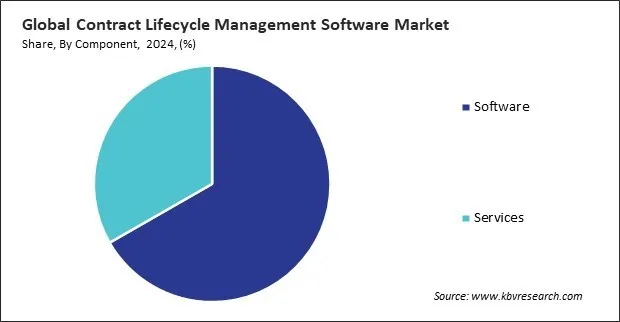
On the basis of component, the contract lifecycle management software market is classified into software and services. The services segment recorded 33% revenue share in the market in 2024. The services part includes consulting, setup, training, support, and maintenance that work along with CLM software. These services help companies install and connect the software with their current IT systems, making sure it works well and is easy to use for best results.
By business function, the contract lifecycle management software market is divided into legal, procurement, sales, finance, and operations. The procurement segment garnered 23% revenue share in the market in 2024. The services segment covers consulting, setup, training, support, and maintenance that go along with CLM software. These services help companies set up and fit the software into their current IT systems, making sure it works well and is easy to use.
Based on organization size, the contract lifecycle management software market is segmented into large enterprises and small & medium enterprises. The small & medium enterprises segment acquired 36% revenue share in the market in 2024. The small and medium businesses (SMEs) part of the CLM market is growing steadily because more people know about contract problems and there are now more affordable, cloud-based solutions to help them.
By vertical, the contract lifecycle management software market is divided into BFSI, IT & telecom, government & public sector, consumer goods & retail, manufacturing, healthcare & life sciences, and other. The IT & telecom segment procured 22% revenue share in the market in 2024. The IT & telecom sector is a big part of the CLM software market because this field depends a lot on license deals, service contracts, and handling global vendors.
Region-wise, the contract lifecycle management software market is analyzed across North America, Europe, Asia Pacific, and LAMEA. The North America segment recorded the 40% revenue share in the market in 2024. The North America region leads the CLM software market, driven by widespread digital transformation, strong regulatory compliance mandates, and early adoption of enterprise automation tools.
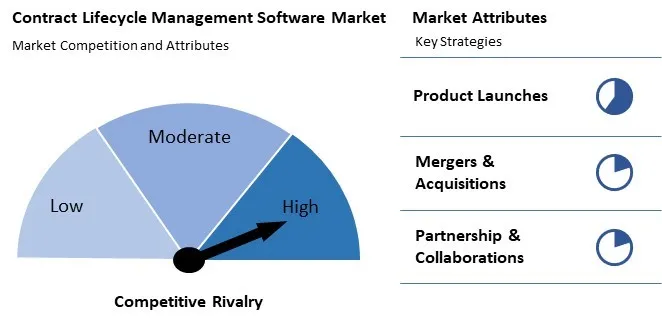
The Contract Lifecycle Management (CLM) software market has tough competition with many new vendors and special providers offering low-cost and custom solutions. These companies compete by giving new ideas, easy integration, industry-focused tools, and good customer support. The rising demand from SMEs and changing compliance needs keep this competition strong and bring in more new players to the market.
| Report Attribute | Details |
|---|---|
| Market size value in 2024 | USD 1.57 Billion |
| Market size forecast in 2032 | USD 3.97 Billion |
| Base Year | 2024 |
| Historical Period | 2021 to 2023 |
| Forecast Period | 2025 to 2032 |
| Revenue Growth Rate | CAGR of 12.8% from 2025 to 2032 |
| Number of Pages | 484 |
| Number of Tables | 575 |
| Report coverage | Market Trends, Revenue Estimation and Forecast, Segmentation Analysis, Regional and Country Breakdown, Competitive Landscape, Porter’s 5 Forces Analysis, Company Profiling, Companies Strategic Developments, SWOT Analysis, Winning Imperatives |
| Segments covered | Deployment Mode, Component, Business Function, Organization Size, Vertical, Region |
| Country scope |
|
| Companies Included | DocuSign, Inc., Conga Corporation, Icertis, Inc., Ironclad, Inc., SAP SE, IBM Corporation, CobbleStone Systems Corp. (CobbleStone Software), LinkSquares, Inc., Concord Worldwide, Inc., and Workday, Inc. |
By Deployment Mode
By Component
By Business Function
By Organization Size
By Vertical
By Geography
This Market size is expected to reach $3.97 billion by 2032.
Increasing Complexity and Volume of Contracts in Enterprises are driving the Market in coming years, however, High Implementation Costs and Integration Complexities restraints the growth of the Market.
DocuSign, Inc., Conga Corporation, Icertis, Inc., Ironclad, Inc., SAP SE, IBM Corporation, CobbleStone Systems Corp. (CobbleStone Software), LinkSquares, Inc., Concord Worldwide, Inc., and Workday, Inc.
The expected CAGR of this Market is 12.8% from 2023 to 2032.
The Software segment captured the maximum revenue in the Market by Component in 2024, thereby, achieving a market value of $2.57 billion by 2032.
The North America region dominated the Market by Region in 2024, thereby, achieving a market value of $1.51 billion by 2032.
Our team of dedicated experts can provide you with attractive expansion opportunities for your business.







 Unique Offerings