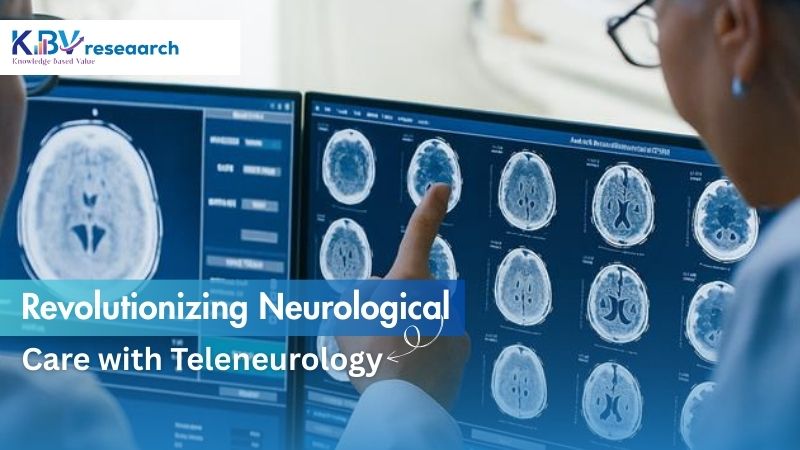
The world of healthcare has been undergoing a massive digital transformation, and one of the most exciting areas leading this change is teleneurology. If you’ve ever wondered what happens when modern neurology meets telemedicine, the answer is simple: patients gain faster, easier, and more accurate access to life-saving care.
The teleneurology market has become a cornerstone of the digital health revolution, especially as the burden of neurological disorders like stroke, epilepsy, Alzheimer’s, and Parkinson’s continues to rise globally.
In this Blog , we’ll explore what teleneurology is, why it matters, the forces driving its expansion, regional impacts, key players, and what the future of neurological care looks like.
Teleneurology, in simple terms, is neurology delivered through telemedicine. It allows patients to consult neurologists remotely using digital platforms, video conferencing, and integrated diagnostic tools. Imagine a patient living in a rural area hundreds of miles away from a hospital. Instead of waiting months for an in-person appointment, they can now connect to a neurologist in real time—sometimes within hours.
Teleneurology didn’t just appear overnight—it evolved alongside broader telemedicine advancements. In the early 2000s, hospitals experimented with remote consultations, mostly in urban centers. However, adoption was slow due to limited internet infrastructure and skepticism around digital healthcare.
Today, teleneurology consultations are no longer seen as secondary. Instead, they have become a mainstream component of neurological care, particularly in regions struggling with a shortage of neurologists. The market continues to expand, driven by patient demand, government initiatives, and technological advancements.
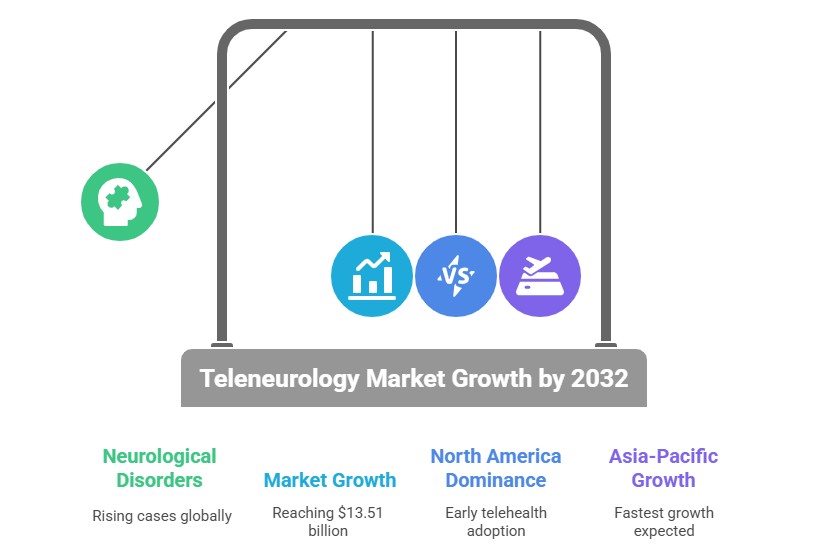
The Teleneurology Market is on a rapid growth expected to reach $13.51 billion by 2032, rising at a market growth of 11.2% CAGR during the forecast period, fueled by rising neurological disorders such as Alzheimer’s, Parkinson’s, epilepsy, and migraines.
Several factors are driving this surge:
Regional Insights:
North America dominates due to early adoption of telehealth and strong digital infrastructure.
Europe follows closely, with regulatory support for telemedicine in healthcare systems.
Asia-Pacific is expected to witness the fastest growth, thanks to large rural populations and growing investment in digital health platforms.
Artificial Intelligence (AI) is becoming a game-changer in neurological care. When combined with teleneurology, AI allows for earlier and more accurate diagnoses of complex brain conditions.
Key applications of AI in teleneurology include:
The integration of AI makes remote care more reliable. A neurologist consulting via telemedicine can use AI-powered dashboards that show real-time patient data, helping them make faster, evidence-based decisions.
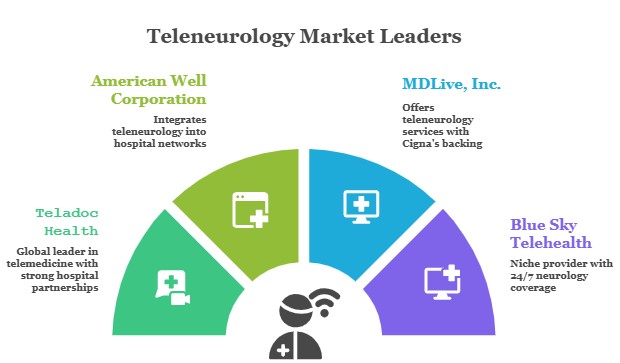
The teleneurology market is shaped by a handful of key players driving innovation and access:
Teladoc Health, Inc. – A global leader in telemedicine, offering stroke care, epilepsy consultations, and chronic disease management through strong hospital partnerships.
American Well Corporation (Amwell) – Connects hospitals with virtual neurology specialists, focusing on scalable solutions for both urban and rural healthcare systems.
MDLive, Inc. – Now part of Cigna, MDLive provides multi-specialty telehealth services, with teleneurology gaining traction for chronic condition monitoring.
To truly understand the value of teleneurology, let’s look at real-world examples where these services have transformed care.
In several Midwestern states, hospitals without in-house neurologists now rely on teleneurology stroke programs. Emergency physicians connect with neurologists virtually, enabling rapid decision-making on treatments like clot-busting drugs.
An NGO-led initiative in India introduced teleneurology consultations for epilepsy patients in rural villages. Using smartphone-based EEG devices, patients can now be diagnosed and monitored without traveling to distant urban hospitals.
These case studies highlight how teleneurology is not just theory—it’s real-world impact improving patient lives globally.
The next decade is set to bring groundbreaking innovations to teleneurology. Here are some trends to watch:
AI will move beyond diagnostics and start predicting disease progression, allowing neurologists to take preventive measures before symptoms worsen.
Smartwatches and wearable neuro-sensors will continuously collect patient data, providing neurologists with real-time insights into conditions like epilepsy or Parkinson’s.
The teleneurology market is more than just a trend—it’s a fundamental shift in how neurological care is delivered. With the rise of AI-assisted diagnostics, neuro-monitoring tools, and virtual consultations, patients across the world now have faster, more reliable access to critical neurological care. From North America’s mature ecosystem to Asia-Pacific’s fast-growing adoption, teleneurology is bridging healthcare gaps, making quality neurology accessible even in underserved regions.
The journey has just begun, but one thing is clear: teleneurology will play a central role in the future of medicine.