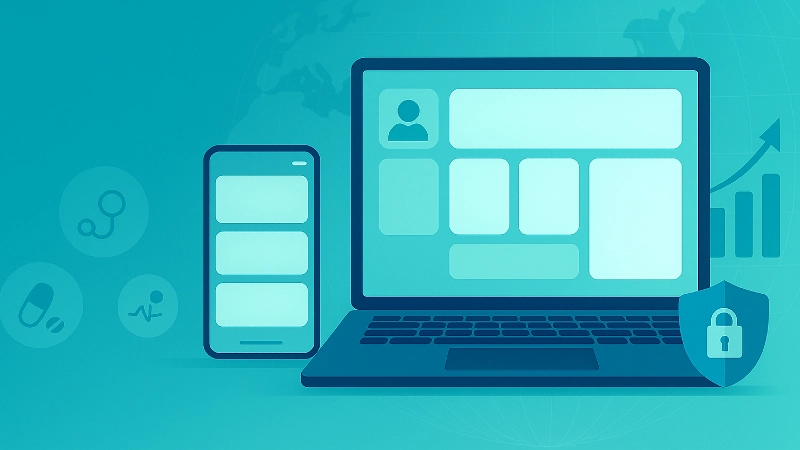
A growing number of healthcare professionals now favor digital learning methods over traditional in-person training approaches. As surprising as it sounds, this shift isn’t just about convenience. It’s a direct response to growing healthcare complexities, regulatory pressures, and a rapidly evolving patient care landscape.
According to industry estimates, the global healthcare e-learning market is poised for remarkable growth in the coming years. Behind this expansion is the urgent demand for scalable, cost-effective, and accessible learning systems, especially post-pandemic.
Let’s break down the latest advancements, real-world applications, benefits, future outlook, and who’s leading the charge in this space.
Despite being one of the most critical industries, healthcare has long relied on outdated and inefficient training approaches. These include:
These gaps not only burden healthcare administrators but also compromise the quality of care patients receive.
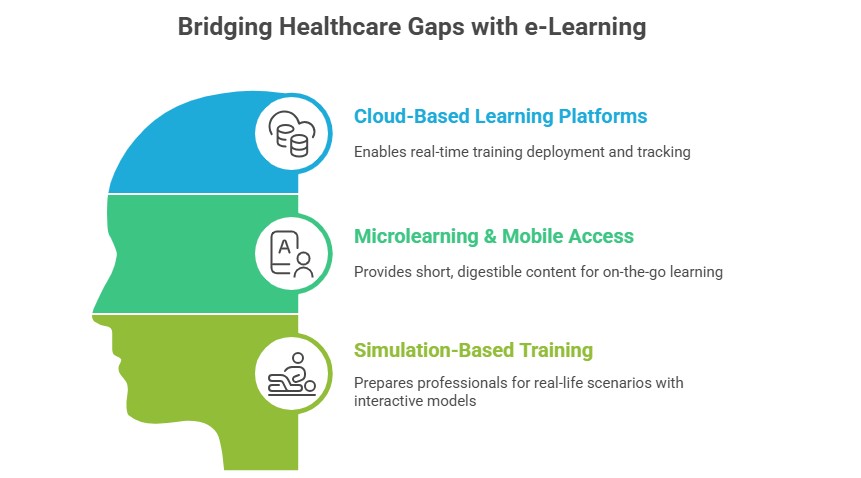
The Healthcare e-Learning Services Market is stepping up with solutions that are smart, scalable, and cost-effective. Here's how:
Modern LMS (Learning Management Systems) allow healthcare organizations to deploy, track, and update training modules in real-time—no matter where staff are located.
Short, digestible content chunks are designed for on-the-go learning, enabling staff to train during breaks or downtime.
Advanced simulations and interactive 3D models are preparing healthcare professionals for real-life scenarios—from CPR to surgical procedures.
Platforms now use artificial intelligence to tailor learning paths based on individual performance, roles, and knowledge gaps.
These innovations aren’t just upgrades—they’re game changers.
Let’s look at how healthcare e-learning is playing out in real settings:
A multi-hospital network in Texas used MedTrainer to onboard over employees during the pandemic, cutting the average onboarding time.
Using Relias LLC, a behavioral health facility in Ohio achieved employee compliance with state-mandated training, reducing liability risks significantly.
HealthStream’s CE (Continuing Education) modules helped a Florida-based hospital upskill ICU nurses, contributing to a in procedural errors within a year.
Platforms like AcademyOcean are creating specialized courses to train clinicians in telehealth etiquette, technical troubleshooting, and virtual diagnostics—crucial in the post-COVID world.
The impact of e-learning in healthcare is measurable and substantial.
Digital training saves money on travel, materials, instructors, and venue costs. According to the Association for Talent Development, organizations save when switching to e-learning.
Staff can complete courses during downtime, reducing disruption to patient services.
Whether it’s employees, the same content can be delivered consistently and instantly.
Track learner performance, identify knowledge gaps, and adjust content dynamically.
Well-trained staff directly translate to better patient safety, satisfaction, and reduced medical errors.
The future is bright—and smarter. Here are some standout trends:
Adaptive learning systems will become the norm, with real-time feedback and content recommendations.
Points, leaderboards, and challenges will engage learners and improve retention.
Cross-border knowledge sharing through cloud-based tools will raise global care standards.
Content design based on how the brain best absorbs information will improve training outcomes.
Immersive experiences will simulate real medical emergencies, surgeries, and diagnostic procedures, ensuring hands-on readiness without risk.
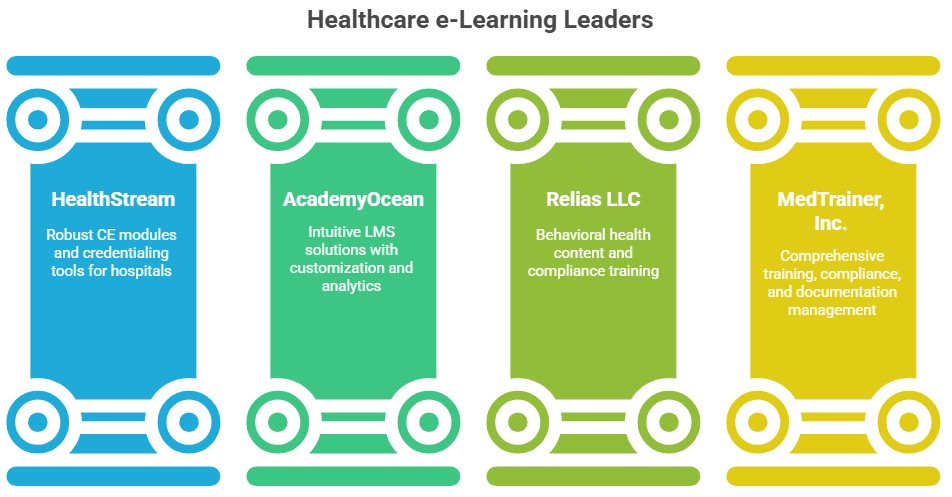
Several companies are at the forefront of this transformation:
Known for its robust CE modules and credentialing tools, HealthStream is a staple in hospitals across the US.
Offers intuitive LMS solutions tailored for medical institutions, including white-label customization and employee analytics.
Specializing in behavioral health, Relias provides content libraries and compliance training trusted by thousands of healthcare facilities.
A one-stop-shop for training, compliance, and documentation management, ideal for small and mid-sized clinics.
These players aren’t just vendors—they're partners in healthcare transformation.
Of course, implementing healthcare e-learning solutions isn’t without challenges.
Not all staff—especially older clinicians—are comfortable with digital tools. Proper change management is essential.
Training platforms must adhere to stringent healthcare data regulations.
Modules must stay up-to-date with changing guidelines, especially in fast-moving fields like infectious disease or cardiology.
While ROI is high, the initial investment in platforms, customization, and integrations may be significant.
The Healthcare e-Learning Services Market is not a trend—it’s a transformation. From reducing training costs and compliance risks to improving clinical outcomes, the benefits of e-learning in healthcare are clear, measurable, and immediate. With companies like HealthStream, Academy Ocean, Relias, and Med Trainer driving innovation, the future of healthcare education is flexible, smart, and built for scale.
Healthcare providers who embrace this shift stand to gain not just a competitive edge—but the trust and safety of their patients. Now is the time to invest in modern medical training—because in healthcare, knowledge truly saves lives.