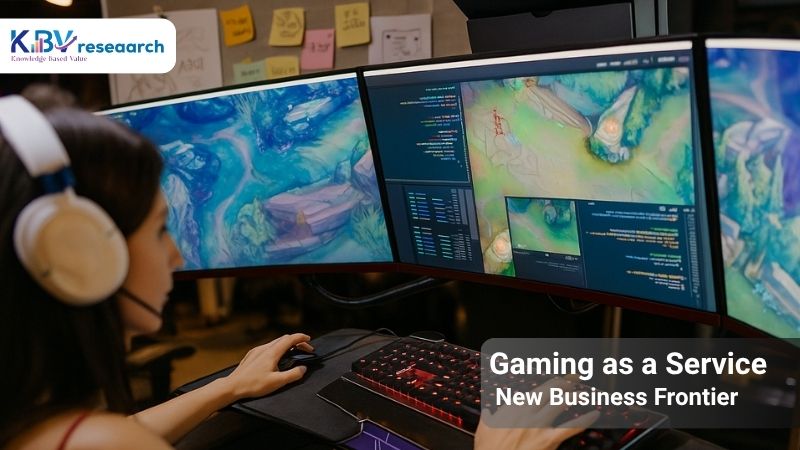
Gaming as a Service (GaaS) isn't just reshaping the player experience—it’s transforming how developers and publishers approach business.Although there is a lot of excitement around GaaS, the path has faced challenges. A major constraint in previous game distribution models was reliance on advanced local hardware. Conventional games necessitated costly consoles or PCs and long installation periods—restricting accessibility and user involvement.
The worldwide Gaming as a Service (GaaS) market is projected to hit $22.31 billion by 2031, expanding at a CAGR of 24.4% , as per KBV Research. This increase involves more than players changing platforms—it signifies a total reformation of how games are created, shared, and monetized.
Gaming as a Service has evolved from a novel concept to rapidly becoming the standard in the industry. Major companies in technology and gaming are demonstrating the significant impact of this model. We're experiencing a transition from one-off game purchases to cloud libraries, subscription models, and live games that develop gradually.
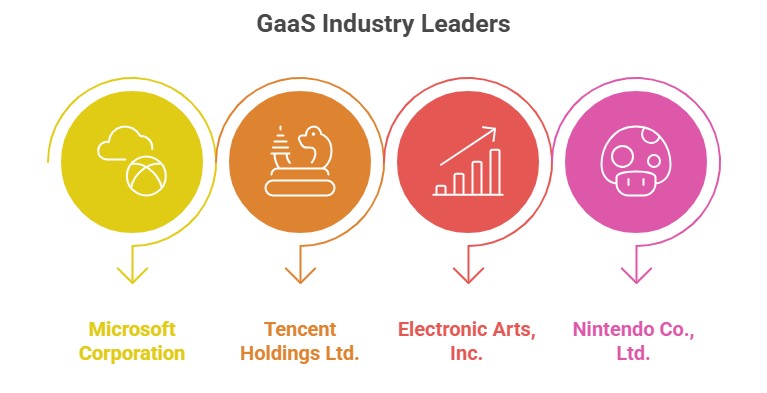
Firms such as Microsoft, Tencent, EA, and Nintendo are at the forefront, transforming not only the delivery of games but also the way players engage with them. Their tactics are converting casual gaming into lasting involvement—and assisting developers in producing consistent, continuous income.
GaaS uses the cloud to deliver games on-demand, allowing users to play on smartphones, tablets, consoles, or even stream on smart TVs. There is no longer a need for outdated expensive hardware upgrades.
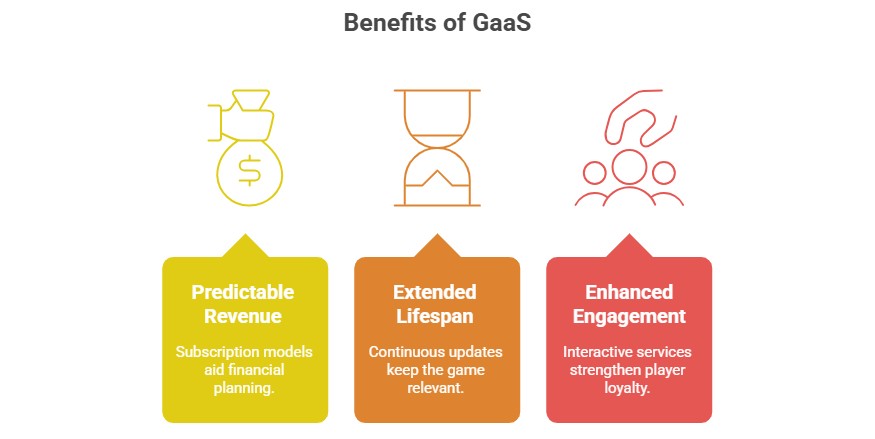
Gaas offers continuous engagement with players through regular updates, seasonal events, and expansions as opposed to one-off sales, enabling them to keep players engaged for many years.
Gaas GaaS enhances revenue through subscriptions, microtransactions, and season passes providing steady monetization and engaging users on a deeper level on a monthly or yearly basis.
The ability to have continuous and predictable revenue is one of the most important benefits of GaaS for businesses. Unlike traditional gaming models, which depend on one-off purchases and generate sporadic sales, GaaS ensures consistent revenue.
Thanks to the GaaS model, there is less need to develop brand new intellectual properties. Businesses enjoy decreased development costs while retaining their loyal customers. Players benefit too as they do not have to switch games regularly. This leads to lower churn rates and improved ROI on game development costs.
Continuing service that incorporates community interaction along with real-time services is the secret to GaaS success. Repeat visits are encouraged within the system through its multiplayer functionalities like scheduled competitions and live feedback.
In the past, games were purchased either in a hard-copy version or through a download. They were completed and forgotten, which made it very difficult for developers to get any good returns on investment.
Many games which come under the AAA category seem to cost hundreds of millions to develop. However, the game seems to ‘die’ some time after hitting the market. Therefore, these businesses found themselves unable to recover their investment, since there were no additional revenues to be generated after the peak period.
Before, players were bound to certain platforms and specific hardware capabilities. Players had to contend with inadequate or outdated systems, which led to discrepancies in the player experience.
Machine learning is progressively employed to customize gaming experiences, including suggesting in-game items and modifying difficulty levels instantly.
Players anticipate being able to change devices without losing their progress. GaaS enables this, enhancing user retention throughout ecosystems.
With the increasing popularity of the metaverse, GaaS will act as a core layer for engaging, lasting environments. Integrating blockchain might create innovative revenue models such as NFT-driven gaming assets.
To deliver seamless cloud gaming, providers must invest in low-latency data centers, edge computing, and robust server networks.
Aggressive monetization—especially involving loot boxes—has raised regulatory concerns in several countries. Transparency and ethical design are essential.
Overly frequent updates or monetization pushes can alienate users. Maintaining a balance between engagement and overexposure is key.
As GaaS involves continuous data collection, companies must prioritize cybersecurity and comply with regulations like GDPR and CCPA.
The shift toward Gaming as a Service is not just a trend—it’s a strategic evolution. By embracing cloud-based delivery, recurring monetization, and continuous engagement, developers and publishers can unlock sustainable revenue, enhanced user loyalty, and global scalability.
For businesses, this means not only higher returns but also the agility to adapt in a rapidly changing market. The leaders—Microsoft, Tencent, EA, and Nintendo—are already reaping the rewards. For others, the time to level up is now.