How AI, Strategic Partnerships, and New Tech Are Transforming Event Logistics
Published Date : 10-Sep-2025 |
When most people think about event logistics, they imagine trucks, boxes, and a few staff making sure things arrive on time.
The event logistics market has evolved far beyond traditional transportation. It now integrates data-driven planning, real-time tracking, AI forecasting, and strategic alliances between logistics giants. This transformation is helping the industry meet rising demand for international trade shows, concerts, sports events, and corporate gatherings.
Today, that’s changing rapidly, as innovations in technology and IT are transforming how companies plan, manage, and execute events of all sizes.
Let’s break it down.
What is Event Logistics and Why It Matters
In simple terms, event logistics refers to the planning, transportation, storage, and execution of materials, equipment, and resources required for an event.
It’s more than just “shipping stuff.” It’s about timing, precision, and coordination — ensuring that lighting rigs arrive before sound systems, or that a stage is built before rehearsals start.
Key areas include:
- Transportation & Freight: Moving equipment between cities or countries.
- Warehousing & Storage: Temporary holding facilities for props, merchandise, or gear.
- On-Site Coordination: Managing setup, dismantling, and returns.
- Compliance & Customs: Ensuring international shipments meet regulations.
Without seamless logistics, even the best-planned events can fail before they start.
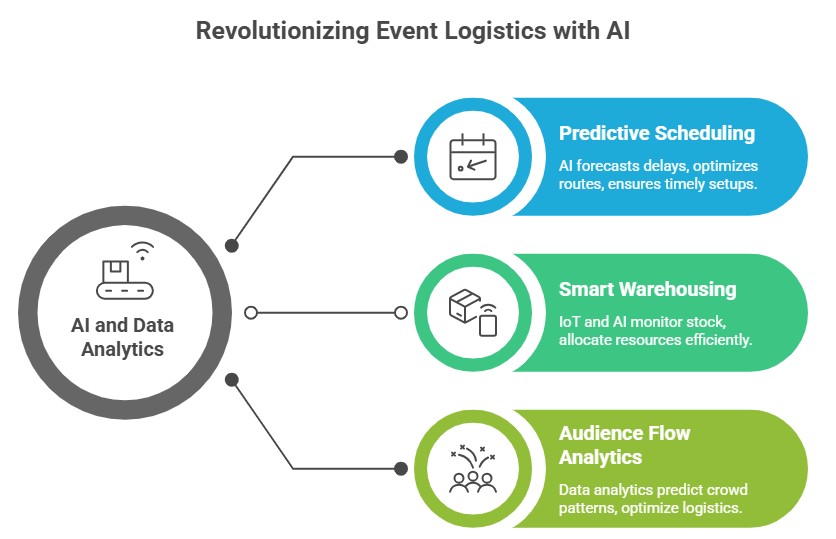
Role of AI and Data Analytics in Event Logistics Growth
In the past, event logistics relied heavily on manual planning and static schedules. Today, AI and data analytics are rewriting the playbook.
Predictive Scheduling
AI-powered algorithms can forecast potential delays, optimize delivery routes, and adjust plans in real time. This reduces costly downtime and ensures on-time setups.
Smart Warehousing
Through IoT sensors and AI tracking, warehouses can monitor stock levels and automatically allocate resources where needed—critical for events requiring rapid inventory turnover.
Audience Flow Analytics
Data analytics tools help predict crowd patterns, allowing logistics teams to optimize entry gates, shuttle services, and security deployment.
Strategic Alliances Driving Industry Competitiveness
Partnerships between logistics providers, event organizers, and technology firms are becoming a strategic weapon in this sector.
Deutsche Post DHL Group collaborates with international sports federations to streamline multi-country event transportation.
Kuehne + Nagel International AG partners with venue operators for integrated warehousing and on-site support.
C.H. Robinson Worldwide, Inc. leverages partnerships with AI software providers to enhance route planning for corporate trade shows.
These alliances not only expand service portfolios but also help companies secure large-scale contracts that require complex, multi-region coordination.
Regional and Global Impact of the Event Logistics Market
The influence of event logistics is far-reaching—impacting everything from local job creation to global trade flows.
North America
Home to some of the world’s largest entertainment and sports markets, North America leads in high-value event logistics solutions. The U.S. and Canada see a surge in demand for hybrid event setups that combine physical and virtual elements.
Europe
With cities like Paris, London, and Berlin hosting international conferences and sporting events, the region invests heavily in sustainable logistics solutions—such as electric freight vehicles and reusable packaging.
Asia-Pacific
APAC is witnessing explosive growth, driven by mega-events in China, India, Japan, and Australia. The rising middle class fuels demand for concerts, exhibitions, and sports tournaments, boosting the need for advanced logistics services.
Global Economic Ripple Effect
International events stimulate cross-border trade, tourism, and cultural exchange. Every major event—be it the Olympics or World Expo—triggers a chain reaction of economic benefits that extend well beyond the event itself.
Challenges in Event Logistics
While the market is thriving, it faces notable challenges:
Customs Delays: International shipments can be held up by complex regulatory requirements.
Last-Mile Delivery Issues: Urban congestion and local restrictions can slow down final-stage deliveries.
Environmental Concerns: Pressure to reduce carbon emissions pushes companies to adopt greener practices.
How New Technologies Are Addressing These Issues
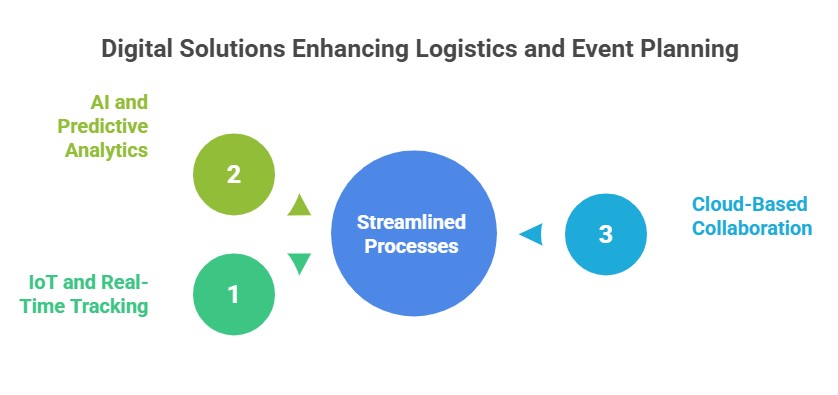
Over the past five years, emerging digital solutions have begun to close these gaps. By integrating advanced IT systems, logistics companies and event planners can streamline every stage of the process.
IoT and Real-Time Tracking
The Internet of Things (IoT) enables real-time monitoring of shipments, allowing event managers to track the location, temperature, and condition of critical materials.
AI and Predictive Analytics
Artificial intelligence helps forecast demand, anticipate disruptions, and optimize resource allocation. Predictive analytics tools can model thousands of “what if” scenarios to choose the most efficient and cost-effective logistics plans.
Cloud-Based Collaboration Platforms
Cloud logistics management systems allow all stakeholders—from freight forwarders to event coordinators—to work on the same platform, reducing miscommunication and speeding up approvals.
Future Trends Shaping the Event Logistics Industry
Sustainable Practices – Use of electric vehicles, biodegradable packaging, and carbon offset programs.
Integrated Platforms – All-in-one software solutions for managing transport, warehousing, and on-site operations.
Augmented Reality Planning – AR tools that help visualize event setups and logistics flows before execution.
Resilience Planning – Contingency strategies to handle pandemics, natural disasters, and political instability.
Conclusion
The event logistics market is no longer a behind-the-scenes player—it’s a strategic partner in creating world-class events.
From AI-powered optimization to global partnerships and sustainable practices, the industry is setting new benchmarks for efficiency and innovation. As global demand for large-scale events rises, those who embrace technology, strategic alliances, and eco-conscious practices will lead the way—delivering not just goods, but unforgettable experiences.