The dental practice management software market is transforming how clinics and dental groups operate. From scheduling and billing to handling electronic health records (EHRs), modern dental software offers real-time updates and integrates seamlessly with digital platforms.
That number is surprising when we consider how rapidly technology has transformed healthcare—and dentistry is no exception. The Global Dental Practice Management Software Market size is expected to reach $5.68 billion by 2032, rising at a market growth of 10.5% CAGR during the forecast period.
In this blog, we’ll explore the current landscape, emerging trends, regional impacts, and leading innovators driving this change.
Running a dental clinic today isn’t only about patient care—it’s about managing operations, billing, scheduling, compliance, and communication.
Think of it like juggling multiple balls at once. Without a system in place, one slip can lead to inefficiencies, errors, or worse—poor patient experiences.
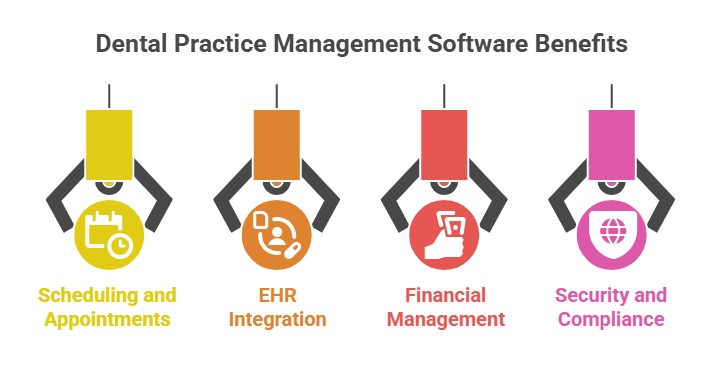
Dental Practice Management Software acts as the digital backbone of a practice. It brings security and accessibility, helps optimize clinical workflows, and ensures that dentists spend more time with patients rather than drowning in paperwork.
One of the biggest pain points in any clinic is missed or overlapping appointments. With automated scheduling tools, practices can reduce no-shows and optimize chair time. It’s like having a virtual receptionist that never sleeps—reminding patients about their visits while filling gaps in the calendar.
Modern software seamlessly integrates with electronic health records (EHRs). This means a dentist can instantly access a patient’s history, treatment plans, and radiographs without searching through endless files.
No one enjoys the complexity of billing, especially when insurance claims get involved. Dental Practice Management Software simplifies the process with automated claim submissions, real-time billing updates, and error tracking.
In healthcare, protecting patient data is non-negotiable. These systems come equipped with built-in security and accessibility features that safeguard sensitive information while ensuring compliance with HIPAA and other regulations.
Think of it as a digital vault only authorized users can access it, and every action is tracked for accountability.
The adoption of Dental Practice Management Software isn’t uniform across the globe.
North America dominates the landscape due to advanced healthcare infrastructure and high awareness among dental professionals.
Europe follows closely, driven by regulatory mandates and growing digital adoption.
Asia-Pacific, however, is the region to watch. With a booming middle class and rising demand for advanced dental care, it’s projected to be the fastest-growing market segment in the coming years.
This regional impact and market growth reflect not just technology adoption, but also cultural shifts in how patients perceive dental care.
Despite the benefits, there are hurdles.
Some practices worry about the initial costs of implementation, while others fear resistance from staff unfamiliar with digital tools. Data migration from old systems can also be a challenge.
However, the long-term ROI—better efficiency, fewer errors, and improved patient retention—far outweighs the temporary setbacks.
Several players are shaping the global landscape of Dental Practice Management Software. Among the most influential are:
Henry Schein, Inc. – A leader offering comprehensive dental solutions.
CD Newco LLC (Curve Dental) – Known for its innovative cloud-based platforms.
DentiMax LLC – Specializes in user-friendly software tailored for small to mid-sized practices.
Open Dental Software, Inc. – Popular for its open-source approach, offering flexibility and customization.
These organizations are not just competing—they are driving innovation, making dental care smarter, more efficient, and more patient-friendly.
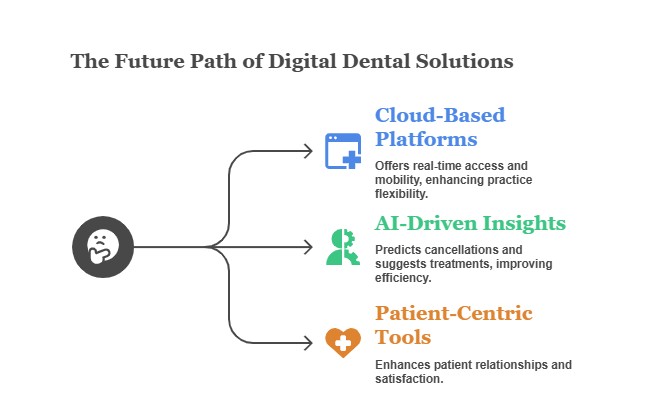
Cloud solutions offer real-time updates, enabling dentists to access patient information from anywhere—whether in the office, at home, or even while traveling. This mobility ensures that practices remain flexible, adaptable, and resilient in a competitive landscape.
Artificial intelligence is no longer just a buzzword. In dental management software, AI helps predict appointment cancellations, flag irregular billing patterns, and even suggest treatment pathways based on past data.
Features like patient portals, digital reminders, and tele-dentistry options are quickly becoming standard. These tools foster stronger relationships, enhance convenience, and improve patient satisfaction.
Looking ahead, the market will continue to thrive as more clinics digitize operations. Expect to see greater use of AI, cloud computing, and predictive analytics.
Imagine a system that not only manages today’s patient flow but also predicts tomorrow’s busiest hours, identifies which treatments may trend, and even recommends personalized patient communication strategies.
That’s the future this industry is heading toward.
The rise of Dental Practice Management Software is more than a technological upgrade—it’s a cultural shift in dentistry.
Practices that adopt early stand to gain operational efficiency, stronger patient trust, and a competitive edge in a growing market. Those that delay risk falling behind in an industry where convenience and accuracy are no longer optional—they’re expected.