“Global Blockchain Distributed Ledger Market to reach a market value of USD 30.56 Billion by 2032 growing at a CAGR of 23.5%”
The Global Blockchain Distributed Ledger Market size is estimated at $6.98 billion in 2025 and is expected to reach $30.56 billion by 2032, rising at a market growth of 23.5% CAGR during the forecast period (2025-2032). The projected growth of the market is driven by rising enterprise adoption across finance, supply chain, and healthcare, increasing demand for transparent and secure transactions, rapid digitalization, supportive regulatory frameworks, and continuous innovation in smart contracts, interoperability, and decentralized applications, which collectively accelerate large-scale commercial deployment worldwide.
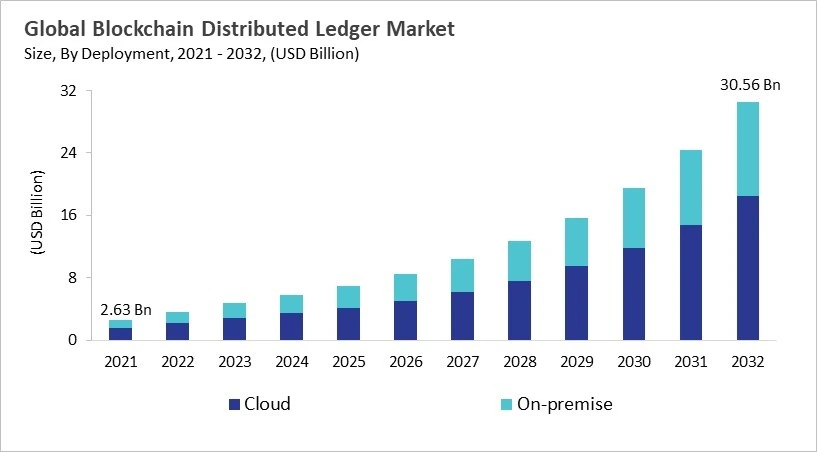
The blockchain and distributed ledger market has developed from cryptocurrency-focused innovation into a foundational digital infrastructure supporting government and enterprise applications. Initially designed to allow decentralized digital currency transactions, blockchain gained broader recognition for its capability to provide transparent, secure, and immutable recordkeeping. Adoption further expanded across enterprises and public institutions for use cases like land registries, identity management, financial settlement, and trade documentation. Also, advances in hybrid blockchain models, smart contracts, and network governance further strengthened its role in supply chains, regulated financial services, healthcare, and manufacturing.
The blockchain and distributed ledger market is driven by trends that prioritize integration, enterprise usability, and regulation. Central bank digital currency initiatives showcase rising sovereign and institutional trust in DLT, while financial institutions leverage it to enhance cross-border transparency and payment efficiency. Blockchain adoption for sustainability verification, supply chain traceability, and asset tokenization is accelerating, propelled by cloud-based blockchain-as-a-service offerings. Market growth is further fuelled by strategic partnerships, enterprise platform development, regulatory engagement, and open-source collaboration, with competition focused on interoperability, scalability, and security. These elements showcase that blockchain has positioned itself as a core component of digital transformation and long-term infrastructure development.
The major strategies followed by the market participants are Partnerships as the key developmental strategy to keep pace with the changing demands of end users. For instance, In April, 2024, Microsoft Corporation and Aptos Labs partnered with SK Telecom, and Brevan Howard to launch Aptos Ascend, a blockchain platform for institutional finance. It offers secure, compliant digital asset management using AI, smart contracts, and zero-knowledge proofs to support tokenization and decentralized finance. Additionally, In February, 2024, NTT Data Corporation has partnered with SWIAT by joining its blockchain platform as a validator and tenant node operator. This collaboration strengthens NTT DATA’s role in tokenized asset solutions and expands its blockchain initiatives in trade, identity, and finance across Europe and Japan.
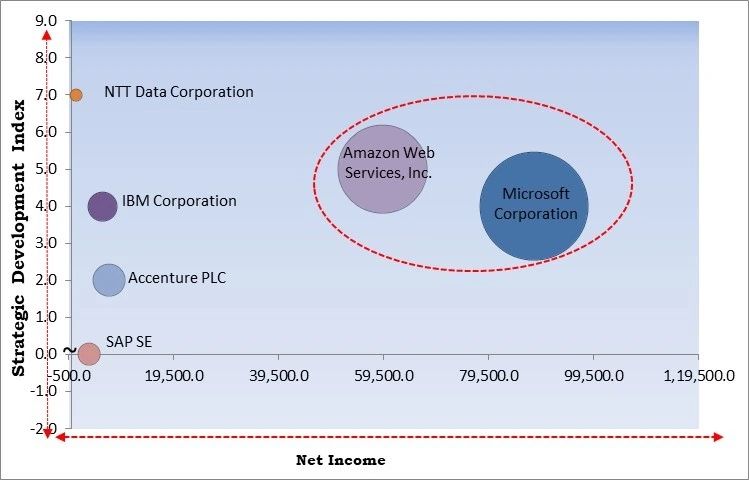
Based on the Analysis presented in the KBV Cardinal matrix; Microsoft Corporation and Amazon Web Services, Inc. are the forerunners in the Blockchain Distributed Ledger Market. Companies such as Accenture PLC and IBM Corporation are some of the key innovators in Blockchain Distributed Ledger Market. In October, 2024, IBM Corporation and Casper Labs came into partnership to a blockchain-based AI governance tool using IBM’s watsonx platform. It leverages distributed ledger technology to provide version control, transparency, and compliance for AI models, targeting highly regulated industries like finance and supply chain.
The COVID-19 pandemic first slowed the growth of the blockchain distributed ledger market because businesses had to shift their budgets to core operations and crisis management, which delayed technology investments. Uncertain economic conditions caused many pilot projects and large-scale deployments to be put off or called off. Disruptions in the supply chain, lockdowns, and travel restrictions made it harder to implement and work together across borders. Industries like manufacturing, logistics, and banking had to deal with longer project timelines and less involvement from vendors. Venture capital funding went down for a short time because investors were being careful. Smaller companies had trouble getting cash, which slowed down innovation and growth. The focus of regulators changed to public health and economic stability, which made policies less clear. All of these things together made people less confident in the market and less likely to adopt it in the short term. Thus, the COVID-19 pandemic had a negative impact on the market.

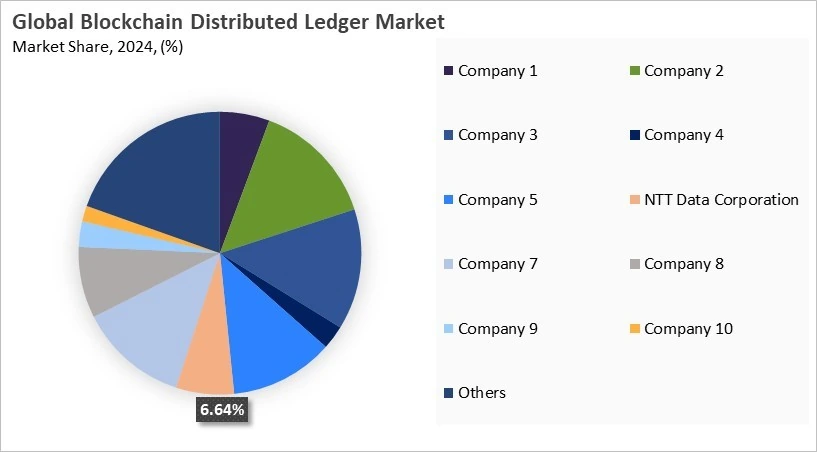
The leading players in the market are competing with diverse innovative offerings to remain competitive in the market. The above illustration shows the percentage of revenue shared by some of the leading companies in the market. The leading players of the market are adopting various strategies in order to cater demand coming from the different industries. The key developmental strategies in the market are Acquisitions, and Partnerships & Collaborations.
Based on Deployment, the blockchain distributed ledger market is segmented into cloud and on-premise. The on-premise segment acquired 40% revenue share in the market in 2024. This deployment model remains highly relevant for enterprises that require direct control over their infrastructure, data governance, and security frameworks. On-premise blockchain deployment allows organizations to host distributed ledger networks within their own data centers or private infrastructure environments, ensuring strict oversight of sensitive transactional data and compliance with regulatory mandates.
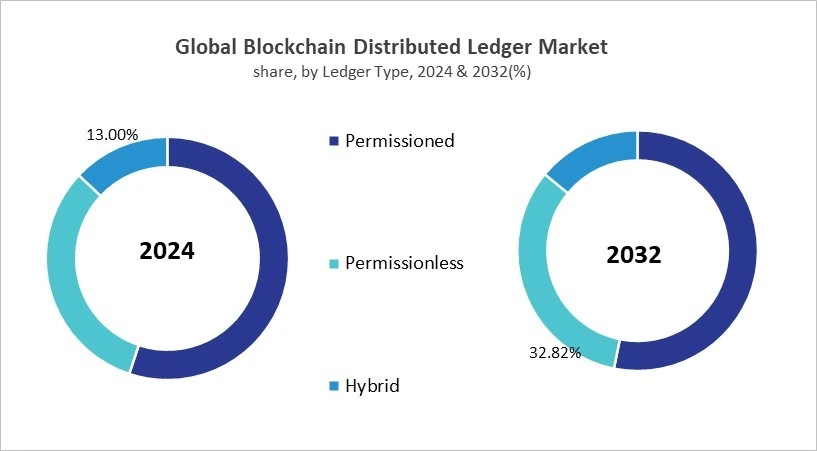
Based on ledger type, the blockchain distributed ledger market is segmented into permissioned, permissionless, and hybrid. The permissionless segment attained 32% revenue share in the market in 2024. This segment is characterized by open and decentralized blockchain networks that allow anyone to participate without prior authorization. Permissionless ledgers are built on principles of transparency, decentralization, and censorship resistance, making them foundational to public blockchain ecosystems.
Free Valuable Insights: Blockchain Distributed Ledger Market Size to reach $30.56 by 2032
Region-wise, the blockchain distributed ledger market is analyzed across North America, Europe, Asia Pacific, and LAMEA. The North America segment recorded 36% revenue share in the blockchain distributed ledger market in 2024. The blockchain and distributed ledger market is estimated to experience substantial expansion in the North America and Europe regions. This is because of strong enterprise demand, early technology adoption, and relatively mature regulatory engagement. North America leads in commercialization and platform development, propelled by major cloud providers, extensive usage of DLT in financial services, healthcare data management, capital markets, supply chain optimization, and fintech innovation. The region further shows strong momentum in blockchain-as-a-service deployments and pilot programs for payment modernization and digital assets. Moreover, Europe prioritizes regulatory clarity, cross-border collaboration, and data protection. European financial institutions and governments largely explore blockchain for trade finance, digital identity, and public-sector recordkeeping, while regulatory initiatives encourage compliant innovation in areas like distributed financial infrastructure and digital assets.
In the Asia Pacific region, the blockchain and distributed ledger market is predicted to grow at a significant rate. The market expansion is propelled by expanding fintech ecosystems, rapid digitalization, and strong government involvement. Regional nations are widely heavily in blockchain for supply chain transparency, payments, and public infrastructure, with particular emphasize on central bank digital currency (CBDC) research and large-scale deployment. Rising e-commerce activity, high transaction volumes, and mobile-first economies surge adoption. In addition to this, the LAMEA blockchain and distributed ledger market is offering positive growth opportunities. The market is driven by the need for cross-border remittances, financial inclusion, transparency in public services, and trade documentation. With improving digital infrastructure and maturing regulatory frameworks, LAMEA is predicted to witness steady growth, positioning blockchain and DLT as core component for enterprise modernization and secure digital finance.
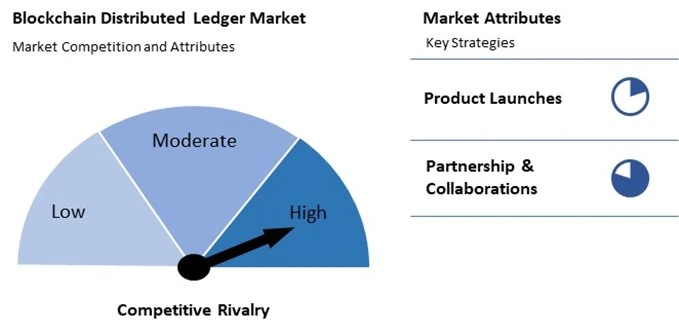
Market competition in the blockchain distributed ledger market is highly intense due to the presence of numerous technology providers, startups, and open-source platforms offering similar core functionalities. Players compete mainly on scalability, security, transaction speed, and ease of integration with existing enterprise systems. Rapid technological evolution shortens product life cycles and forces continuous innovation. Price competition is strengthened by open-source frameworks and cloud-based deployment models. Strategic partnerships and industry-specific solutions are increasingly used to achieve differentiation and expand market reach.
| Report Attribute | Details |
|---|---|
| Market size value in 2025 | USD 6.98 Billion |
| Market size forecast in 2032 | USD 30.56 Billion |
| Base Year | 2024 |
| Historical period | 2021 to 2023 |
| Forecast Period | 2025 to 2032 |
| Revenue Growth Rate | CAGR of 23.5% from 2025 to 2032 |
| Number of Pages | 489 |
| Tables | 356 |
| Report Coverage | Market Trends, Revenue Estimation and Forecast, Segmentation Analysis, Regional and Country Breakdown, Competitive Landscape, Market Share Analysis, Porter’s 5 Forces Analysis, Company Profiling, Companies Strategic Developments, SWOT Analysis, Winning Imperatives |
| Segments Covered | Deployment, Ledger Type, Application, Region |
| Country Scope |
|
| Companies Included | IBM Corporation, Intel Corporation, Microsoft Corporation, GrainChain Inc., Accenture PLC, NTT Data Corporation, Amazon Web Services, Inc. (Amazon.com, Inc.), SAP SE, Auxesis Services & Technologies (P) Ltd., and Monax Industries Limited |
By Deployment
By Ledger Type
By Application
By Geography
Our team of dedicated experts can provide you with attractive expansion opportunities for your business.







 Unique Offerings