“Global Automotive Telematics Market to reach a market value of USD 110.73 Billion by 2032 growing at a CAGR of 13.7%”
The Global Automotive Telematics Market size is expected to reach $110.73 billion by 2032, rising at a market growth of 13.7% CAGR during the forecast period.
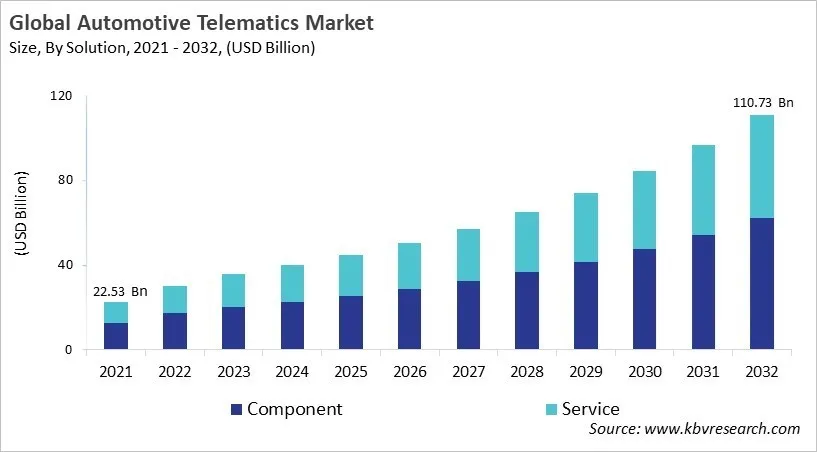
Automotive telematics has developed from basic fleet management and GPS tracking into a core component of modern connected vehicles. Early adoption focused on government vehicles and commercial fleets to enhance monitoring, compliance, and efficiency, but the rapid technological advancements are seen with automotive OEMs embedding telematics systems directly into vehicles at the factory level. Regulatory mandates like the EU’s eCall requirement further accelerated adoption by making connectivity a safety requirement. Advancements in cloud platforms, wireless communication, and vehicle sensors expanded telematics capabilities to include emergency services, real-time navigation, over-the-air updates, remote diagnostics, and predictive maintenance. Telematics has transitioned as a foundational technology supporting smart transportation system, digital mobility ecosystems, and vehicle safety.
Automotive telematics includes data-driven business models and connected vehicle strategies across the industry. OEMs largely leverage telematics data to deliver value-added services like driver behaviour analytics, usage-based insurance, fleet optimization, EV charging and battery management, and subscription-based connected services. Integration with developing technologies, including V2X communication, ADAS, cloud-based analytics, and electrification-positioned telematics as a central communication hub for future mobility. The competitive landscape of the automation telematics market is shaped by Tier-1 suppliers, automakers, telecom operators, and technology platforms, competing on analytics, connectivity quality, scalability and user experience. Telematics has become a crucial part of automotive innovation, allowing recurring revenue streams, improved customer engagement, and smarter, safer transportation networks.
The major strategies followed by the market participants are Partnerships as the key developmental strategy to keep pace with the changing demands of end users. For instance, In June, 2024, Continental AG teamed up with Samsara, a fleet management platform to offer integrated, data-driven fleet solutions focused on trailer management. By combining Continental’s in-tire sensor data with Samsara’s trailer insights, the collaboration aims to improve safety, maintenance, and efficiency. Moreover, In August, 2025, Geotab, Inc. announced the partnership with Mercedes-Benz to integrated telematics solution, enabling direct factory-installed connectivity for fleet vehicles. This partnership unifies EV and ICE vehicle data in MyGeotab, providing real-time tracking, diagnostics, and insights without aftermarket hardware. It streamlines mixed-fleet management, enhances efficiency, and supports most Mercedes-Benz models from 2019 onward.

Based on the Analysis presented in the KBV Cardinal matrix; HARMAN International Industries, Inc., and Verizon Communications, Inc. are the forerunners in the Automotive Telematics Market. In March, 2025, Verizon Communications, Inc. teamed up with Verra Mobility to offer managed tolling, violations, and registration services to fleet operators. This collaboration integrates Verra’s compliance solutions into Verizon’s telematics platform, streamlining fleet management and enhancing operational efficiency for commercial vehicle fleets using connected technologies. Companies such as Denso Corporation, Robert Bosch GmbH, and Continental AG are some of the key innovators in Automotive Telematics Market.
The COVID-19 pandemic impacted the Automotive Telematics Market by halting vehicle production and sales, as well as disrupting global supply chains. This made it much less likely that telematics systems would be installed in new vehicles. Lockdowns and restrictions on movement led to a sharp decline in vehicle use, which meant that fleet operators, logistics companies, and ride-hailing services didn't require tracking and monitoring solutions immediately. Due to the unstable economy, automakers and fleet owners had to focus on keeping costs low. This meant that investments in connected vehicle technologies and telematics upgrades were put off, especially by small and medium-sized fleet operators. Additionally, problems with research, development, and technology integration hindered the implementation of new ideas. Regulatory delays and postponed vehicle launches also made it harder for the market to grow during the pandemic. Thus, the COVID-19 pandemic had a negative impact on the market.
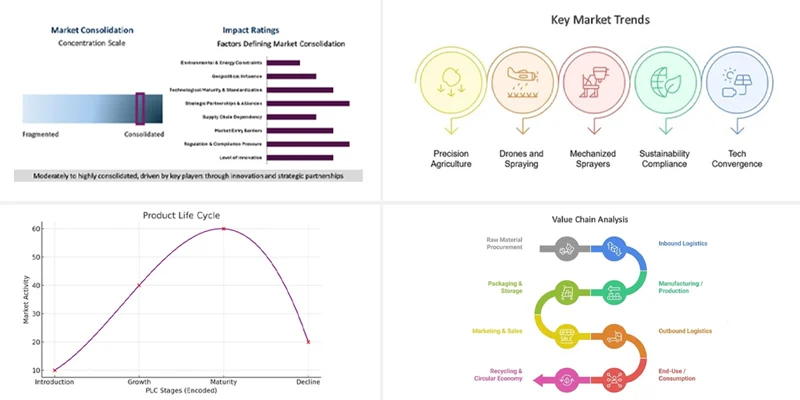


The leading players in the market are competing with diverse innovative offerings to remain competitive in the market. The above illustration shows the percentage of revenue shared by some of the leading companies in the market. The leading players of the market are adopting various strategies in order to cater demand coming from the different industries. The key developmental strategies in the market are Acquisitions, and Partnerships & Collaborations.
Free Valuable Insights: Automotive Telematics Market size to reach USD 110.73 Billion by 2032
Based on Vehicle, the market is segmented into Passenger, and Commercial. The commercial segment registered 24% revenue share in the automotive telematics market in 2024. The commercial vehicle segment plays an important role in the automotive telematics market by focusing on operational efficiency, safety, and cost optimization. Telematics solutions are widely used in commercial vehicles for fleet management, vehicle tracking, fuel monitoring, route optimization, and driver behavior analysis. Logistics, transportation, construction, and public service operators rely on telematics to improve productivity and reduce downtime.
Based on Sales Channel, the market is segmented into OEM, and Aftermarket. The aftermarket segment recorded 36% revenue share in the automotive telematics market in 2024. The aftermarket segment plays a vital role in expanding automotive telematics adoption beyond factory-installed systems. Aftermarket solutions enable vehicle owners and fleet operators to retrofit telematics capabilities into existing vehicles. These solutions are widely used for fleet management, vehicle tracking, driver behavior monitoring, and security applications. Flexibility, lower upfront costs, and ease of installation make aftermarket telematics attractive across passenger and commercial vehicles.

Based on Technology, the market is segmented into Embedded, and Tethered. The tethered segment acquired 22% revenue share in the automotive telematics market in 2024. The tethered segment plays an important role in the automotive telematics market by leveraging external devices, typically smartphones, to enable connectivity. This technology offers flexibility and cost advantages, making it attractive for consumers and fleet operators seeking telematics functionality without full hardware integration. Tethered solutions support applications such as navigation, infotainment, real-time traffic updates, and basic vehicle diagnostics.
Region-wise, the automotive telematics market is analyzed across North America, Europe, Asia Pacific, and LAMEA. The Asia Pacific segment gained 40% revenue share in the automotive telematics market in 2024. The automation telematics market is anticipated to witness substantial growth in the North America and Europe regions. The market is driven by strong OEM integration, high vehicle connectivity penetration, and supportive regulatory frameworks. In North America, the telematics adoption is propelled by usage-based insurance programs, large commercial fleets, subscription-based connected services, and advanced driver assistance systems (ADAS). Large consumer acceptance of premium digital features, along with widespread 4G/5G connectivity, supports continued innovation in remote diagnostics, predictive maintenance, and infotainment services. Moreover, Europe market is largely influenced by regulatory mandates like the EU’s eCall system, which has standardized safety telematics across new vehicles. Also, Europe’s emphasis on sustainability, electric mobility, and emission monitoring has spurred the integration of telematics into smart transportation systems, EV management, and cross-border fleet operations.
In the Asia Pacific and LAMEA region, the automotive telematics market is predicted to grow at a prominent rate. This is because of increasing disposable incomes, expanding vehicle production, and rapid digital infrastructure development across India, China, Japan, and South Korea. OEMs in the region are largely embedding telematics as standard features to support safety, navigation, and EV battery management and connected mobility services, while government-backed smart city and smart transport initiatives are accelerating adoption. Furthermore, the LAMEA automotive telematics market is growing rapidly, driven by logistics optimization, fleet management, and urban mobility needs. Nations such as Mexico, Brazil, Saudi Arabia, and the UAE are experiencing the deployment of telematics for public transport, commercial vehicles, and smart infrastructure projects, thereby leading to market growth.

The market for fire trucks has grown highly competitive because of government buying processes, rules, and long replacement cycles. Price isn't the only thing that matters in competition; customization, reliability, following safety rules, and after-sales support are also important. Product differentiation is affected by the terrain, the level of risk, and the way things work in a certain area. Long-term service contracts, local assembly, and technological integration are other things that help define competitive positioning in both global and regional markets.
| Report Attribute | Details |
|---|---|
| Market size value in 2025 | USD 44.96 Billion |
| Market size forecast in 2032 | USD 110.73 Billion |
| Base Year | 2024 |
| Historical Period | 2021 to 2023 |
| Forecast Period | 2025 to 2032 |
| Revenue Growth Rate | CAGR of 13.7% from 2025 to 2032 |
| Number of Pages | 608 |
| Number of Tables | 527 |
| Report coverage | Market Trends, Revenue Estimation and Forecast, Segmentation Analysis, Regional and Country Breakdown, Competitive Landscape, Market Share Analysis, Porter’s 5 Forces Analysis, Company Profiling, Companies Strategic Developments, SWOT Analysis, Winning Imperatives |
| Segments covered | Solution, Application, Vehicle, Sales Channel, Technology, Region |
| Country scope |
|
| Companies Included | Continental AG, Robert Bosch GmbH, Denso Corporation, Verizon Communications, Inc., Geotab, Inc., Samsara Inc., LG Electronics, Inc. (LG Corporation), HARMAN International Industries, Inc. (Samsung Electronics Co., Ltd.), Visteon Corporation, and Trimble, Inc. |
By Solution
By Application
By Vehicle
By Sales Channel
By Technology
By Geography
The market size is projected to reach USD 110.73 Billion by 2032.
The automotive telematics market is projected to grow at a CAGR of 13.7% between 2025 and 2032.
Rising focus on vehicle safety and emergency response, combined with expanding connected vehicle and digital mobility ecosystems, is driving market growth.
Continental AG, Robert Bosch GmbH, Denso Corporation, Verizon Communications, Inc., Geotab, Inc., Samsara Inc., LG Electronics, Inc. (LG Corporation), HARMAN International Industries, Inc. (Samsung Electronics Co., Ltd.), Visteon Corporation, and Trimble, Inc.
The Fleet Management segment captured the maximum revenue in the Global Automotive Telematics Market by Application in 2024, thereby, achieving a market value of $41.5 billion by 2032.
The Asia Pacific region dominated the Global Automotive Telematics Market by Region in 2024, and would continue to be a dominant market till 2032; thereby, achieving a market value of $45.2 billion by 2032.
Our team of dedicated experts can provide you with attractive expansion opportunities for your business.









 Unique Offerings