The Asia Pacific Native Advertising Market would witness market growth of 13.6% CAGR during the forecast period (2025-2032).
The China market dominated the Asia Pacific Native Advertising Market by Country in 2024, and would continue to be a dominant market till 2032; thereby, achieving a market value of $24,237.9 million by 2032. The Japan market is registering a CAGR of 12.9% during (2025 - 2032). Additionally, The India market would showcase a CAGR of 14.3% during (2025 - 2032). The China and Japan led the Asia Pacific Native Advertising Market by Country with a market share of 34.9% and 15.5% in 2024. The Australia market is expected to witness a CAGR of 15.6% during throughout the forecast period.
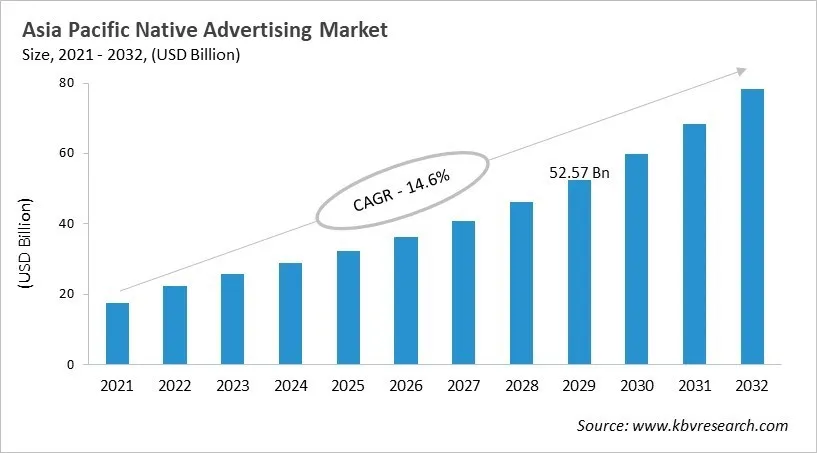
Native advertising in the Asia-Pacific region has changed from simple sponsored content to a complex, tech-driven part of digital marketing that seamlessly blends promotional messages with editorial context. Mobile-first consumption, the growth of programmatic and in-app inventory, and platform investments in native tools and measurement have all helped this change happen. Modern native formats, such as sponsored articles, in-feed social placements, and connected TV units, focus on contextual relevance, component-based creativity, and clear disclosure. They try to find a balance between user experience and business goals. Advertisers in APAC are putting more emphasis on engagement-driven results like dwell time and scroll depth instead of just impressions. They are also using AI and automation to improve creative variants and programmatic delivery on a large scale.
In APAC, market strategies are based on three main pillars: standardized, component-based creative for consistency across devices; following disclosure and regulatory rules to keep trust; and forming strategic partnerships with local publishers to make content more relevant to the context. Global platforms give you the ability to measure and scale, while regional publishers give you trusted editorial spaces, and specialist networks let you tell stories quickly and in a way that fits your audience. As attention spans get shorter and there are more platforms, advertisers are focusing on high-quality, market-specific native placements that combine global assets with local execution. As a result, the competitive landscape favors integrated solutions that provide reliable, open, and quantifiable results. This makes native a popular, performance-based channel in APAC.
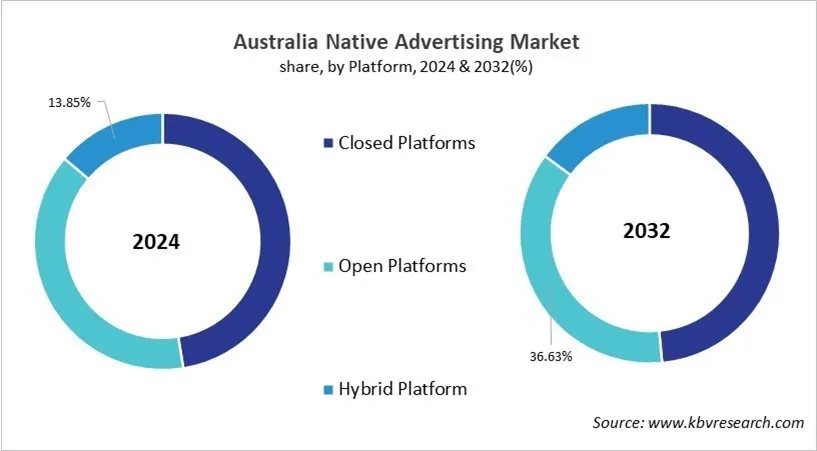
Based on Platform, the market is segmented into Closed Platforms, Open Platforms and Hybrid Platform. The Closed Platforms market segment dominated the Australia Native Advertising Market by Platform is expected to grow at a CAGR of 15.9 % during the forecast period thereby continuing its dominance until 2032. Also, The Hybrid Platform market is anticipated to grow as a CAGR of 16.7 % during the forecast period during (2025 - 2032).
Based on End Use, the market is segmented into Retail & eCommerce, Media & Entertainment, BFSI, Travel & Hospitality, Healthcare, Telecom & IT, Automotive, Education and Other End Uses. Among various Japan Native Advertising Market by End Use; The Retail & eCommerce market achieved a market size of USD $1571.3 Million in 2024 and is expected to grow at a CAGR of 10.9 % during the forecast period. The Education market is predicted to experience a CAGR of 14.5% throughout the forecast period from (2025 - 2032).
Free Valuable Insights: The Native Advertising Market is Predicted to reach USD 263.84 Billion by 2032, at a CAGR of 13.0%
China's native advertising market does well in a digital-first world with highly engaged mobile users, platforms full of content, and apps that work together. The high demand is due to how well ads fit in with user experiences on lifestyle portals, social feeds, video platforms, and app interfaces. The market is shaped by a number of important factors, such as advanced digital infrastructure, widespread mobile payments, high user interaction, and a culture that values content. Regulatory guidelines also affect messaging and disclosure. Trends right now focus on immersive formats, AI-driven personalization, interactive storytelling, and designs that work best on mobile devices. Domestic digital platforms and multi-functional apps are the most popular in the competition. Advertisers focus on making their ads more relevant to the context, using integrated multi-touch strategies, and getting the most people to interact with their ads in unified digital ecosystems.

By Platform
By Content Format
By End Use
By Country
Our team of dedicated experts can provide you with attractive expansion opportunities for your business.



 Unique Offerings