The Asia Pacific Loyalty Management Market is expected to reach $5.76 billion by 2029 and would witness market growth of 10.8% CAGR during the forecast period (2025-2032).
The China market dominated the Asia Pacific Loyalty Management Market by Country in 2024, and would continue to be a dominant market till 2032; thereby, achieving a market value of $2,073 million by 2032. The Japan market is registering a CAGR of 10% during (2025 - 2032). Additionally, The India market would showcase a CAGR of 11.4% during (2025 - 2032). The China and India led the Asia Pacific Loyalty Management Market by Country with a market share of 29.9% and 18.7% in 2024. The Singapore market is expected to witness a CAGR of 12.4% during throughout the forecast period.
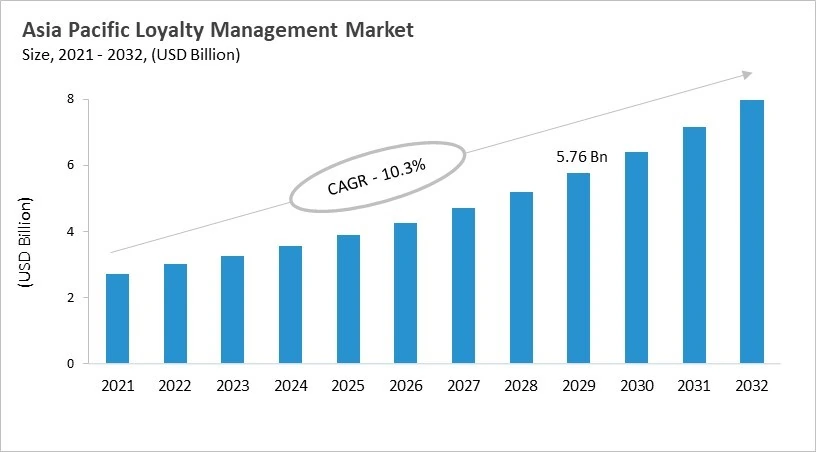
The Asia Pacific loyalty management market has changed from traditional, points-based programs to highly integrated, mobile-first digital ecosystems that are part of everyday life for consumers. The rise of super apps like GrabRewards, WeChat, Paytm, and GoPay, along with the rapid spread of smartphones and better internet access, has changed the way loyalty is delivered. Now, rewards are built into payments, ride-hailing, e-commerce, travel, and financial services. Loyalty is no longer just a way to promote something; it's now a strategic asset that helps keep customers engaged, keep them coming back, and increase their lifetime value. Businesses can move away from transactional rewards and toward predictive, behavior-based models that are tailored to different regional preferences thanks to advanced analytics, AI-driven personalization, and real-time engagement capabilities. Also, changing data privacy rules are pushing for open, consent-based data practices that build trust with customers.
There is a lot of competition in the area, and ecosystem-led platforms, fintech innovators, and omnichannel retailers are all working together to make loyalty work across both digital and physical touchpoints. To meet the needs of Millennials and Gen Z consumers who want instant gratification and meaningful experiences, top companies focus on mobile-first engagement, gamification, tiered memberships, and experiential rewards. Strategic partnerships between businesses in different industries make it easier for customers to earn and redeem rewards in more than one industry. This makes the program more useful and keeps customers coming back. The Asia Pacific loyalty management market is changing because super apps, AI-enabled personalization, and experience-based loyalty models are all coming together. This is happening as markets like China, India, Southeast Asia, Australia, and Singapore continue to go digital.
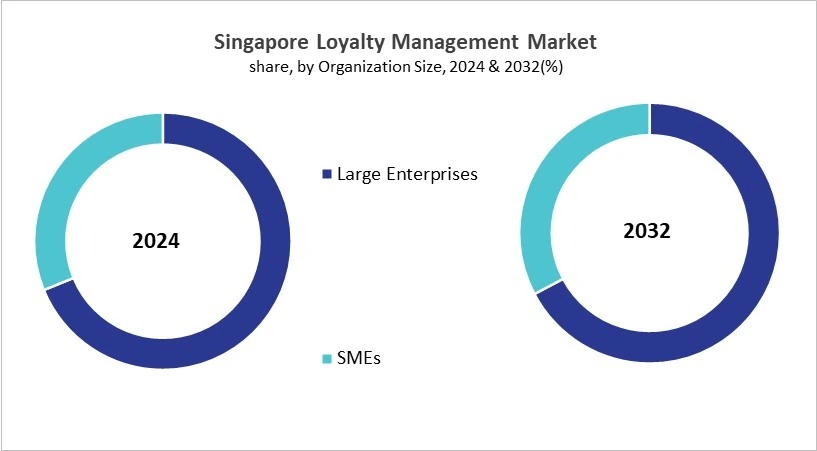
Based on Organization Size, the market is segmented into Large Enterprises and SMEs. The Large Enterprises market segment dominated the Singapore Loyalty Management Market by Organization Size is expected to grow at a CAGR of 12.1 % during the forecast period thereby continuing its dominance until 2032. Also, The SMEs market is anticipated to grow as a CAGR of 13.1 % during the forecast period during (2025 - 2032).
Based on Deployment, the market is segmented into Cloud and On-premise. With a compound annual growth rate (CAGR) of 11.5% over the projection period, the Cloud Market, dominate the India Loyalty Management Market by Deployment in 2024 and would be a prominent market until 2032. The On-premise market is expected to witness a CAGR of 11.2% during (2025 - 2032).
Free Valuable Insights: Loyalty Management Market is Predicted to reach USD 25.70 billion by 2032, at a CAGR of 10.3%
China's loyalty management market is a big part of its highly digital consumer economy, which is led by platforms like Alibaba Group, JD.com, and Tencent that are based on ecosystems. Programs like 88VIP show that loyalty programs are built around integrating multiple services, like shopping, entertainment, and delivery, instead of having separate points systems. Real-time, data-driven, and experience-based reward systems are now possible because of the high use of mobile commerce and digital wallets like Alipay and WeChat Pay. More and more, the market is defined by premium tiers that require a subscription, AI-powered personalization, and the ability to shop across borders. China's loyalty landscape is still changing because of strong competition between major platforms and related industries, as well as new rules about data privacy.

By Organization Size
By Deployment
By Component
By Vertical
By Country
Our team of dedicated experts can provide you with attractive expansion opportunities for your business.






 Unique Offerings