“Global API Management Market to reach a market value of USD 29.25 Billion by 2032 growing at a CAGR of 24%”
The Global API Management Market size is estimated at $6.48 billion in 2025 and is expected to reach $29.25 billion by 2032, rising at a market growth of 24.0% CAGR during the forecast period (2025-2032). The rapid expansion of this market is supported by accelerating digital transformation, widespread cloud adoption, and growing use of microservices and SaaS platforms. Rising demand for secure API integration, partner ecosystems, and data-driven applications across enterprises.
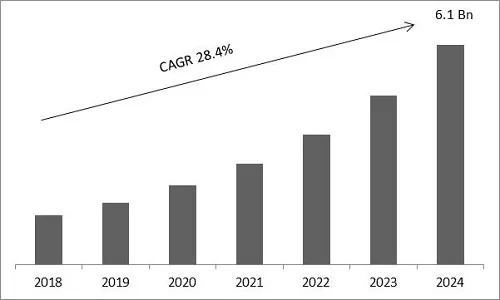
APIs have evolved into a foundational layer of modern digital systems, allowing efficient and secure communication between cloud services, applications, enterprise environments, and mobile platforms. With organizations shifting from monolithic architectures to cloud native and service-oriented models, API management developed to govern the full API lifecycle-covering security, design, monitoring, publishing, and monetisation. Initially used for internal integration, APIs rapidly expanded to external facing usage cases like partner ecosystems, mobile apps, and third-party platforms, creating strong demand for performance, security, and robust governance. With the growth of cloud computing, API management developed into a core digital infrastructure, driven by scalable PaaS solutions for major providers that allow multicloud and hybrid deployments while assuring consistent access, observability, reliability, and control.
API management has developed as a strategic enabler of digital transformation, focusing on developer experience, security, and business value creation. Advanced capabilities like analytics, API-driven automation, policy-driven security, analytics, monetisation frameworks, and developer portals are driving competition in the market. Organizations largely treat APIs as monetisable digital products, propelling new revenue streams and partner collaboration. Key market players, including AWS, Microsoft, IBM, and Google, integrate API management deeply into wider cloud ecosystems, emphasizing scalability, security, developer engagement, and hybrid support. The API management market seems to be intensively competitive as innovation around cost-efficiency, AI-powered insights, and ecosystem collaboration continues to drive a highly dynamic and competitive landscape.
The major strategies followed by the market participants are Partnerships as the key developmental strategy to keep pace with the changing demands of end users. For instance, In February, 2025, IBM Corporation announced the partnership with Alinma Bank, a Banking company to launch a new API platform powered by hybrid cloud and AI technologies. Using IBM API Connect, Cloud Pak for Integration, and Red Hat OpenShift, the platform aims to enhance digital service integration for fintech and SME clients and drive new revenue streams. Additionally, In February, 2025, SAP SE teamed up with PortSwigger, a software company to enhance web application security using Burp Suite Enterprise Edition. This collaboration aims to secure SAP’s global web applications, including ARIBA, BTP, and S/4HANA, across multiple regions. The integration of automated security scans ensures compliance with regional security standards and improves application security at scale.
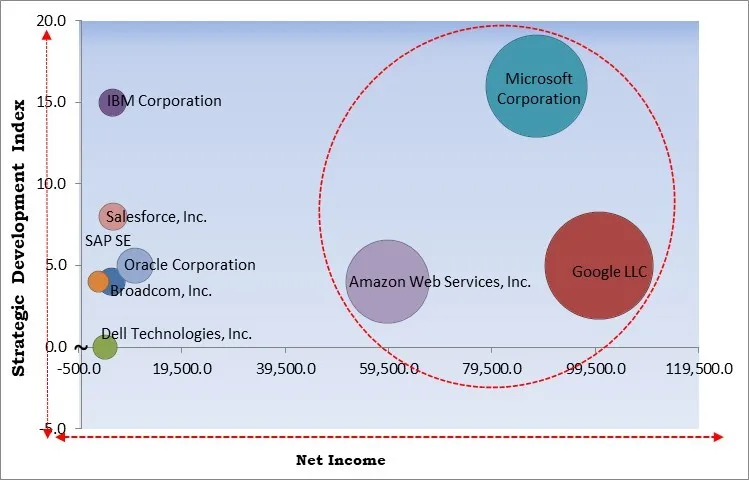
Based on the Analysis presented in the KBV Cardinal matrix; Google LLC, Microsoft Corporation, and Amazon Web Services, Inc. are the forerunners in the API Management Market. Companies such as Oracle Corporation, Salesforce, Inc., and IBM Corporation are some of the key innovators in API Management Market. In April, 2025, Microsoft Corporation teamed up with Pronovix, a software company to enhance Azure API Management with customizable, scalable developer portals. Combining Azure's enterprise platform with Pronovix’s expertise, the collaboration enables businesses to create branded, fully functional portals, improving API discoverability, authentication, and integration. This solution scales with growing API needs and offers advanced customization.
The COVID-19 pandemic had a positive effect on the API management market because companies sped up their digital transformation to keep their businesses running. As more people worked from home, used online services, and interacted with customers digitally, APIs became more important for connecting applications and sharing data. The quick move to cloud-based environments made the need for secure and scalable API management solutions even greater. Healthcare, e-commerce, banking, and telecommunications are some of the industries that saw more API use to support digital services and meet rising user demand. API management platforms helped keep an eye on performance, security, and traffic in digital ecosystems. Companies also started using APIs to make their operations more automated, compatible with other systems, and based on data. As a result, continued investments in API management solutions helped the market keep growing even after the pandemic. Thus, the COVID-19 pandemic had a Positive impact on the market.

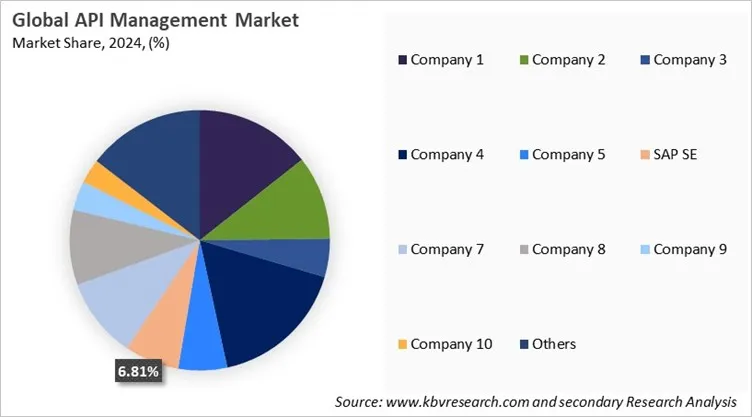
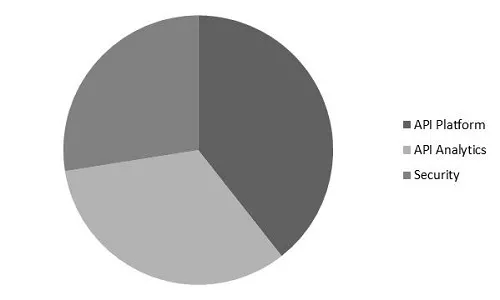
The leading players in the market are competing with diverse innovative offerings to remain competitive in the market. The above illustration shows the percentage of revenue shared by some of the leading companies in the market. The leading players of the market are adopting various strategies in order to cater demand coming from the different industries. The key developmental strategies in the market are Acquisitions, and Partnerships & Collaborations.
Free Valuable Insights: API Management Market size to reach USD 29.25 Billion by 2032
Based on Deployment, the API Management Market is segmented into Cloud, and On-Premise. The On-Premise segment acquired 50% revenue share in the market in 2024. The On-Premise segment of the API Management Market emphasizes controlled and highly secure environments for organizations with stringent regulatory or compliance requirements. On-premise deployments provide deep integration capabilities with existing IT infrastructure, allowing for customization and optimization to meet specific enterprise needs.
Based on Application, the API Management Market is segmented into Security, Performance Analytics, Gateway, Governance, and Other Application. The Performance Analytics segment attained 22% revenue share in the market in 2024. The Performance Analytics segment of the API Management Market emphasizes monitoring, measuring, and optimizing API performance across various applications. This segment delivers real-time insights into API usage, response times, latency, and error rates, enabling organizations to enhance operational efficiency and user experience.
Region-wise, the API Management Market is analyzed across North America, Europe, Asia Pacific, and LAMEA. The North America segment recorded 38% revenue share in the market in 2024. The API management market is estimated to experience expansion in the North America and Europe region. The market is driven by high cloud adoption, advanced digital infrastructure, and strong enterprise demand across industries such as healthcare, retail, BFSI, and government. The region mainly grows because of early adoption of cloud native architectures, API-first strategies, and microservices, supported by regulatory focus on compliance and security. The presence of extensive partner ecosystems, major technology providers, and robust R&D investment further supported North America’s market. Furthermore, Europe API management market is anticipated to witness growth. The European market is propelled by regulatory mandates such as GDPR and PSD2 that drive API adoption in government, finance, and cross-border digital services.
In the Asia Pacific and LAMEA region, the API management market is predicted to grow at a prominent rate in the forecast period. This is because of expanding cloud computing, rapid digitalization, strong API usage in fintech and e-commerce, and mobile-first consumer markets. Furthermore, LAMEA API management market is expected to witness substantial rate in the forecast period. The market expansion is supported by open banking programs, public sector digital initiatives, and investments in mobile services and telecom. Additionally, the growth potential in the market is also strong in both regions as digital transformation accelerates.
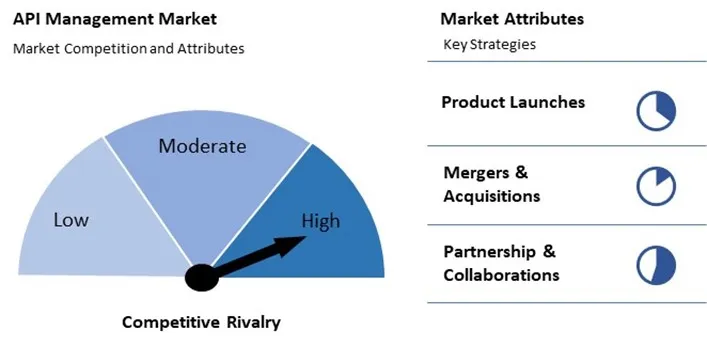
Competition in the API management market is high and characterized by the presence of several global technology providers and specialized vendors. Market participants compete on factors such as platform scalability, security features, cloud integration, ease of deployment, and support for hybrid and multi-cloud environments. Continuous innovation, including advanced analytics, automation, and developer management tools, plays a key role in differentiation. The growing demand from enterprises across industries further intensifies competition, encouraging vendors to expand capabilities and strengthen ecosystem partnerships.
| Report Attribute | Details |
|---|---|
| Market size value in 2025 | USD 6.48 Billion |
| Market size forecast in 2032 | USD 29.25 Billion |
| Base Year | 2024 |
| Historical Period | 2021 to 2023 |
| Forecast Period | 2025 to 2032 |
| Revenue Growth Rate | CAGR of 24.0% from 2025 to 2032 |
| Number of Pages | 596 |
| Number of Tables | 487 |
| Report coverage | Market Trends, Revenue Estimation and Forecast, Segmentation Analysis, Regional and Country Breakdown, Competitive Landscape, Market Share Analysis, Porter’s 5 Forces Analysis, Company Profiling, Companies Strategic Developments, SWOT Analysis, Winning Imperatives |
| Segments covered | Enterprise Type, Deployment, Application, End-User Industry, Region |
| Country scope |
|
| Companies Included | IBM Corporation, Microsoft Corporation, Broadcom, Inc., Google LLC (Alphabet Inc.), Oracle Corporation, SAP SE, Amazon Web Services, Inc. (Amazon.com, Inc.), Salesforce, Inc., Dell Technologies, Inc. and TIBCO Software, Inc. |
By Enterprise Type
By Deployment
By Application
By End User Industry
By Geography
This Market size is expected to reach USD 29.25 Billion by 2032.
The API management market is projected to grow at a CAGR of 24% between 2025 and 2032.
Digital transformation through API-led business models, combined with cloud migration and multi-cloud integration, is driving scalable enterprise growth.
IBM Corporation, Microsoft Corporation, Broadcom, Inc., Google LLC (Alphabet Inc.), Oracle Corporation, SAP SE, Amazon Web Services, Inc. (Amazon.com, Inc.), Salesforce, Inc., Dell Technologies, Inc. and TIBCO Software, Inc.
The Large Enterprises segment is leading the Global API Management Market by Enterprise Type in 2024; thereby, achieving a market value of $16.54 billion by 2032.
The North America region dominated the Global API Management Market by Region in 2024, and would continue to be a dominant market till 2032; thereby, achieving a market value of $10.65 billion by 2032.
Our team of dedicated experts can provide you with attractive expansion opportunities for your business.











 Unique Offerings