“Global AI-Based Personalization Engines Market to reach a market value of USD 618.58 Billion by 2032 growing at a CAGR of 5.1%”
The Global AI-Based Personalization Engines Market size is estimated at $436.28 billion in 2025 and is expected to reach $618.58 billion by 2032, rising at a market growth of 5.1% CAGR during the forecast period (2025-2032). The projected growth of the market is justified by rising demand for tailored digital experiences across e-commerce, media, banking, and healthcare. Increasing adoption of AI, big data analytics, and cloud platforms enable real-time customer insights, driving higher engagement, conversion rates, and long-term enterprise investment in personalization technologies.
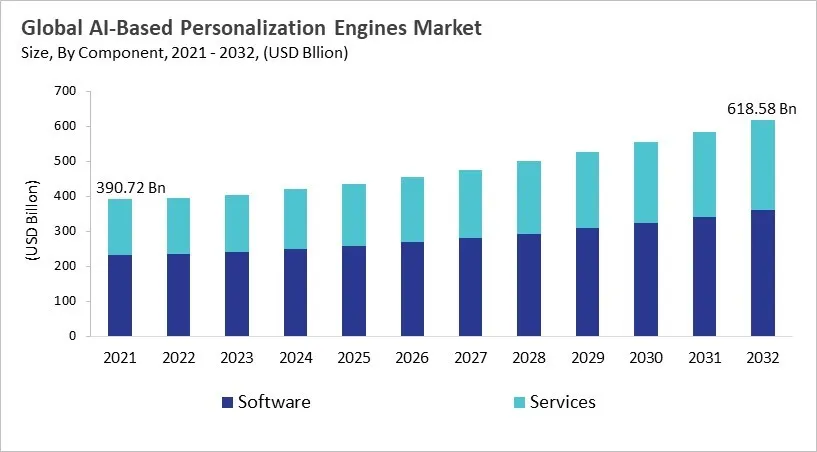
Growing assurance from consumers has transformed the AI-based personalization engines and evolved the advancements in digital data and AI technologies. As compared to the conventional ways comprises of rule-based or static segmentation methods modern personalization uses ML, deep learning and real-time data processing to provide predictive, dynamic and context-aware experiences at a personal scale. Starting from the initial predictive analytics and recommender systems, these engines regularly train from the user input to customized content, recommendations, and services in real time. Key technology providers like IBM and Salesforce have spurred this transformation by implanting AI-driven personalization into combined consumer data platforms, giving congruous and relatable engagement in various digital channels.
Standard personalization trends are very much focused on delivering experiences that adapt instantly to user context, operate seamlessly across multiple channels, and proactively anticipate user needs rather than simply responding to past behavior. What was once limited to commercial applications is now extending into public sector digital services, signaling that personalized digital experiences have become a baseline expectation for users everywhere. As competition intensifies, organizations are differentiating themselves through strong data integration, real-time AI decision-making, advanced predictive capabilities, and responsible data governance. With continued investment in these areas, AI-based personalization engines are evolving into core digital infrastructure, enabling organizations to deliver consistent, trusted, and highly tailored experiences across industries.
The major strategies followed by the market participants are Partnerships as the key developmental strategy to keep pace with the changing demands of end users. For instance, In June, 2025, SAP SE announced the partnership with Phenom, making its AI-driven Intelligent Talent Experience platform an SAP Endorsed App. Integrated with SAP SuccessFactors, it enables hyper-personalized hiring through automation, improving candidate engagement, recruiter efficiency, and application conversion rates while reducing time-to-hire and manual workflows across global enterprises. Additionally, In May, 2025, Salesforce, Inc. announced the partnership with Bouygues Telecom, an internet service provider to deploy Agentforce AI agents within its CRM, enhancing customer service through automation and personalization. Integrated with Data Cloud, the system enables 360-degree customer insights, streamlining operations and empowering advisors to focus on empathetic, high-value interactions that strengthen customer relationships.
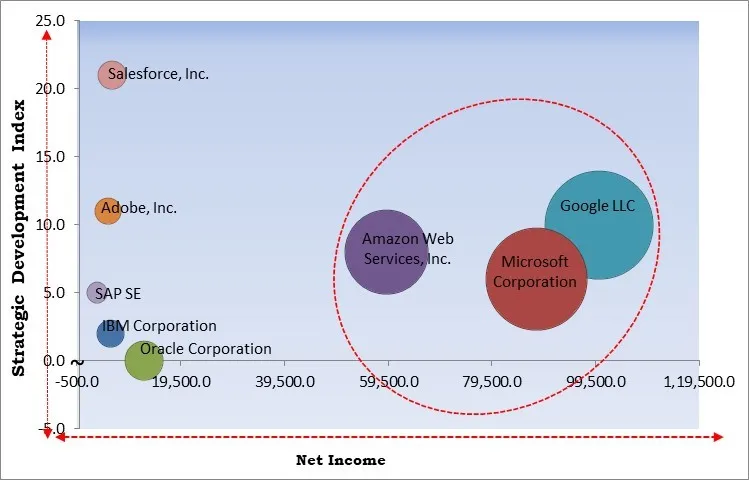
Based on the Analysis presented in the KBV Cardinal matrix; Google LLC, Microsoft Corporation, Amazon Web Services, Inc. are the forerunners in the AI-Based Personalization Engines Market. Companies such as Oracle Corporation, Salesforce, Inc., and IBM Corporation are some of the key innovators in AI-Based Personalization Engines Market. In February, 2025, Google LLC announced the partnership with Glance, an AI company to launch generative AI-powered experiences on smartphone lock screens and ambient TV screens. Using Google’s Gemini and Imagen models, Glance will enable hyper-personalized content and commerce, transforming phones into AI-powered devices through its upcoming platform, "Glance AI," starting in the U.S. market.
The COVID-19 pandemic positively impacted on the AI-based personalization engines market as businesses accelerated digital transformation and shifted customer engagement to online channels. Lockdowns and mobility restrictions increased reliance on digital platforms, boosting demand for real-time, intelligent personalization. Growth in e-commerce, online media, and digital services strengthened adoption as companies sought to enhance user experience and conversion rates. Personalization engines became central to marketing and CRM strategies by enabling data-driven decision-making and targeted campaigns. Cloud-based AI personalization solutions gained traction due to scalability and cost efficiency. Remote work and distributed operations further supported their deployment. Overall, the pandemic reinforced the strategic importance of AI-driven personalization and supported long-term market growth. Thus, the COVID-19 pandemic had a positive impact on the market.

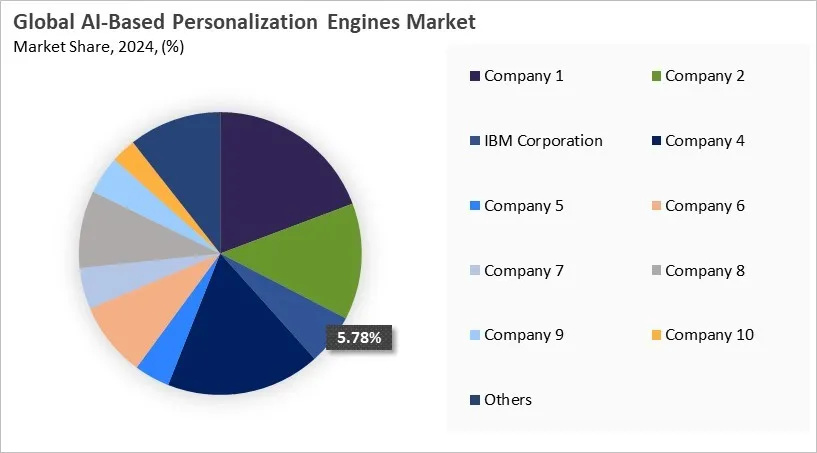
The leading players in the market are competing with diverse innovative offerings to remain competitive in the market. The above illustration shows the percentage of revenue shared by some of the leading companies in the market. The leading players of the market are adopting various strategies to cater demand coming from the different industries. The key developmental strategies in the market are Acquisitions, and Partnerships & Collaborations.
Based on End Use, the AI-Based Personalization Engines Market is segmented into Retail & E-commerce, BFSI, IT & Telecom, Media & Entertainment, Healthcare, Travel & Hospitality, Education, Automotive, and Other End Use. The BFSI segment attained 15% revenue share in the market in 2024. The banking, financial services, and insurance sector leverages AI-based personalization engines to enhance customer engagement, service delivery, and relationship management. Personalization technologies enable financial institutions to analyze transaction behavior, financial goals, risk profiles, and interaction histories to tailor product recommendations, communication strategies, and digital experiences.
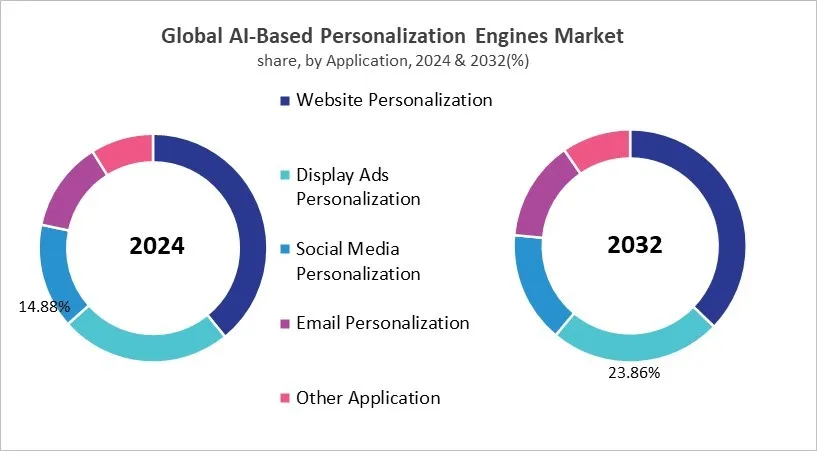
Based on Application, the AI-Based Personalization Engines Market is segmented into Website Personalization, Display Ads Personalization, Social Media Personalization, Email Personalization, and Other Application. The Display Ads Personalization segment attained 24% revenue share in the market in 2024. Display ads personalization focuses on tailoring visual advertising content to specific audience segments or individual users across digital platforms. AI-based personalization engines analyze demographic data, online behavior, purchase patterns, and contextual signals to deliver targeted advertisements that align with user preferences and interests. This application enables advertisers to optimize ad relevance, messaging, and creative formats while minimizing wasted impressions.
Region-wise, the AI-Based Personalization Engines Market is analyzed across North America, Europe, Asia Pacific, and LAMEA. The North America segment recorded 36% revenue share in the market in 2024. North America and Europe remain at the forefront of the AI-based personalization engines market, supported by well-established digital ecosystems and early adoption of advanced AI technologies. In North America, organizations across industries such as retail, BFSI, and media actively use real-time and predictive personalization to improve customer engagement and drive better conversion results. Europe follows closely, with steady adoption led by large enterprises and a strong focus on data privacy, regulatory compliance, and ethical AI, all of which significantly influence how personalization solutions are developed and deployed across the region.
Asia Pacific and LAMEA are gaining momentum as high-growth markets, driven by rising investments in digital platforms and AI-powered engagement solutions. Asia Pacific, with key contributions from countries such as China, India, and Japan, is experiencing rapid digital expansion, widespread mobile-first usage, and a growing e-commerce landscape that fuels demand for scalable personalization technologies. Meanwhile, LAMEA remains at an earlier stage of adoption but is steadily progressing as digital transformation initiatives across sectors like retail, banking, and government services increase, positioning the region as a promising long-term market for AI-based personalization engines.
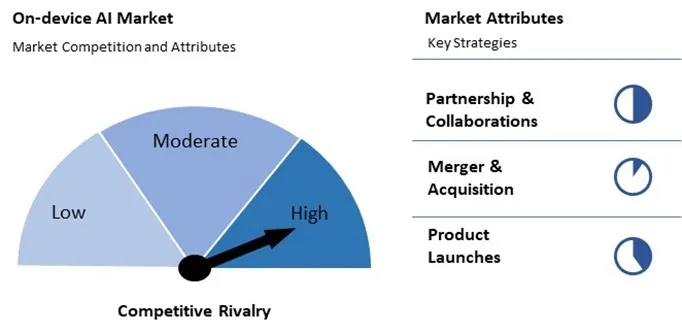
The AI-based personalization engines market is highly competitive, driven by rapid innovation from global technology firms, SaaS providers, and specialized AI startups. Competition centers on algorithm accuracy, real-time data processing, and seamless integration with e-commerce, media, and CRM platforms. Vendors differentiate through proprietary machine learning models, omnichannel personalization capabilities, and privacy-compliant data handling. Strategic partnerships, cloud scalability, and continuous product upgrades intensify rivalry, while customer demand for hyper-personalized experiences pushes companies to innovate and expand market presence aggressively.
| Report Attribute | Details |
|---|---|
| Market size value in 2025 | USD 436.26 Billion |
| Market size forecast in 2032 | USD 618.58 Billion |
| Base Year | 2024 |
| Historical period | 2021 to 2023 |
| Forecast Period | 2025 to 2032 |
| Revenue Growth Rate | CAGR of 5.1% from 2025 to 2032 |
| Number of Pages | 782 |
| Tables | 628 |
| Report Coverage | Market Trends, Revenue Estimation and Forecast, Segmentation Analysis, Regional and Country Breakdown, Competitive Landscape, Market Share Analysis, Porter’s 5 Forces Analysis, Company Profiling, Companies Strategic Developments, SWOT Analysis, Winning Imperatives |
| Segments Covered | Component, Deployment, Application, Technology, End Use, Region |
| Country Scope |
|
| Companies Included | Amazon Web Services, Inc. (Amazon.com, Inc.), Google LLC, IBM Corporation, Microsoft Corporation, Twilio Inc., Adobe, Inc., SAP SE, Salesforce, Inc., Oracle Corporation and Optimizely, Inc. |
By Component
By Deployment
By Application
By Technology
By End Use
By Geography
Our team of dedicated experts can provide you with attractive expansion opportunities for your business.










 Unique Offerings