Surgical Instrument Tracking Systems: How US Tech is Revolutionizing Global Healthcare
Published Date : 03-Sep-2025 |
In modern hospitals, a single misplaced surgical tool can disrupt operations, cause compliance issues, and even risk patient safety. That’s why the Surgical Instrument Tracking Systems Market is gaining massive attention from healthcare providers worldwide.
The Surgical Instrument Tracking Systems Market is rapidly expanding as hospitals and surgical centers prioritize patient safety, operational efficiency, and asset management. From reducing misplaced tools to optimizing surgical workflows, this technology is becoming indispensable in modern healthcare systems.
In this blog, we’ll break down market growth, innovations, benefits, features, and the leading companies shaping the future of surgical tracking.
What is a Surgical Instrument Tracking System?
A surgical instrument tracking system is a digital solution that enables healthcare facilities to track, monitor, and manage surgical tools throughout their lifecycle.
Key Functions:
- Identification: Using barcodes or RFID tags for unique recognition.
- Tracking: Monitoring an instrument’s journey from sterilization to the operating room.
- Reporting: Generating usage, maintenance, and compliance reports.
- Integration: Connecting with broader healthcare asset tracking software.
Example: A scalpel can be scanned before surgery, after surgery, and during sterilization, ensuring it’s never misplaced or reused without proper cleaning.
Market Overview & Growth Trends
The global demand for instrument tracking systems is rising, driven by:
- Patient safety regulations (e.g., FDA’s UDI rule in the US).
- Rising surgical volumes due to aging populations and chronic diseases.
- Hospital asset management cost optimization.
Market Insight: Industry reports project a steady CAGR in the coming years, with North America and Europe leading adoption, while Asia-Pacific is showing rapid growth due to healthcare infrastructure upgrades.
Technologies Powering Modern Instrument Tracking
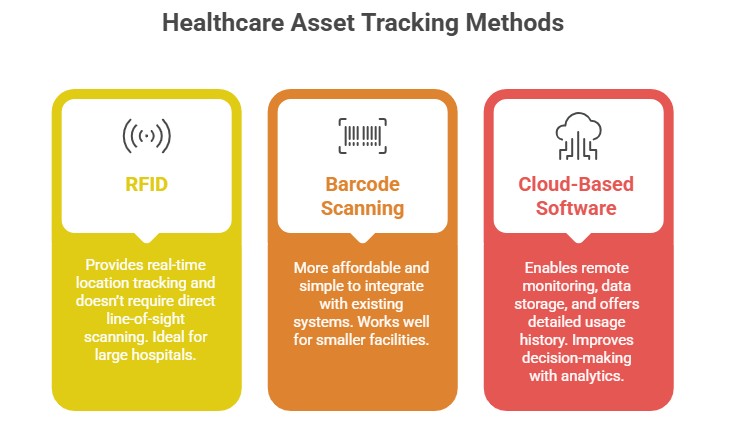
RFID (Radio Frequency Identification)
- Provides real-time location tracking.
- Doesn’t require direct line-of-sight scanning like barcodes.
- Ideal for large hospitals with high instrument volumes.
Barcode Scanning
- More affordable than RFID.
- Simple integration with existing healthcare systems.
- Works well for smaller facilities.
Cloud-Based Healthcare Asset Tracking Software
- Enables remote monitoring and data storage.
- Offers detailed usage history for each instrument.
- Improves decision-making with analytics dashboards.
Why Healthcare Systems Are Adopting Surgical Instrument Tracking
Improved Patient Safety
By ensuring every instrument is accounted for, these systems reduce the risk of retained surgical items (RSIs)—a critical safety concern.
Regulatory Compliance
Healthcare facilities must follow strict sterilization and reporting protocols. Tracking systems simplify compliance with Joint Commission and FDA guidelines.
Cost Savings & Efficiency
Less loss: Reduced instances of misplaced tools.
Time savings: Faster surgical kit preparation.
Better inventory control: Avoiding overstock or shortages.
Top Innovators in the Market
Fortive Corporation
Provides advanced SPM tracking systems that integrate smoothly with hospital workflows for better instrument management.
Becton, Dickinson and Company
Offers reliable barcode-based tracking solutions widely used in healthcare systems.
Xerafy Singapore Pte Ltd.
Designs RFID tags that can withstand intense sterilization processes, making them ideal for surgical tools.
Ternio Group, LLC
Specializes in customized tracking systems tailored to complex hospital needs.
Key Features That Set Leading Systems Apart
The latest systems go beyond basic tracking. They offer:
Maintenance Alerts – Get notified when instruments need repair or replacement.
Usage Analytics – Identify which tools are overused or underused to optimize purchasing.
Integration with Electronic Health Records (EHR) – Automatically link instrument usage to specific surgeries for complete documentation.
Use Cases: Real-World Impact
Case Study 1: Reducing Surgical Delays
A leading US hospital reduced surgery delays by after implementing RFID-based tracking, allowing staff to quickly locate and prepare instruments.
Case Study 2: Compliance Success
A European healthcare system avoided costly penalties by meeting new sterilization documentation requirements through automated tracking.
How Surgical Instrument Tracking Works
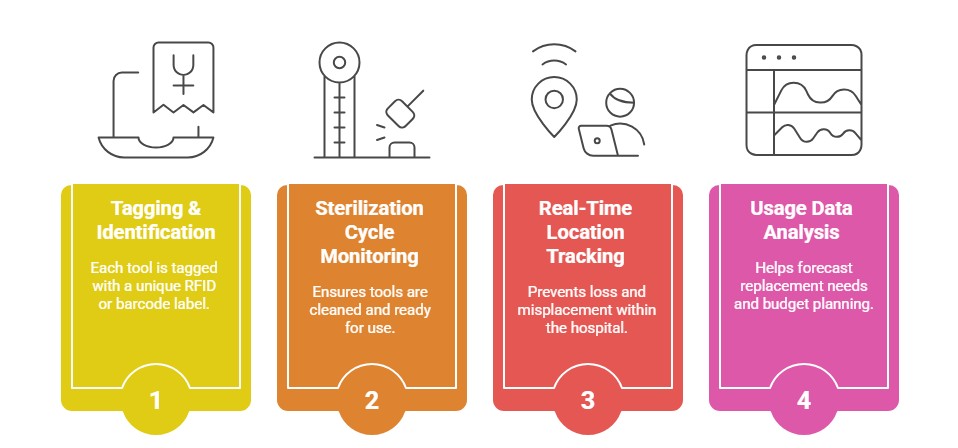
Modern surgical instrument tracking systems combine hardware (RFID chips, barcodes, scanners) and software to monitor instruments through every stage:
- Tagging & Identification – Each tool is tagged with a unique RFID or barcode label.
- Sterilization Cycle Monitoring – Ensures tools are cleaned and ready for use.
- Real-Time Location Tracking – Prevents loss and misplacement within the hospital.
- Usage Data Analysis – Helps forecast replacement needs and budget planning.
By automating these steps, hospitals can cut down manual record-keeping and improve accountability across the surgical team.
The Future: AI & IoT in Instrument Tracking
Artificial intelligence and IoT integration are the next big shifts.
Future systems will predict instrument wear-and-tear, automate reordering, and integrate with surgical scheduling software to minimize downtime.
The next decade will see:
- AI-Driven Predictive Analytics – Forecasting instrument demand and maintenance needs before issues arise.
- Cloud-Based Tracking Systems – Allowing multi-hospital networks to share data seamlessly.
- Smarter RFID Technology – Smaller, more durable tags capable of storing more data.
- Blockchain for Traceability – Creating tamper-proof logs of each instrument’s lifecycle.
Conclusion
The Surgical Instrument Tracking Systems Market is no longer just about compliance — it’s about building safer, smarter, and more cost-effective healthcare systems.
Hospitals that invest today will gain long-term savings, operational efficiency, and improved patient safety. If your facility is still relying on manual tracking, now is the time to upgrade. The right system could save lives, money, and a whole lot of headaches.