How In-store Analytics Boosts Productivity and Expands Across Regions
Published Date : 08-Aug-2025 |
Walk into any modern retail store today, and chances are—your every move is being quietly analyzed. From how long you linger in front of a display to the exact path you take through the aisles, retailers are using in-store analytics to track, understand, and improve every customer interaction.
The In-store Analytics Market has seen explosive growth in recent years, driven by the need to compete with eCommerce-level precision and provide a seamless, data-driven shopping experience in physical spaces.
In this blog, we’ll explore what in-store analytics really means, how it’s being applied across retail environments, and why it’s becoming a game-changer for store operations and productivity.
What Is In-store Analytics?
In-store analytics is the practice of collecting and analysing real-time data from physical retail environments to understand customer behaviour, optimize store operations, and increase sales.
If Google Analytics gives you insights into website traffic, then in-store analytics does the same—but for your brick-and-mortar location.
Core technologies include:
- Sensors and smart cameras
- Wi-Fi/Bluetooth tracking
- Point-of-sale (POS) integration
- Heatmaps and dwell time tracking
Retailers use these tools to uncover powerful insights:
Where do customers go first? How long do they stay? What displays drive the most engagement?
Market Overview & Growth Trends
The global In-store Analytics Market is projected to reach $5.2 billion by 2032, growing at an impressive CAGR of 21.5% .
Why the surge in adoption?
Key growth drivers:
- Omni-channel retail: Stores want the same insight as e-commerce platforms.
- Data-driven decisions: Retailers want to optimize based on real metrics.
- IoT and AI integration: Smart shelves, sensors, and analytics go hand in hand.
- Customer demand: Shoppers expect personalized, frictionless experiences.
Top growth regions:
North America: High adoption across big box retail and malls.
Europe: Focus on compliance-driven solutions (GDPR).
Asia-Pacific: Rapid growth due to tech-savvy consumers and retail digitization.
Key Takeaways
Omni-channel retail demands: Physical stores need to match the insight-level of eCommerce.
Competitive edge: Retailers want to optimize floor plans, staffing, and inventory based on hard data.
Rising IoT adoption: Sensors and smart devices make real-time data collection seamless.
Customer expectations: Personalized, data-driven experiences are now the norm.
Improved Operations and Productivity
The biggest win for retailers? Smarter operations that lead to higher profits.
Benefits at a glance:
- Data-Driven Decisions: Eliminate guesswork from store planning.
- Reduced Costs: Optimize staffing and minimize unnecessary inventory.
- Personalized Shopping: Use data to create tailored experiences.
- Improved Layouts: Position high-margin items in high-traffic zones.
Real-Time Feedback: Adjust strategies instantly based on live data.
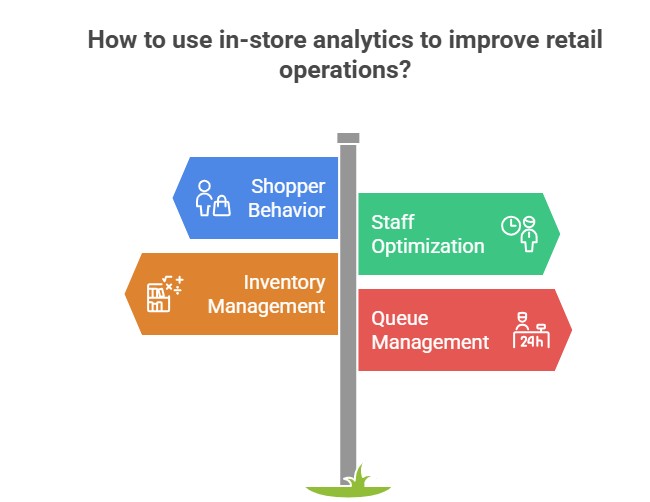
How Is In-store Analytics Used?
1. Understanding Shopper Behavior
Retailers use in-store analytics to monitor how customers move, where they stop, and how long they stay. This helps fine-tune layout and product placement.
2. Staff Optimization
By analyzing peak hours and footfall trends, managers can adjust employee schedules. This avoids both overstaffing and long lines due to understaffing.
3. Inventory Management
Heatmaps and shelf engagement data help identify products that attract attention but don't convert. Retailers can experiment with pricing or bundling strategies to boost sales.
4. Queue Management
Using sensor data, stores can track wait times and direct more employees to checkout lanes when lines grow.
Leading Players in the Market
Several tech giants and niche specialists are driving innovation in this space. Here are a few to know:
RetailNext, Inc.
Pioneer in video analytics, offering in-depth customer behavior tracking, heatmaps, and dwell time monitoring.
Capillary Technologies India Limited
Focuses on AI-powered loyalty and engagement solutions combined with in-store behavioral insights.
SAP SE
Provides enterprise-grade analytics through its Customer Activity Repository, integrating in-store data with CRM and ERP.
Honeywell International, Inc.
Combines IoT, building systems, and environmental sensors to enhance in-store monitoring and energy efficiency.
These vendors are powering data-first retail strategies from grocery chains to luxury boutiques.
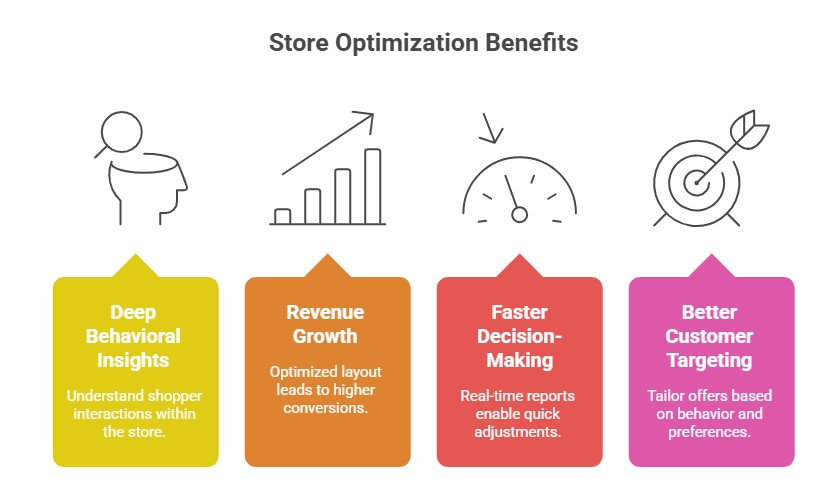
Benefits of In-store Analytics
Deep Behavioral Insights
Understand how shoppers interact with your store—where they go, what they touch, and what they skip.
Revenue Growth
Well-placed products + optimized layout = higher conversions. Simple math, big impact.
Faster Decision-Making
Get real-time reports to make quick changes without waiting for quarterly reviews.
Better Customer Targeting
Integrate with loyalty programs and mobile apps to tailor in-store offers based on behavior and preferences.
Challenges & Considerations
In-store analytics isn’t without its hurdles.
Key concerns include:
Privacy & Compliance: Shoppers are wary of surveillance. Transparent policies and opt-ins are crucial.
High Initial Costs: Hardware, setup, and training can be expensive for small retailers.
Tech Adoption Curve: Teams need training to interpret data effectively.
Integration Gaps: Not all analytics tools integrate easily with legacy systems.
Still, the ROI and competitive advantages far outweigh the setup costs over time.
Conclusion
The In-store Analytics Market is no longer optional—it's foundational for competitive retailing.
If you’re still relying on gut feeling to make floor layout or inventory decisions, you’re already behind. It’s time to let data guide your strategy, just like it does online. The In-store Analytics Market isn’t just another retail buzzword—it’s the new foundation of smarter shopping environments.