Why Cryptocurrency Payment Apps Are Gaining Global Adoption
Published Date : 09-Oct-2025 |
Introduction
The way we pay is changing faster than ever, and it’s not just about swiping cards or scanning QR codes anymore. Digital currencies are stepping into the mainstream, and cryptocurrency payment apps are now at the center of this transformation.
The Cryptocurrency Payment Apps Market is reshaping how people pay for goods and services—whether it’s in-store payment at retail shops, online checkouts, or peer-to-peer transactions.
This blog explores how these apps work, which crypto is best for payment, and the companies driving innovation in this space.
Why Cryptocurrency Is Gaining Traction in Payments
The shift toward digital currencies isn’t accidental. It’s fueled by a combination of factors:
Lower Fees: Merchants avoid hefty credit card processing fees.
Global Reach: No need for currency exchange in cross-border payments.
Security: Blockchain technology offers transparency and reduces fraud.
Consumer Preference: Younger consumers, especially Gen Z, are more likely to pay with crypto than with traditional methods.
In short, crypto isn’t just hype—it’s convenience and cost savings in action.
Payment Apps: Driving Mass Adoption
The real magic is happening in the app ecosystem.
Apps like Paytomat and CoinPayments Inc. are designed for everyday use, offering dashboards that allow users to spend, send, and receive crypto as easily as fiat currency.
It’s similar to how PayPal changed online shopping years ago.Except now, instead of linking your bank account, these apps connect to your crypto wallet.
The UX is improving too—transaction speeds are getting faster, fees are dropping, and integration with point-of-sale systems is becoming smoother.This is reducing friction and encouraging both consumers and businesses to make the shift.
Which Crypto Is Best for Payment?
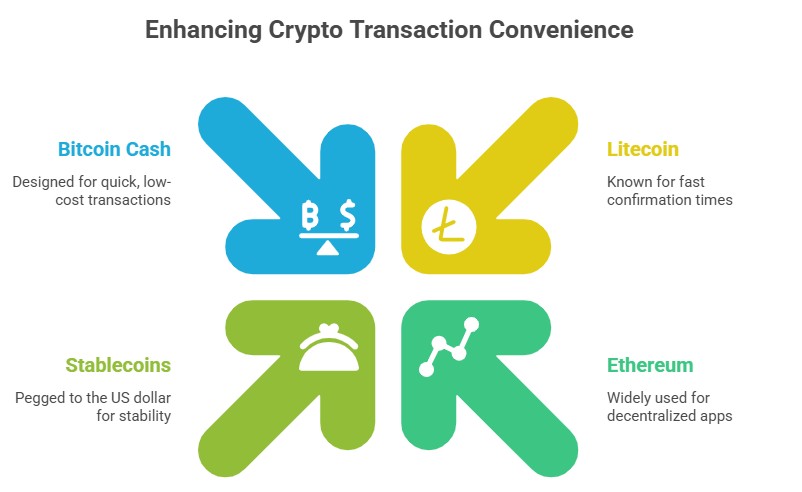
While Bitcoin remains the most recognized digital asset, its high transaction fees and slower processing times can make it less ideal for daily purchases. Instead, many payment apps recommend:
- Litecoin (LTC): Known for fast confirmation times.
- Ethereum (ETH): Widely used, especially for decentralized apps and services.
- Stablecoins (USDT, USDC): Pegged to the US dollar, offering stability.
- Bitcoin Cash (BCH): Designed for quick, low-cost transactions.
By integrating these options, payment apps allow users to choose based on speed, cost, and availability—making crypto transactions as convenient as swiping a card.
Impact on the Industry and Regional Growth
The impact on the industry and regional adoption of crypto payments has been dramatic.
North America, particularly the United States, has been leading in adoption, thanks to companies like Coinbase Global, Inc. and regulatory clarity around digital assets.
Europe follows closely, where startups like ALFAcoins and BitPay have tapped into tech-savvy markets.
In Asia-Pacific, mobile-first economies are creating fertile ground for payment apps that integrate crypto alongside traditional e-wallets. Meanwhile, Latin America is witnessing exponential growth due to inflation-driven demand for alternatives to unstable local currencies.
It’s not an exaggeration to say that the rise of cryptocurrency payment apps is reshaping financial inclusion on a global scale.
Rise of Cryptocurrency Payment Apps
Cryptocurrency is no longer just an investment vehicle. It’s increasingly being used for everyday transactions, from coffee shops to luxury retailers.
- Payment apps play a crucial role by:
- Offering real-time crypto-to-fiat conversions
- Enabling merchants to accept multiple cryptocurrency types
- Providing lower transaction fees than traditional credit cards
This growing demand has made cryptocurrency payment apps essential for businesses that want to stay competitive in a digital-first economy.
Leading Companies Driving This Change
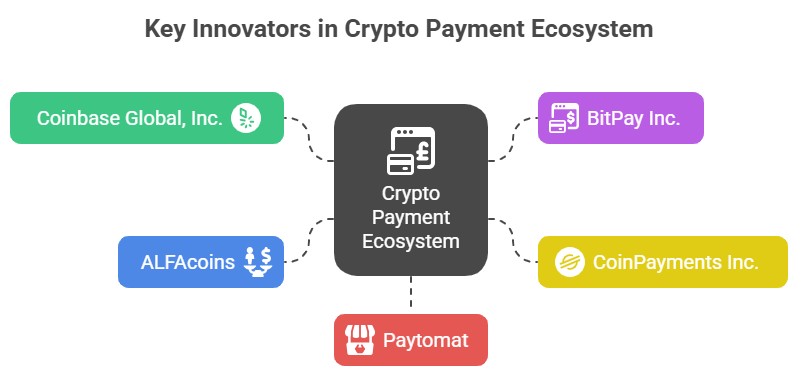
Several innovators are shaping the crypto payment ecosystem:
Coinbase Global, Inc.
A trusted name in the crypto space, Coinbase Commerce lets businesses accept payments in Bitcoin, Ethereum, and other currencies.
BitPay Inc.
One of the earliest players, BitPay provides solutions for both online and in-store payment, with support for multiple cryptocurrencies.
CoinPayments Inc.
With merchants in over 200 countries, CoinPayments offers easy integrations for e-commerce platforms.
ALFAcoins
Known for its instant conversions, ALFAcoins helps businesses accept crypto while receiving payouts in dollars or euros.
Paytomat
Focused on everyday retail, Paytomat allows small businesses and restaurants to accept digital currencies easily.
Future Outlook of the Cryptocurrency Payment Apps
Looking ahead, the market shows strong momentum. According to research, the global cryptocurrency payments market is projected to grow steadily as regulatory frameworks mature and consumer trust increases.
Trends that will shape the future include:
- Wider acceptance of stablecoins for daily payments.
- Integration with contactless in-store payments via NFC.
- Use of AI-driven fraud detection in crypto transactions.
- Expansion of merchant adoption programs by leading players.
The takeaway? The future of payments is digital, and crypto apps are leading the way.
Conclusion
Cryptocurrency payment apps are changing the way we shop, making digital currencies practical for both online and in-store payment. From Bitcoin to stablecoins, consumers now have real choices in how they pay, while businesses enjoy lower costs and global reach. Companies like Coinbase, BitPay, CoinPayments, ALFAcoins, and Paytomat are leading this exciting transformation